Category: Farmer Notes

By now you readers may know I tend to gauge the season by birds. At present, chickadees have shifted to their more springy song. At least they’ve shifted octaves and I’m calling it “springy.” That said, to date I’ve yet to hear or see the redwing blackbirds down at the pond?? Without fail, regardless of severity of the winter, they’ve always returned by the 17th. This makes it their latest arrival which means…???

What does any of it mean? Everything and nothing I suppose. Given the healthy sustained cold that kept well into February, and additional snow, I will not fault the blackbirds in their hesitation. The cold remained through both the wax and wane of the month’s full moon, with a week of powdery snow. Just in the past few days has it begun to loosen, and now the snowy roads are rotting out, things are soggy and as daylight gathers, I’m beginning to wonder – not speculate but wonder – just what the soil profile is going to be come April? Certainly could be a delay in field work. Then again, the past two springs have been very dry and warm. And this is a semi-desert climate with intense sun at times, and fairly light, porous soils. Indeed, I do think a lot of the moisture is already going down and in. Which is ideal.

Hold on; winter isn’t over, even though the back of the old man may be bending. Owls and coyotes still own the nights. February is a wonderful month for coyotes; it is their “courting” season. In their mating up they certainly have been vocal! We’ve had the same bunch around the creek and right outside here fairly regularly. I’m sure they are partially responsible for thinning down our quail covey that loves the grain hulls in the lower pasture. And this past week we’ve had a few remaining Hungarian partridge visiting at twilight for grain scraps and pebbles now baring up in our driveway. I suppose the owls may be responsible for the rest of the disappearing birds…?

The granary has been very lively here despite the wintry weather and on-going freight issues. I’m impressed with the volume of orders from both our local accounts and with our distributors. The grains are running well, milling well, and I believe tasting well! The crew is doing great and I almost hesitate to think that within the next 6 weeks, farming season will be here to interrupt the flow!

Being a producer/processor we have both businesses running for 7 months of the year and only one of the businesses (processing) in the winter. All hands on deck for the winter time, or maybe time to swap out ski runs from time to time!

I’m thinking that with the new tools we bought last year for the farming – the tine-weeder and the minimum-till drill, we will be able to save some tillage steps in the fields this spring and therefore may not need quite as much time to get planted. Of course, that is always the hope, and Mother can always change any of that at any given time.

So many different factors play out to make or break a crop that we can only plan and know that planning will likely change. It more is a matter of how much does it change? The next month will perhaps be the last chance to not be thinking farming full time, but the planning will begin. Because it could be today that the blackbirds return!  Oh, and did I mention the other true sign of the seasons change?  Wind.  Adding another bite to these 10 degree nights…

Yours, Farmer Sam
Juncos and chickadees and our annual flock of brilliant Bohemian Waxwings ring in the New Year here at Bluebird. These little birds indeed seem to be the lively “icing” on an otherwise cold, white countryside cake! Just in the past few days the temperature has moderated from a sustained stretch of below zero nights and days barely in the teens. Alas, cold is what makes winter so pure.

Bit by bit our snowpack is adding up and, on top of our very wet fall, the soil profile I’m thinking is going to be plenty moist once the longer light of April is upon us. Meanwhile, we’ve been having fun redistributing the snow and entertaining ourselves with trying to get orders out in a timely fashion. During current conditions, this means ferrying pallets 2.5 miles down to pavement to meet freight trucks.  Chad, our UPS driver has been doing great navigating what the county calls a road out here, and has no problem once he hits our driveway.  And so; we’re hoping you all have not seen a drop in our service.

We had a great holiday break and came back to work exhausted after the first. After a mellow week or two, we seem to be back to busy and enjoy the fact that there are so many out there loving our products. What better thing to ward off winters’ chill than fresh bread or some hardy grains in any form!

Already, our afternoons are brighter as the days lengthen. It is flabbergasting how fast it all happens each year! I’ve not pondered too many farming thoughts yet, but they will rise up by the next letter I’ve little doubt.  We’re never very far away from farm thoughts when we run the grains each week. I must say, the emmer we’ve been running from this year’s crop is really nice stuff. Cleans well, mills well, tastes well. As well, we’re finding the wheat to be very consistent, too. Still and all,  my new love is the Einka farro. Really a fun grain!

For this farmer, winter passes too quickly. Seems like the time for reflection has been all but lost in some ways. And yet, winter is the time for this, if no other. We’ve got a good crew on board right now, and I feel like we’re entering a very good year here at Bluebird. Given these uncertain times, I like to think that consistency and intent are ever more important. Eating well, and supporting healthy farming may be a good way to keep from easily being pulled down. To that end, I encourage all of you to gather round and stay healthy.

Welcome to the New Year! I count my blessings most every day and we are glad to have this “organic” relationship with so many over these years. Let’s keep on keeping on…

Yours, Farmer Sam

The gray and withered countryside of November has given way to a brittle and whitened landscape in these Rendezvous foothills, with sharp, cold Cascade peaks beyond. Perfect for the Winter Solstice here, just 30 miles south of ‘ole Canada… And as the snows begin, we are heartened by the fact that sleigh-bells, indeed, will ring!

Finches, chickadees and nuthatches frequent the feeder, while barred and great horned owls can be heard at dusk with sawets during the day. We’ve had 3-4 coyotes hanging about perusing for possible tid-bits and reminding us that meals are a bit harder to come by for many when temps drop below O. It is this time of year when the deer and quail and other creatures likely appreciate the grain tailings we scatter down along the lower field the most. Small offerings for the season…

The Bluebird granary has been abuzz with holiday orders and even more so with our year-round local wholesale accounts here, and our distributor accounts elsewhere. Scheduling has been tight, but thanks to all the good help here we’ve been able to maintain a timely flow for most all orders and appreciate that our customers understand the solitary week of the year Bluebird shuts down; Christmas thru New Years.

Often I’ve felt that the silence of winter solstice is the perfect silence. When one stands outside at twilight and hears only the owls, or perhaps a tree crack or, on occasion the sound – “of easy wind and downy flake”- one might think of perfection.  As I’ve come to learn through a fortunate life spent largely in the wild, and 25 years farming in the wild, only Nature is perfect – as good or terrible as we may perceive her at any given time.

While we are not nearly as efficient at Bluebird as Mother Nature is, we do try to deliver our goods in a proficient manner. This time of year this includes having to meet freight trucks almost 3 miles away. And one thing we also have come to realize is there is a certain amount of proficiency in knowing what we grow and having partners that know what they grow as well because in turn, this helps us better know how to finish and mill our grains. Bluebird’s ‘reputation has been built on knowing our grains from plow to plate and this standard is the one we will continue to keep. After 12 years now, we realize this not only is what still feels good to us, but is what our customers most like! So…

First, I want to thank all you loyal customers for another successful year for Bluebird. Secondly, I want to thank all our staff for delivering such a great product to all of you. I have no idea where 2017 will lead us, but I can say that we will stay as true to our mission as we’ve always been: Delivering organically grown fresh milled, high quality grains and flours from our farm directly to you. It is a circle we will try our best to keep unbroken.

Please circle round during these holidays, and think and give peace. To this wonderful land that sustains us. To each other; both past and present souls that also sustain us.

This Christmas I feel grateful to my mother’s cousin Oakley Goodner and my mother’s brother ” Uncle H. ” Thorne  for being such wonderful people and great influences in my life. As well, remembrance goes out to my “second mother” of sorts, Janet Nagy and  her great wit, humility, and beautiful, knowing smile. We also send blessings to Scott, Amber and Jade Grant and think of them during their first Christmas without mother Darlene. We love you all and none will ever be forgotten.

As for the rest of you? See you next year, by Christ!

Yours, Farmer Sam

Opening stanza from Robert Frost’s My November Guest :

“My Sorrow, when she’s here with me

Thinks these dark days of autumn rain

Are beautiful as days can be;

She loves the bare, the withered tree;

She walks the sodden pasture lane.”


The wettest October we’ve seen here in the Valley has now run clear up against Thanksgiving! Snow-line has just begun to touch the foothills, but almost every day the main word has been rain. It is hard to be frustrated with significant rain in a semi-desert climate. That said, I surely was hopeful of getting more fall field work done and harvesting the rest of our crop. Not to be, on either account. I believe the last time we were in a field doing anything was over a month ago.

Mild, too. Hardly a flight of southbound geese and the local ponds we skated across on this date last year all remain wide open. Without a question, our fall planted crops are digging this different type of mountain autumn. Our cereal rye is cranking and winter peas are into their 4th leaf stage. This should give us a hefty nitrogen boost come spring planting. Oh, we should have plenty of moisture, too! However, finches and chickadees and a few buntings remind us winter will actually arrive some day soon. Ahh, Mother never ceases to surprise…

Good news for Bluebird is that the granary has been bustling and I’ve been spending a bountiful amount time running grains, sacking grains, mixing flours and reconnecting with some of you customers. As I’d hoped, the grains are of very good quality and are finishing nicely whether as flour or as whole grain. Nutrient dense kernels give us many more #1 berries from a given lot as our gravity table stratifies the heavies and lights.  As with combining, the heavier the grains, the better “processing” job we realize in the end.

One thing I’m reminded of while cleaning our hulled, ancient grains each day is the way in which we have chosen to extract the the outer hull. Because we run the emmer and einka through an impact huller to do this, our ratio of whole grains to splits is not near as high as if the grain was pearled. Pearling is the process of removing the outer hull or husk, as is traditionally done in Italy, by running the emmer or einkorn over a set of scarifying stones wherein the hull is “skinned” or peeled off instead of fractured off. This method leaves many more of the grain kernels intact. However, during this process some of the actual kernel or “berry” bran is removed as well. As a result, what is left is a “semi-pearled” berry which no longer is a true whole grain. Semi-pearled farro cooks much faster, but also breaks down much faster. Think pearled barely.

From the beginning, Bluebird made the easy decision to only offer true whole grains and whole grain flours. All the goodies we work hard to give the crop during their growth stage we surely want to pass along in the finished product. We feel that by keeping all the trace minerals and proper amino acids within the finished grain, our grains and flours not only deliver more nutrients but, perhaps more importantly, deliver more flavor as well. Many of you seem to agree!

Speaking of taste, yes, Thanksgiving is my favorite holiday and boy do I love to eat! Fact is, November hosts two of the most significant American holidays in my mind: Veterans Day and Thanksgiving. Both are times to reflect, count our blessings, and gather round. At times I believe Thanksgiving should be once monthly, and not just for the food. We have a great, great deal to be thankful for in this country to be sure. At the same time, there are too many who do not have as much. Please keep this in mind as we kick off the holiday season.

And last:

“Not yesterday I learned to know

The love of bare November days

Before the coming of the snow,

But it were vein to tell her so,

And they are better for her praise.”

Sit, hold hands, and break bread in peace.  Very best, Farmer Sam


A cloudy day from the porch….

Beginning here by following up on the end of last month’s Farmer Notes…The weather has been far more conducive for eating than ‘being out on the land.’ If not the wettest Methow October to date, it has to be close. I’m sitting here in the kitchen listening to the rain pour trying to remember if we’ve had 2 consecutive clear days or not this month? Two days I believe, because we had two mornings of 22 degrees FH just prior to the full Hunter’s Moon this past weekend. So I’ve had few mornings on the porch sharing coffee with the birds. That said, I can report there’s been a large gathering of robins this month, who undoubtedly have been enjoying easy pickings when it comes to worms. I’ve seen flocks of 30-40. Also, various hawks, a few chickadees, finches, and yesterday the first fall flight of south-bound geese.

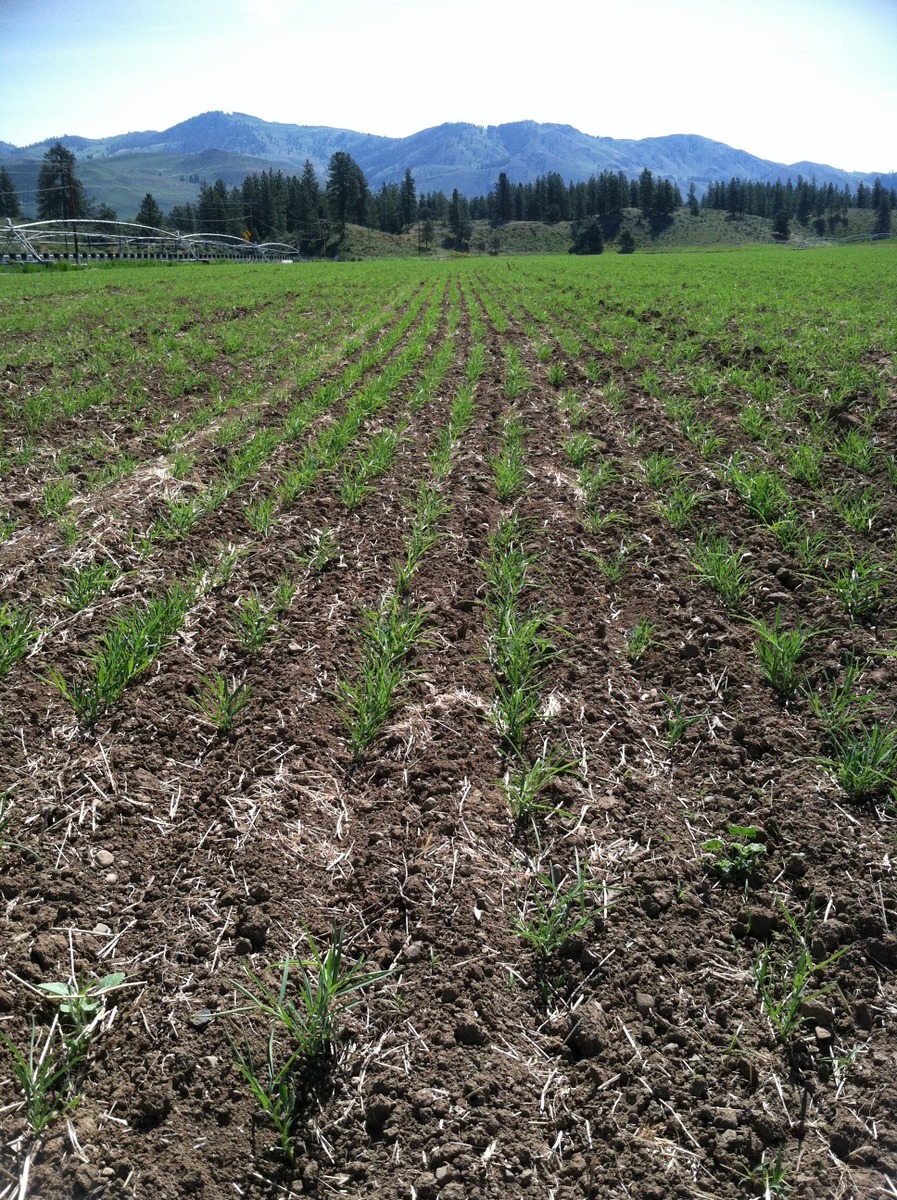
What began as a very strong harvest has ended on a lower note.  Gone are the crisp, dry days of mid September and now we are faced with the prospect of not reaping the last 15+ percent of our crop.  The late ripening due to the cooler, moister summer pushed harvest just late enough so the last planting never got time to cure, only because October has been nothing but wet. The up-side of this is that our winter peas and rye are thriving. Happy to report the no-till drill worked well. Although in retrospect, one could have just broadcast peas onto the ground’s surface and gotten a stand this fall. Here’s a poem I wrote called Hunter’s Moon:

Fresh-turned November field
Swollen and pliant;
Southerly rain drenching
These tired hills
Skipping days weeklong.
Morning mist hugs the river
Trailing a full-moon
Chopped stubble caught
In chunky disc lines-
The pungent odor of decay
Delighting this farmer’s mind.

When at once I see
My prints are not all
Nor the biggest-
Nor the most
And surely the least sure.
From the by-gone orchard they climb
Big in front, two behind
Winding a curious path:
Deep, slow, commanding-
Claw-marks inches long
Pads worn smooth to shine

With warm familiarity I follow
Childhood wonder not lost
On dozens of encounters now;
Steeped in gratitude
If not haunting kinship-
A gypsy-wind longing
Just shy of understanding
Full of compassion
For old she-bear.
Whose kind has run
Charged me, studied me
And finally been disgusted
In all make-ups of
Damp woods; wild tundra streams
Snow-patched mountains or
This luxury of field.

Yet just last night I missed
Her non-chalant mosey
To this center-field rock
For a contemplative look
At the awkward world she’s captive to
Day-long, before now
And her quiet stepping out.
Stout legs plodding
Heavy, apple-filled belly
Swaggering
To visit the view-
As if age could be suspended
Before one more winter’s nap
(Would this be the last?)

Stars so cold
Mountains like a saw
Cutting the white moon
The silence of fall night
Embracing only those now awake-
That other nation whose land
This can only be…
Through her sunken eyes
Oh, if I could only see
At best I would see
A most untidy harmony.

Yours, Farmer Sam


The hot days of August faded fast with September’s arrival, which was ushered in by a bit of moisture and 40 degree nights. Not exactly the change one likes to see when beginning grain harvest, yet I recall it is not uncommon for September to begin rehearsing fall “fits”. The swallows are long gone and most of the blue-wing teal have left the pond while robins re-gather. Migrating hawks fill the skies and our family of bluebirds have grown up right before our very eyes. We’ve enjoyed watching them dunk and flutter in our bird-bath.  As their departure nears, I can’t help but wonder how many, if any, will return? After dusk and before daylight I have been hearing the poorwill, and the meadowlarks but they, too, will soon be gone.

Alas, as we worked into September and the true Harvest moon ripened, the heat did return! Oh what sweet days we had the week proceeding this years plump Harvest Moon. Eighty degrees and sunshine with slight breezes; perfect harvesting weather. And harvest we did. As of this writing, we’ve taken in two-thirds of our crop and so far it has been running a little above average volume and is of excellent quality. Combining has been fun! The heavier the crop, the more one can keep the ole’ Gleaner maxed and the better job it likes to do threshing when all chambers are constantly full.

This year’s Einka actually came in a good 15% above our average and really seemed to do well. One field of emmer was also up bout 10 % with another right about average. We’ve already begun running some of this new-crop emmer and it is cleaning quite well, as is the Einka. This is Bluebird’s biggest Einka crop to date, so that is good news for all you Einka flour fans and for folks like yours truly who sometimes like to simmer the Einka berries in broth the same way as with emmer, and serve up with sea salt and butter.

Tom and Jay, our two wheat growers, are all finished with their  harvest and have great reports on the hard white and hard red that they grew for Bluebird. They have excellent test weight numbers and good protein on both lots, with a higher yield than they anticipated. This, hopefully, is a good start to a longer relationship with both the Stahls and Goldmarks. (Good job guys!)

With the coming equinox so come the shorter growing days and this week we are going to try out a new tool. After much consideration, we decided to swap out our current grain drill  for a true no-till drill. One of our main reasons for doing so is that this allows us to sow our winter pea cover crop right into our grain stubble post-harvest, without having to work up a seed bed. We are planning to do this this week, in and around the rest of harvest. After putting in the peas, we’ll do one last watering for the season with another dose of biology and carbohydrates (fish and sugar).  This will aid in straw decomposition, plus kick off the winter peas. This way, after the winter snows go to work, spring time will give us some heavy green goods and fiber to turn in before coming back with grain. Already working on next year!

Our only other fall crop – our northern rye – I planted at the beginning of the month and it is up and running. I look for it to be stooling out here by late October, and am planning to foliar feed on some biology before we put this crop to bed for winter, too. But hey… winter is a ways off yet, no? And my favorite of favorite seasons – autumn- stands between now and winter and I surely hope to enjoy a long autumn in the fields, and elsewhere in the now-turning countryside.

We’ve eaten a couple meals of fresh mountain grouse (thanks dogs!). I love to sear them in an oil/butter combo, after dressing them with salt and pepper and rolling them in emmer flour. Any day now I’d expect to hear the sandhill cranes passing over from the north. This happens here in the valley almost always right on the equinox. We hear and sometimes see them high, high up going over the valley even if just for a couple days. Oh, the timelessness of it all! Nothing like a stiff autumn breeze and the sounds of migration to awaken the soul.

And so here’s to fall!  As fine a time to be out on the land that I can think of.  Also, a good time for eating…

Cheers, Farmer Sam


The heat is on… again. After a hot spring and a much cooler and moister July than usual, August has finally shed the last (hopefully) of the thunderstorms, heavy rain, and hail and has come off cooking the way we think of August.  Each day this week has reached well into the 90’s and though the swallows have all headed out, a few hummingbirds remain as the last of the fruit and flowers wither.  Birds pay more attention to the length of daylight than most anything else. Molting ducks are now coming out from hiding; just this morning I saw a flock of blue-wing teal “practicing” down on the pond.

Due to the accompanying moisture, the heavy storms never produced any fire. This blessing is not lost on those of us here in Okanogan County where the past couple summers have been devastating to so many.

The grains are behind in curing as well. The heat, I’m almost reluctant to say, is just the ticket to sun-ripen our grains the way nothing else can. This is one of the paramount reasons our climate is favorable for producing high quality, dense grains. Overall our crops look good. Of course some of the heavier crop went down under the wind and heavy rains,  but it will eventually cure out and we’ll be able to collect it given a long enough weather window. One of our fields took some hail as well. We won’t know the extent of loss until harvest. In fact, one really doesn’t know anything until the crop is in! Have we been naughty? Or nice??

We may windrow some of the later fields to aid the harvest. If swathed at the hard-dough stage, grain will finish quickly under sunny western skies. Liken this to plucking tomatoes or peaches just before they are fully ripe, and think how quickly they mature once picked. I’ll make the call to swath or not to swath soon if the blistering weather continues. I’m a little “itchy” letting too much of this good harvesting weather go by! However, as I said at the end of last month’s notes, late August is much more common for harvest to begin than the earlier starts we’ve had the past couple years.

Yields around the State are very strong so far, as well as elsewhere in the Northwest. Tom and Jay, our hard red and white wheat growers, say their crops look to be strong as well. I’m excited for them. I’m excited for all of us! Their crops will be coming in about the same time as ours.

I must admit the spring and early summer months seem a blur of non-stop activity. Despite that, it’s now all up to how the crops cure and what Mother brings for weather, and there really is little one can do except watch and admire these old grains in their final stages. Is it sad? It kind of is as this month brings perhaps the most poignant stage of the cycle. I don’t say this lightly because we finally get to recapture some of our costs! To be sure, it does come as sort of a reward for our intentions. However, I speak of this from my elevated and on-going respect of Nature. She is more beautiful all the time. Just yesterday I stood nearby a slowly turning emmer field, as I’ve done so many seasons now, and still I was stunned by the hues of greenish gold and the easy way it swayed in the breeze and the swishing sound of sheaf against sheaf…

When not waxing nastolgic, we’ve been preparing our winter rye field and making sure the combine is well serviced and behaving properly. Our inventory is getting pretty low so we are able to clean most of our storage out in preparation for this year’s crop. Orders have not let up during these dog-days of summer, and we’ve been hustling to get orders turned around in the usual timely fashion. Sheah has been doing a good job keeping up and toughs out the hot days by keeping on the move!

August’s full moon is upon us. Slow to rise with an almost audible presence in the easy summer sky, the moon kicks off the katydids, crickets and other later summer evening sounds. It does give pause, and in this pause I’m remembering this day a year ago when the Twisp River fire blew up and shot fear into all of us. I’m remembering with honor and sorrow the loss of Richard, Tom and Andrew and the horrific injuries to Daniel and the toll it has taken on their loved ones, and the permanent scar to this community. Their efforts are not forgotten. We salute in your honor. As well, we are forever grateful to so many others who worked bravely and diligently to successfully keep this fire from spreading through the entire valley.

Sending warm thoughts to all of these folks, and to all of you,

Yours, Farmer Sam

Sitting here in the kitchen on a Sunday: Mid-day, mid month, rain falling, a cool breeze thru the screened windows, 65 degrees. This sums up how different this July has been for us here in the Methow; certainly in comparison to the past two years.  There are lightening flashes and thunder;  I’m hoping the moisture out-competes any new fire start-ups.  Hummingbirds, adult and young, joust at the feeder hanging under the eaves and a young doe pauses down by the edge of the creek, perhaps with a fawn nearby?  This is to say, I’m liking July this year and July isn’t always this farmer’s favorite!

Indeed, it has been perfect grain growing weather.  Without a day above 80 so far, yet some sun and wind along with scattered showers, our grains are “grooving.”  Our earlier plantings have hit boot stage and are beginning to pop while our later plantings are reaching flag-leaf.  At both stages we apply an organic foliar feed high in plant-based nitrogen with traces of phosphorus.  This really helps the grain heads fill and finish with the uptake of all the other nutrients in the soil.  It’s been a busy time running around to the different fields: feeding fish and sugars at earlier growth stages, and now putting on the finishing goodies.  We’ve been irrigating in between applications, plus we’ve had sporadic rain showers to help us out.  By the month’s end, most all of our irrigation will go on rest.

The cooler weather keeps the plants from stressing and so this should increase yields as grain heads fill gradually.  We want the intense heat and sharp eastern Washington sun eventually, like right after fill, so that our crops cure and finsih evenly.  August is generally good for this, but who really knows what Mother has planned…?

One thing we have planned at Bluebird is continued business growth, as we’ve had each year so far. One of the challenges we’re facing in this small valley, however, is the lack of suitable farm ground.  For us, suitable farm ground means fairly heavy soils and land that can be easily brought into certified organic production.  We’ve struggled to obtain either in our little mountainous valley.  To be sure, there are a few other large scale growers, but it is all hay, not organic, and none have shown much interest in another market.  The good news is there are a lot of grain producers within two hours of here and we’ve met a few wanting to, or who already have, transitioned some of their soils into certified organic.  A couple of these growers are using some of our stead-fast strategies: Cover cropping, biological fertility, and tender care with an eye toward quality and nutrition.  This year is the first year we’re partnering with two family farms to grow our hard white and hard red spring wheats.  Tom Stahl of Waterville, Washington (roughly 100 miles from us) is growing out hard white while Jay and Chuck Goldmark up on the Okanogan Plateau (about 70 miles from here) are growing out hard red.  Both of their crops are coming along well and I think they are even having fun at it!  We sure look forward to turning their efforts into fresh milled, high quality goods to pass along to you.

Expanding the market for other organic family farmers in our region has been an “outside” goal of Brooke’s and mine since we began Bluebird 12 year ago.  Well, lo and behold!  We’re excited to begin work with experienced producers who have been growing grains for at least 3 generations.  As with everything farming, it takes forethought and planning and so the conversation with Stahl/ Goldmarks has been ongoing for a couple of years or more.  The prospect of long term relationships with both growers and increasing certified organic land in Washington feels good.

By “subbing” out our wheat this year, we’re able to concentrate solely on our ancient grains on the fertile acreage that we manage here in the Methow.  Our Einka farro, Emmer farro, and heirloom rye are going strong.  As mentioned, I hope for a good yield as we work hard to assure the usual high quality.  Meanwhile, we’re getting down to the bin-bottoms right in time for new-crop.  Fear not, we have enough supply to make it through for all you hungry customers!   We may take our rye before the end of the month, but harvest won’t begin in earnest (given the current weather) until well into August. This is about “normal” compared to the past two years when the valley was hot, dry, and on fire and we were combining by the second week of August.

I hope this finds you all enjoying some summer activities, wherever you may be.  We’re grateful to you all, grateful for our health, and always are thinking about the social challenges each of our societies continue to face daily from around the communities in our own country, to all those elsewhere.

Yours, Farmer Sam

The long June light brings the world alive and each morning as I sit and sip on the porch, I try and decide which birds are the noisiest that particular morning because it does vary. One day I’m sure it must be the swallows; the next day house wrens. The quail start early along the creek, but then without question the tanagers can bust in and trump all. There are worse things to decide each day – which birds are the most vocal. To be sure, much of June was cool and sweet and we even had some rain. A welcome reprieve to the heat of April and May.

We finished planting a little later this year, with the last of the einka going in June 10th (just before the rain came that very night). It seemed like a lot of field preparation work this year, but we still did all the planting just in time (from May 24th – June 10th). Now the fun of seeing which crops flourish is upon us. This farmer has been plenty busy with each day bringing new tasks even after all the seed is in.

Following the last of the seeding we mowed off our cover crops and continue to grow them out. We’ll soon be turning them under as the vetch has been flowering now for a week or more. We’ve put our first round of biology onto our grains, which includes a beneficial microbial mixture combined with liquid fish and about 2 pounds of organic sugar to the acre. We will repeat the fish/sugar mixture again about the second week in July. When our earlier crops reach flag-leaf stage (remember from past years the “flag” leaf is the top leaf  that the grain head forms from) we will do a plant-based nitrogen foliar feeding, and then again at “boot” stage – when the grain head begins to hatch from the flag. This all can happen very quickly – possibly less than a week apart depending on the heat.

The heat has returned the last couple days of June, with temperatures soaring over 90 degrees again. This is a likely predecessor of what July will be like. July is all about growing here in the foothills of the North Cascades. We will be quite busy irrigating the crops through boot stage, and then we’ll let them finish out in August. At this point, our crops look healthy. I like the color the early plants are showing, and there really is a difference in the color between our two oldest grains. The emmer grows more slender – lanky, almost blue like our fall rye in color, whereas the einka is much greener, shorter to begin with, and “bushy”. The Einka is so closely related to a wild grass that, as I’ve mentioned before, it puts a lot of its early energy down into its roots. Then, about the second week in July – boom! Up it reaches and in the end will sometimes tower over the emmer at 5 feet tall.

Also in July, we’ll cut our fall rye and we’ll likely use up what inventory we have left from 2015; just in time for August 2016 harvest. Time to service the old Gleaner and other fun things as well.

Orders have remained decent even during the hotter summer months here at the granary.  We thank you all for your continued support of our fresh grains and flours!  I wish I could write more this round, but the fields beckon. I hope this finds you all well, and I hope the long days of July bring good things this year, instead of smoke and fire.

Thinking of cool mountain streams… Yours, Farmer Sam

That fast, another month gone by!  A very busy month for birds; just as busy for farmers. That fast, we’ve sped up 3 weeks and are on par with last spring when we estimated “everything” to be 3 weeks early.  It has been more of a scramble this year because we had – key word being  had – a later start and moister spring. I’m not alone being impressed  how quickly the moisture has disappeared.  Already the Balsam root and Lupine that were full and rich a month ago, are now shriveled and gone-by.

When I saw tanagers on our lawn 2 weeks ago I knew the accelerated spring to be real. I associate this bird with June. We have more tanagers this year than I can ever recall.  Also, there are three kinds of swallows here,  chatty, chatty wrens, flycatchers,  ducklings in the ponds, nesting bluebirds and soon, buntings. What we haven’t had, with the exception of one showery Saturday,  is rain.  Temperatures have remained very mild.  Soil temps have easily reached the mid-50’s which is when grain seems to not only have strong germination,  but likes to take off and grow!  So…

Have we any grain up yet? Not as of this writing.  However, yes, we have sown both some Einka and Emmer. A fast spring does not mean that the farming goes faster. Some of our acreage we majorly over-hauled , and this required a fair bit of extra work before planting. Other fields had areas still too wet to get on until just recently. Right now, we have about  40% of our grain in and are moving ahead with the rest. I’d expect to be able to row our first plantings in a few days now, and hope to have everything planted by the first week in June.

The cover crop vetch that we put in back in mid-April is beginning to fill out and we’ve irrigated it twice. This annual vetch is sometimes slow to start but as it matures, it begins to really put on green-mass. We’ll grow it out to flower stage, late-June, then mow it off at least once, and keep growing it out well into the summer before incorporating back in.

Once our grains are up a few inches on their own, we’ll feed them some liquid fish through our first round of irrigation. Some of the fields we’ll feed a couple times more, others just only once more. Tissue samples and brix readings should be able to tell us what is needed and when.

We like to grow pretty heavy crops and yet the heavier the crop, the more nutrition it needs. As with everything, it is a balance. To be sure, we were happy with last years crops and are hopeful for similar results this year. However, MN can change that at any time! I’m ready to be done with the ground work and look forward to the “Growing” segment of all this.  The cycle is stunningly fast – 60 days from emergence to finish – so there are not a lot of opportunities one likes to miss to help out the grains. The real fun is watching/helping these crops reach their full potential.  Not unlike with children!

We’ve barely had enough slow days in the granary to run seed stock. We’ve had steady orders to fill and this, of course, takes priority.  One of the challenges with our small cleaning line this time of year is processing our customer orders, while seeing to our seed needs at the same time.  As with our finished products, we  clean our seed stock on an as-need basis, too. That said, Brad and Sheah have done a very good job managing both these needs these past few weeks, and soon they will not have to worry about me stopping in and saying oh, BTW, I need 8000 pounds of seed by… yesterday!

War seems to be an age-old behavior of mankind that we, as a race, have a hard time changing. It is complex, arguable whether necessary or not, but always horrible. Far, far too many have died.  In many cases, died to save what we now have as freedom in a form that not everyone has. This, as with every Memorial Day, please take some time to honor those that paid the ultimate sacrifice, here and elsewhere.

We’ve got a couple new bakery customers using our einka which is very exciting for us.  Also, we’re always pleased to service return customers.  Bluebird continues to grow and in next month’s notes, I’ll explain some of the changes that may be coming down the pike.

Until then, enjoy the sweetness of June. Congratulations to all the graduates out there, and be watchful for more kids in the streets as another school year comes to a close…

Yours, Farmer Sam


Greenfix 1

Greenfix cover crop emerging.


IMG_4430

Volunteer Rye from last years planting

WOW… What a difference a month can make!  Just days after putting up the skis in late March prior to “Spring Break” our still chilly early spring disappeared. March went out like a warm, fuzzy lamb indeed. April arrived and no token snow-squalls came through, in fact, we never even experienced a frost until last night! It has been on the porch for morning coffee most all month and the mornings are all about birds. Robins, quail, geese, ducks, grouse, finches, towhees, swallows, hummingbirds and not the least, bluebirds… to mention a few.  Just this spring I discovered that robins will sometimes sing before actual dawn. Though I’ve not yet noticed this to be true, perhaps there is a shortage of worms this year and the early bird just needs to be earlier?

Shoulder season… NOT as ‘they’ say these days. We’ve not had a shoulder season, just a leap right to spring and despite a very healthy, long winter, things are actually about where they were last spring and last spring was 3 weeks earlier than usual. That fast, the aspen were budded, leaved out and full.  All the fruit trees, except apples, have blossomed or gone by and the balsam-root is as full and prolific as any year we can recall.  I told you this spring would be a dandy once it arrived, but had no idea it would be this vibrant, this early!  And so…

Yes, the scramble to field work began second week of the month and has been on-going since. Weeks of 70-80 degree days drove the surface moisture away and by the time we got cultivating, the fields were about perfect. When I say this what I mean is there is moisture not far down, but the soil surface is dry enough so we are not causing any compaction when we run out machinery, yet we bring moisture up when we do so. We’ve already drilled in a solid 50 acres of spring cover crop on fields that needed a break and a season of rotational nourishment. This year we went back to a nitrogen building vetch variety that not only fixes N but also spreads laterally and puts on a lot of green mass to mow and turn under. The bees LOVE the blossoms as well. We were able to sow this cover right on April’s full moon which feels good. We should see it coming up here by May.

We had wash-out issues on a couple of our other fields due to such a high volume of ground moisture this year. Not big areas at all, but some areas of these fields are still wet so it makes planning a little tricky, to avoid “sticky”!  That said, we do need to mold-board plow one of our bigger fields and I think we’ll be able to do that soon. The others will get spring disking then either the field cultivator or chisel plow  before seed bed prep and plant. I’ve taken spring soil tests and soon will be planning our fertility program. We’ve begun selecting seed stock so as to have ready for sowing hopefully around May’s full moon.

My wish list for tools is as full as a month ago. That said, we’ve got a lot of good tools and will rely on the ones we have for at least one more  season. I like the fact that we know we have plenty of supplemental water this year and really, it is early yet. In fact today the good old northwest wind kicked up, temps came down lower than they’d been all month and the clock seemed to get re-set more to the feel of true spring in the Methow! In other words, there is plenty of time.  Yeah…

Our granary has been steady and to be sure, the crew in there seems happy with the product they are delivering to all of you. Our einka flour is really turning heads and we’ve decided to put in an even bigger crop of the einka this year. As well, we’ll be putting in an average amount of emmer. Given the quality of last year’s crop, our seed stock should be very strong this year.

Of course, big MN will have the final say… each spring I’m reminded what an honor it is to try and work with Mother Nature and, more importantly, try and learn from her – mimic her the best I can – while actually farming her soils.  We appease ourselves many ways, in many ways wherein it is convenient to justify what we do.  However, in reality, to paraphrase one of my favorite writers who passed away last month on his 78th birthday:  “Everywhere we go we do harm… ”  What I try and do, most days, is to do less harm.  By doing so, maybe “least harm” turns into “some” good…

Happy Spring, Yours Farmer Sam


Twenty -three years is a short time. Yet, entering my 23rd spring here in the Methow, I can say I’ve never seen as much water as we have here in mid-March. The snow and rain storms have continued on as this very moist cycle in the West reaches its fourth month. This is a true shift from last year causing one to think perhaps this is what a true La Nina year looks like!

To be sure we are mostly grateful with the stage set for major recharge and a delayed fire-season, we hope. As well, we hope for a gradual melt so as to avoid more land-slides that are a reality given the surrounding burn-scar left from two years of  massive fires. Already the pliant soil has absorbed an amazing volume of water, but we’ve a long ways to go as a dense snow-pack remains on the valley floor with an even thicker blanket in the mountains. Alas, signs of spring grow with the gathering daylight. Robins… chatty robins this morning along one of the spring freshets above the granary here. Towhees, along with the usual spring suspects: finches, nuthatches, meadowlarks chipping sparrows and yes, we’ve seen our first bluebirds flitting about. That all recorded, we’re a good month away from any field work.  This spring’s work will be as late as last spring’s was early.  As ponders the bluebird in Frost’s “Two Tramps in Mud Time”: He wouldn’t advise a thing to blossom…”  And so the cycles go, farming here in the shadow of the North Cascades. I’m not too concerned; it would do little good if I was! As the years tick on I’m always amazed and grateful how Mother Nature tends to even things out. At this point we know we’ll have ample moisture. Our next hope is for sun!

A very worth-while trip down to the “Grain Brains” gathering at stunning 150 year old Paicines Ranch, now under the great care of Sallie Calhoun and Matt Christiano, who rescued it 15 years ago from being converted into a golf-course with the customary accouterments. The group of attendees were a mix of farmers, millers and bakers from different pockets around the nation, as well as aspiring young farmers. Greenhorns – a support group for young farmers organized the conference –  after being prompted by Mr. Doug Mosel from the Mendocino Grain Project.  Kasey White of Lonesome Whistle Farms did a swell job organizing shuttles, dining, curriculum etc.  Much discussion focused around several topics including: What exactly defines “local?” How does each capture their best market?  How do we preserve seed stock? How do we aid young farmers?  Subsequently, Doug has spearheaded the “Grain School”  – a collective that will serve as a future reference for young grain farmers.  It seems incredulous to think there is a desperate need for such a group. Despite grains being a huge part of agriculture, at present there is very little schooling available from our Land Grant Universities for those wishing to grow non-industrialized grain i.e. farmer-direct or organic.

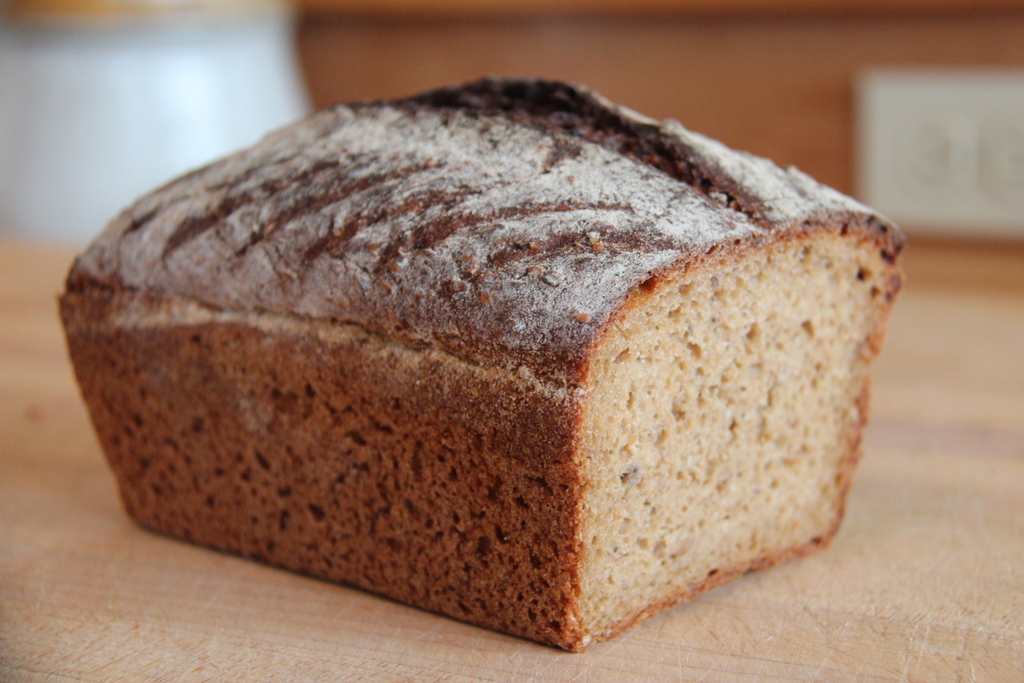
100% Einka Bread with sourdough starter by Mike Zakowski

100% Einka Bread with sourdough starter by Mike Zakowski


Mike Zakowski owner of The Bejkr in Sonoma California produced – among other loaves – a batch of wonderful einka bread loaves one evening in his tag-behind, wood oven that he carts all over to different events and farmer markets. A very accomplished, well schooled baker, Mike and I had a good time talking grains/breads etc. Also, I had the great pleasure of getting to know Jack and Ann Lazor from Butterworks Farm up at the tip of the Northeast Kingdom in Vermont.  Jack is a real Agrarian Elder who, among other things, wrote a book some time ago “The Organic Grain Farmer” and was the keynote speaker during the second morning. He spoke from the heart and true experience after 40 years of organic dairy and grain farming along the Canadian border. Great stuff; I could relate!

Back at home, the Bluebird staff has been packaging and delivering our fresh-milled products at a steady rate and with the usual eye for detail. Our grains continue to clean and mill well.  We just completed a power-upgrade by installing a variable frequency drive on our main flour mill. Now, once the mill is running to proper speed it uses only the power needed to maintain that speed.  Thanks to our electrician Tim Otonicar, we have plans to upgrade a couple other bigger motors as well, in effort to reduce our power foot-print.

We’ll begin cleaning seed this month for planting season – if and when it should arrive!! I’m reviewing soil tests, adding to my equipment wish list and – albeit mildly – beginning to feel the itch!  I hope this finds all of you enjoying the “shoulder season” and preparing for the glory of spring. It is going to be a dandy here, once spring decides to come for good. Until then.

Yours, Farmer Sam