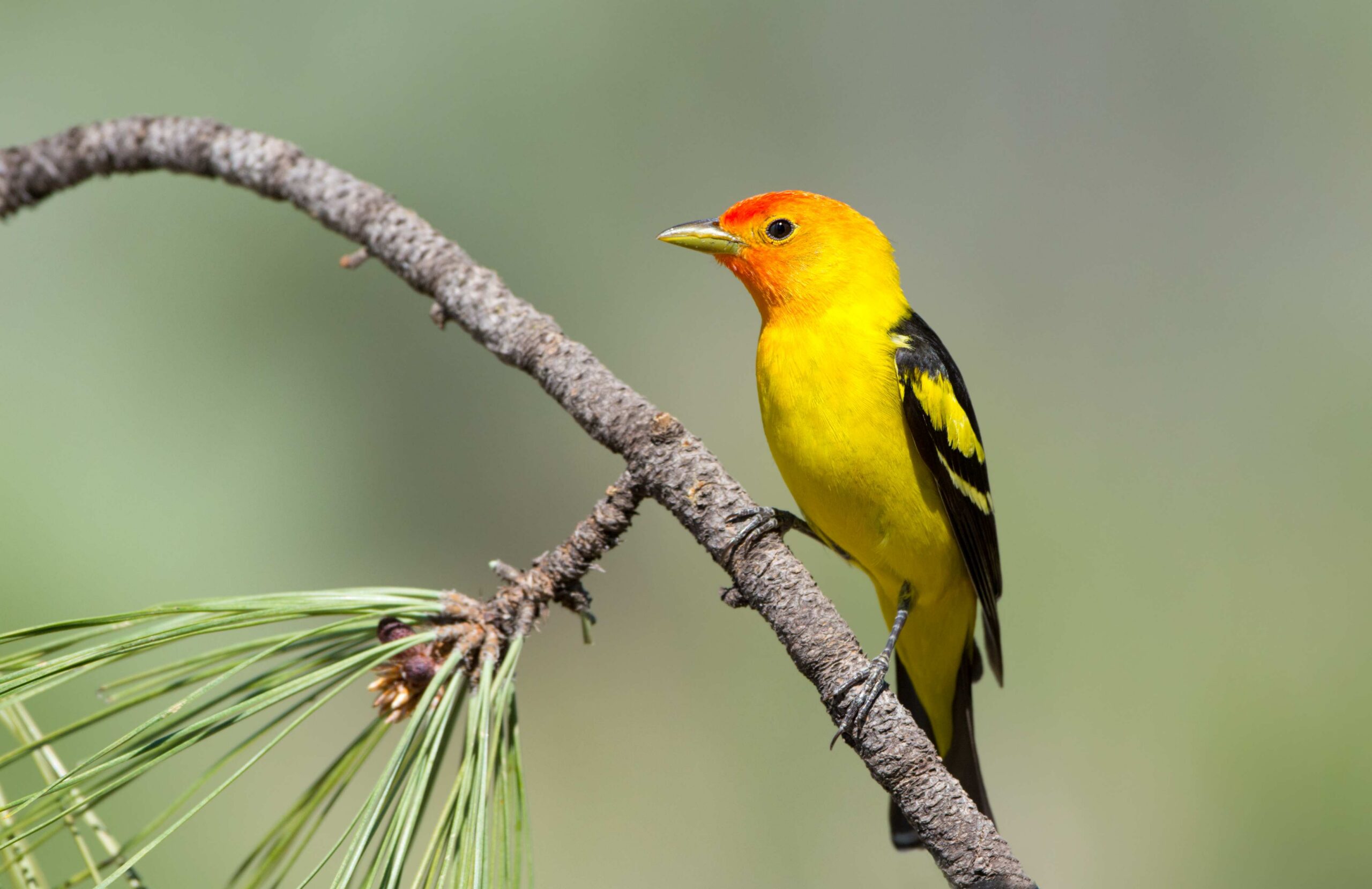
The Western Tanager is one of the latest arrivals of our birds around here. While it is more common up higher in the full coniferous forests, we are lucky to have them here with our mix of fruit trees and fir and pine on the North slope above the aspen. Although they come in late May, Tanagers seem to sanctify June. As we leave behind the most wonderful May this year, I heard a tanagers this morning as I sipped coffee and watched the bluebirds dip in the bird-bath. Then caught a glimpse as a brilliant male zoomed up to an aspen limb. This was a welcome site, to go along with the other birds and bird voices: Orioles, flycatchers, towhees, warblers to name a few. Lest us forget, the persistent and ever-present Chat… always chatting away with urgency down along the creek. And hummingbirds that are zipping about at full-throttle. I’ve been seeing young clutches of grouse about, and soon will surely see some ducklings as all our vernal pools were full this spring here in the foothills. What joy.
Down at the Farm the einkorn I seeded back in early May is growing along on all that residual moisture from the late fall/winter. I’ve yet to turn on any irrigation, and plants are in the 3-leaf stage of growth. We’ve had some nice warm rains as well, and that has kept everything green green. Further south in the Columbia Basin at our partners farm there his spring wheat is cranking along very nicely, and he looks to have an early August harvest. Out on the prairie the Schmaltz family has their crops in, and the spring wheat there looks strong despite working on merely ½” of rain! Once more, this is where true Regenerative farm practices shine – under adversity! Are we not experiencing a lot of that these days!!
The crew at the mill have been servicing various orders both big and small with our top-quality grains and freshly milled flours. Our supply of most everything is solid through the next 3 months so we should easily make it to harvest with our current inventory. Our inventory, you might recall, is largely stored in its field-run, or raw state and doesn’t get cleaned or milled too far ahead of order fulfillment. The freshness of the finished goods therefore is at their peak when it leaves our doors. Many of you know this difference.
That will not change moving forward. That won’t change despite the Farm Bill finally passing both House and Senate on the way to Big Desk! What was in the Farm Bill for most farmers?
A lot of the same safety nets: Strengthened crop insurance; an increase in reference prices for “key commodities” (Soy, corn, wheat) It also dilutes animal welfare rules for some livestock businesses, while it cuts SNAP and conservation funding in half. The cost to US taxpayers for the 5 year duration of the Bill rolls in at approximately $1 trillion.
Why is this important to the largely unsubsidized organic food industry? Because this is the continuation of an uneven playing field for our pricing. As food prices rise largely due to an increased pricing by distribution companies and store chains – little trickles down to producers. Thus, the subsidies. Yet none for healthy foods… One reason organic foods cost more; they more closely reflect the true price of production.
As the economy slows and here at Bluebird we continue on in the current – albeit uneven marketplace – our loyal customer base becomes ever more important. Our steady direct to consumer sales help us navigate these times, and we are fortunate so many understand the difference between our organic grain and flour products and most others. Thank you!
The short month of June holds the longest daylight and is the kick-off of the intense growing season. The combination of long sunny days and warming temperatures bring forth the ‘juices of June.” Here in the North Cascades, June can also be one of our dampest months. I will have to let you know how this June rolls out, come July!
Meanwhile, please get out and enjoy the long days, and congratulations to all graduates! A reminder that there will be more youth on the roads, both driving and recreating so heads up!
Yours,
Farmer Sam
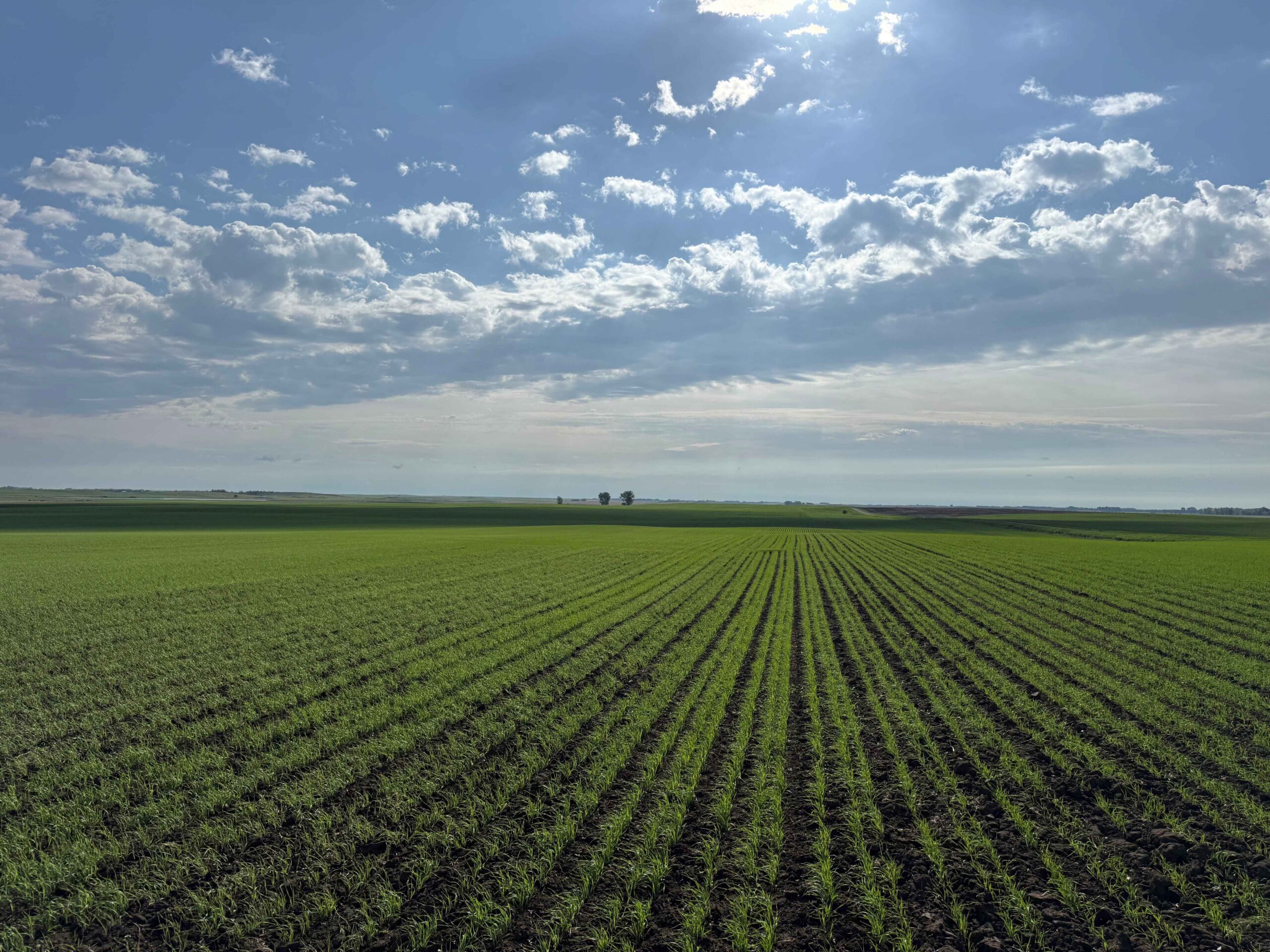
Certified Organic and Regenified Heritage Red Wheat at Schmaltz Family Farm. Just look at that soil biomass!