Reasons I often begin my Farmer Notes with birds: Birds add cheer. Birds can tell the season. Most people like birds. Birds seldom talk back and when they do it is worth listening to. If any of you readers would like me to change this format, please let me know. Otherwise, know that a new chorus of bird-song has begun out the kitchen door as first-sun floods the white hills, warms the south porch, and has a variety of new birds all tuned up about the day. These include nuthatches, juncos, finches, grosbeaks, chickadees, and I saw the first robin yesterday in the elderberry bush despite the dumping snow! Twice now a pair of bald eagles have swooped up and landed atop the big fir on our north slope. I could go on…
But let’s get to farming and organic grains and the floundering Farm Bill and all this other stuff because March is here! The wonderful and wild month that mixes up the hard and the soft, the warm and the cold, the still and blustery. As with November, it is often a month I feel goes unloved by some. This winter has seemed much like March the entire time and so perhaps that was a little overdone as we’ve had no real cold, nor any real warmth and day after day of gray skies. I admit this grew wearing, but it also makes one joyed all the more when the sunny days popped. Now, ample sun ushers in March and the changes have begun. As well, we have the early month full “Worm Moon” on the 3rd so that should perk up all the unground wageless workers so critical to our soils – full lunar eclipse notwithstanding.
Many, many years ago I once planted grain here in late March, albeit in the lower valley. It was spring rye and on a sandy 10 acres next to the river and it was predominantly to out-compete a bunch of old-growth thistle. There was just enough moisture to get it germinated, and it hardly rained a drop all spring but by late June that rye was 6 feet tall (see photo above)! This was one of my earliest love-affair with cereal grains that, ultimately, led me to beginning Bluebird. I do not believe I’ve planted any grains that early since, but it was a testament to the resilience and power of old cereals.
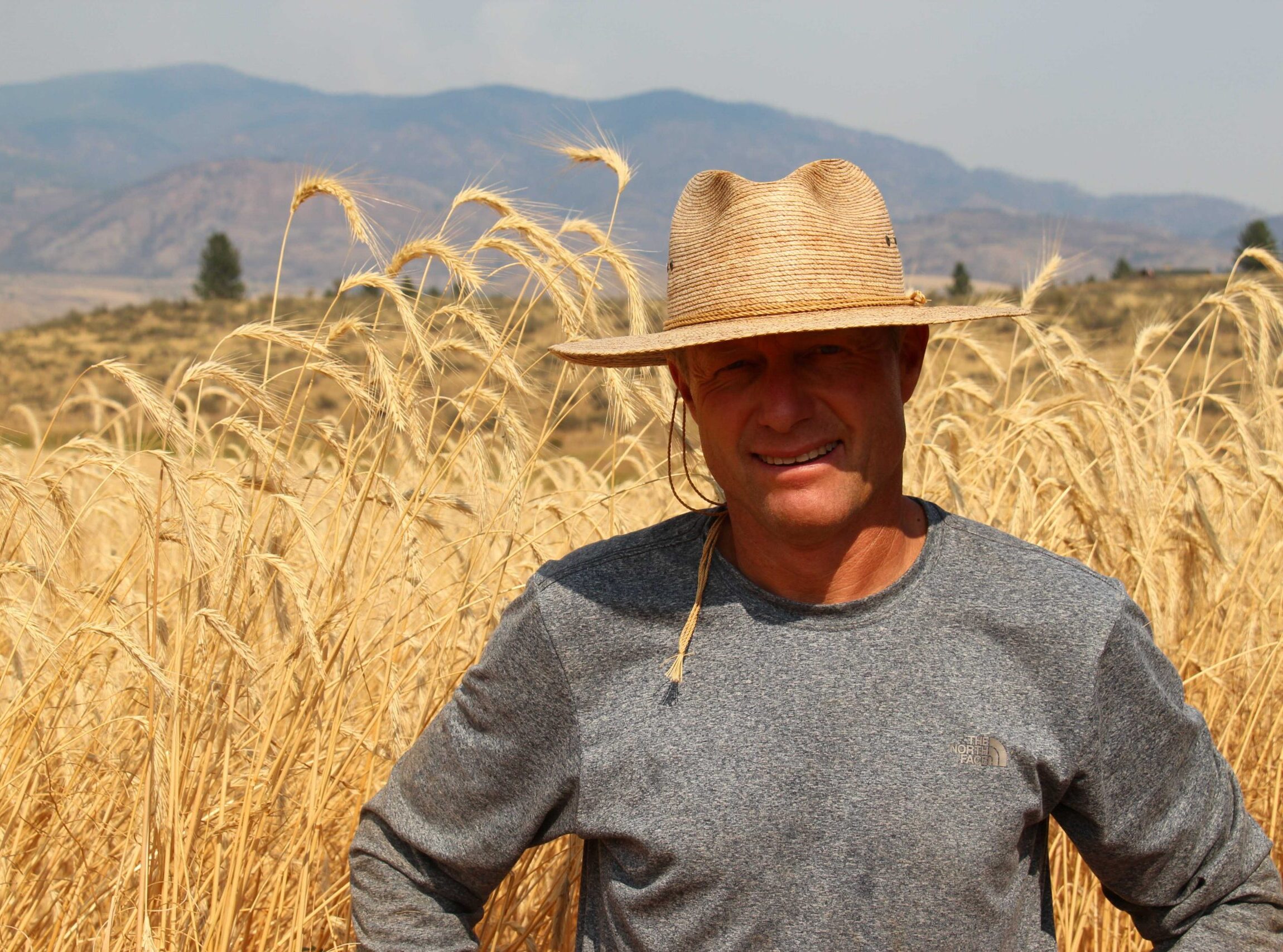
Photo of Sam Lucy standing in front of his six foot Rye crop, 2014.
Then came the emmer and, well, the rest as they say is history.
To be sure, this spring we will have as much ground moisture as I can ever recall; the complete opposite of that spring so long ago. All the fall rain and unfrozen ground has set up a deep moisture profile in our soils – several feet deep. As well, snow is far from finished falling in the mountains setting up ample water supply here in the North Cascades. Am I anxious for spring? Not exactly. As I age, I do not wish ahead for anything as much as I may have in the past, and I love winter but it is going to be a fun spring and by the end of March we will know just how fun.
We’ve been having a lot of fun here at Bluebird Grain farms, and the first 2 months of the year have been busy. With the overall agricultural sector in dire straits again this year, we are grateful for all of our loyal customers and the growing number of folks dedicated to healthy, good tasting food. To this regard, we are receiving an increasing number of inquiries about glyphosate. Are our grains glyphosate free?
Why glyphosate? Many of you know this is a main ingredient in Monsanto’s trademarked herbicide Roundup. Many of you also know there has been a lot of press about Roundup these past years, and part of that press is about the long-line of lawsuits against Bayer Crop Sciences now, since Bayer bought out Monsanto just prior to most of these suits. It is wildly confusing. These suits have been through a gamut of courts and there have been a lot of ruled settlements and a lot of unruled settlements and just days after Bayer’s proposed $7.25 billion settlement, our fearless leader in the White House declared increased glyphosate production as an urgent and national mandate!
What exactly is glyphosate? It is a chelating agent that binds macro and micronutrients essential for many plant processes. In other words, it kills plants by tying up all the goodies. There is strong evidence now that it has been so widely used in the past 50 years, it is throughout our entire food system, much like “forever chemicals.” So folks are taking note. Under the organic label herbicides are banned. However, residual amounts of past use can be present. In case you are curious, yes, you can march right into your local hardware store and still buy Roundup over the counter. Speaking of birds…
We’ve never used RoundUp here at Bluebird, of course, nor have our growers- or any other chemical input for that matter. As for the rest of the Farm Bill – it is a mess. The MAHA movement is at odds with Big Ag, both sides of the isles cave in on different things, tariff talk flies around and 46% more farms went out of business in 2025 than the previous year. What is there not to like? Almost all of it. As I remind you readers during this tax season, all this rhetoric is real and it comes from your taxes. For some fun reading, look up the current Farm Bill and where it stands, and how long it has been since we passed a new one.
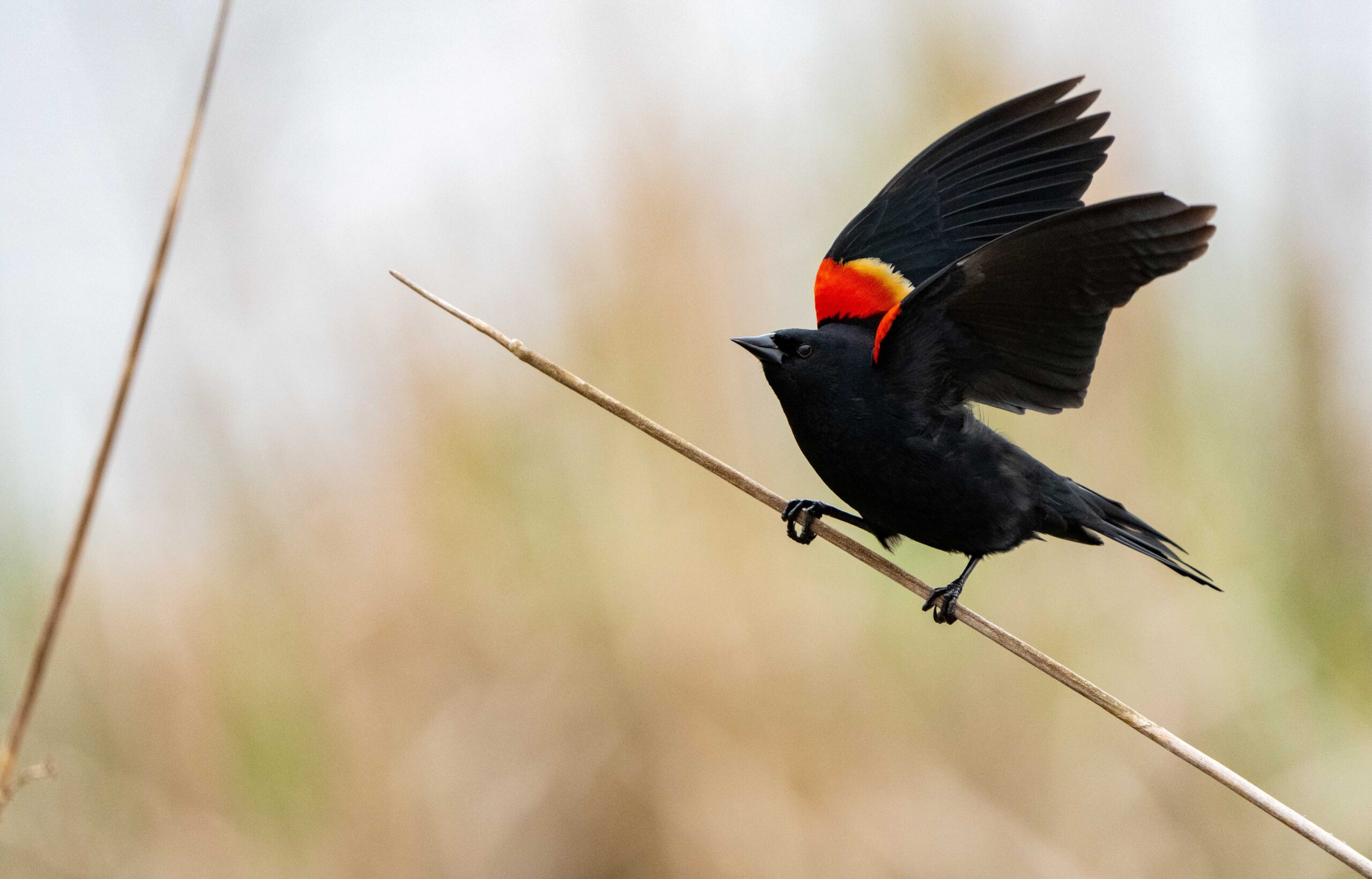
On a lighter note, there goes a red-winged black-bird! And by the end of the month, Spring will “officially” be on the calendar. While some of you are reading these notes, I will be on my way to Waterloo, New York as one of the guest speakers at Cornell University’s Organic Field Crops Conference. I will give a report in April Notes. Stay tuned!
And be well, Your Farmer, Sam