Before full dawn flycatchers, robins, and blue grouse are already awake voicing their day’s agenda to a world otherwise asleep. Not that Nature ever fully sleeps, but the idea of sleep permeates the darkest hour just before dawn. Birds you say…? Yes! I’ve never had so many responses than from those of you wanting me to keep birds in the opening of these Notes. I am flattered and thus, will keep birds safe here as I have all these past years. And what better month than April to delight in their arrival! Juncos, finches, meadowlarks; robins, phoebes and the brilliant mountain bluebirds. Just yesterday I saw the bright blue from a flock of males flitting about similarly colored bluebells that are popping up throughout the just-greening shrub steppe. No joke, April is the month of coming alive. No joke, on the 1st we got our obligatory snow squall to remind us Spring is a slow process here in the foothills!
As I mentioned in my March notes, this spring we are seeing a major recharge of the valley aquifer due in large to last fall’s constant rains upon unfrozen soil. All the seasonal potholes are brimming while freshets pour off the hillsides and down through various coulees dispute the valley’s meager snow pack this past winter. As I say, Nature never sleeps. April arrived not just with a little snow, but also on the cusp of the full Pink Moon. This month should be very fun to watch unfold indeed.
Thoughts of farming come to mind as soils begin to warm and the biology within comes to life. Living soils nurture food for life and that is what we are about here at Bluebird. I will be taking soil samples here shortly, to ascertain how we are doing with our cropping systems insofar as nutrient levels; however, one can tell a lot about the soil’s biology by just feeling the soil. Healthy soils have a softened texture and aren’t clotted but should adhere together with integrity once squeezed. Walking across a field one should feel bounce or lift to pliant soil, and one’s footprint should not be too pronounced. This in part is from leaving a certain amount of “litter” on the soil, otherwise known as “residue”. Organic farming is big on leaving plenty of litter to protect the soil. In true min-till regenerative farming, standing straw is common-place as we have discussed. This protects the soils, and one should easily be able to step on a probe, or shovel when sampling and need no extra effort to push right in.
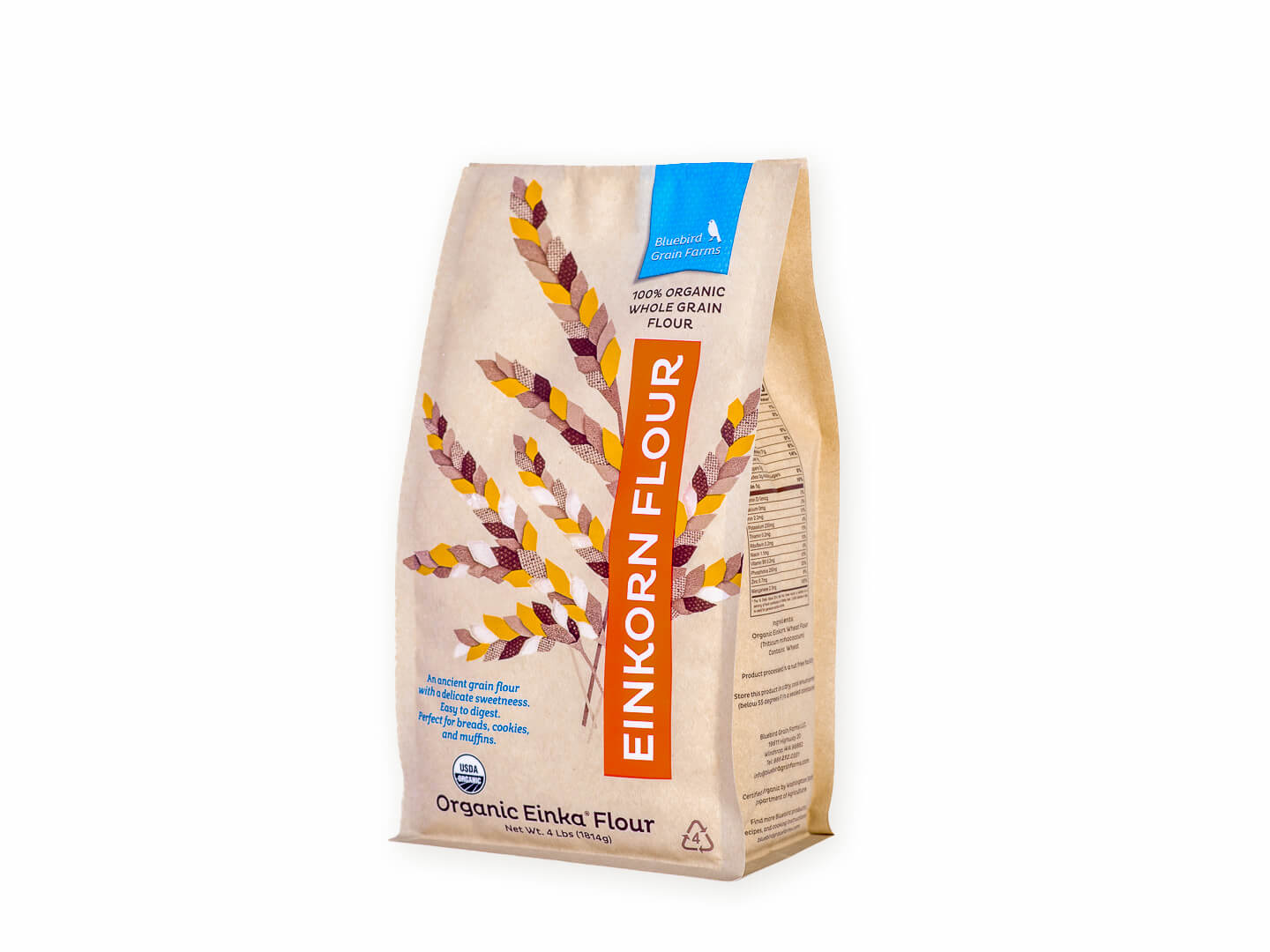
Of the things discussed at last month’s Cornell Organic Field Crops conference, tilth was not mentioned much. I found this interesting, though not too surprising. I did mention biology and tilth in my talk, however, trial results from various cropping systems performed by Cornell were measured largely by volume. This seems to be the leading goal of all cropping these days – certainly in non-organic farming but in organic, as well – yield. Price per bushel still leads the way for how a crop fits in rotation. This is real. However, some crops may not give the yield one hopes for, but may add other values to the whole. Ancient wheats, I was quick to point out, are one such crop. Under many circumstances the einkorn and emmer simply will not yield as high as more modern wheat will, yet they have other traits no longer found in wheat. First, they are a far more nutritious whole food. Second they will mine minerals from the field that more modern crops miss. Third, they add agronomic value in Regen/Organic systems that want as much biomass out there as possible since they grow so much taller than modern wheat. Also there is the allopathic compound. What can be seen as a bane to many farmers, is a boost to organic farmers trying to build biology. We come full circle here.
Please do not mis-read me; if we have good biology in our soils, and if we have nutrient balance higher yields will be realized regardless of the crop. What’s more, higher nutrient value in the crop will be realized most of all. And that dear reader, is what we are after at Bluebird Grain Farms. Superior nutrition.
There were some good parts of the conference and I was glad I was included. Cornell has some of the longer running organic field trials of any of the universities. I met a lot of folks I’d not met before. That is always a joy, particularly to see a new “crop” of farmers interested in organic agriculture. I was most fortunate to connect with an old friend Jay Goldmark from here in the Okanogan. Jay Goldmark grew up part of a wheat producing family on the Okanogan plateau and once grew a little organic wheat for Bluebird. He has since moved to New York state with his own family and runs a large organic feed production/processing facility Stone House Grain. There are too many highlights to mention from the weekend with Jay and his family, not least was a wonderful, impromptu evening at Levon Helm Studios next door in Woodstock where that very weekend one of the Midnight Ramble performances was taking place. Levon had started these some years ago in effort to pay for his cancer treatments. Levon is long gone but his daughter Amy introduced the show and what followed was some of the finest live music from the 16 – piece accomplished band which included Levon’s own grandson on drums! So what does this have to do with Farming? Look up the album “Dirt Farmer” that Levon and company recorded after a 22 year sabbatical since his last Band album. Followed next by “Electric Dirt – both recorded right there in that barn studio, with cover footage from a nearby farm.
Speaking of art, those of you who enjoy the ramblings from yours truly – we still have a few copies of my latest book “Colors” available from our web store. The opening piece is a poem titled Earth Day and it is a fair lead right into April as the waters’ rise.
Earth Day is every day on my calendar. “Officially” it is this coming 22nd. I encourage you all to give our Mother some extra love on this day, and at least a kiss on all others.
Cheers to Spring!
Farmer Sam