Tag: Sam Lucy

The Western Tanager is one of the latest arrivals of our birds around here.  While it is more common up higher in the full coniferous forests, we are lucky to have them here with our mix of fruit trees and fir and pine on the North slope above the aspen.  Although they come in late May, Tanagers seem to sanctify June.  As we leave behind the most wonderful May this year, I heard a tanagers this morning as I sipped coffee and watched the bluebirds dip in the bird-bath.  Then caught a glimpse as a brilliant male zoomed up to an aspen limb.  This was a welcome site, to go along with the other birds and bird voices: Orioles, flycatchers, towhees, warblers to name a few.  Lest us forget, the persistent and ever-present Chat… always chatting away with urgency down along the creek.  And hummingbirds that are zipping about at full-throttle.  I’ve been seeing young clutches of grouse about, and soon will surely see some ducklings as all our vernal pools were full this spring here in the foothills.  What joy.

Down at the Farm the einkorn I seeded back in early May is growing along on all that residual moisture from the late fall/winter.  I’ve yet to turn on any irrigation, and plants are in the 3-leaf stage of growth.  We’ve had some nice warm rains as well, and that has kept everything green green.  Further south  in the Columbia Basin at our partners farm there his spring wheat is cranking along very nicely, and he looks to have an early August harvest.  Out on the prairie the Schmaltz family has their crops in, and the spring wheat there looks strong despite working on merely ½” of rain!  Once more, this is where true Regenerative farm practices shine – under adversity!  Are we not experiencing a lot of that these days!!

The crew at the mill have been servicing various orders both big and small with our top-quality grains and freshly milled flours.  Our supply of most everything is solid through the next 3 months so we should easily make it to harvest with our current inventory.  Our inventory, you might recall, is largely stored in its field-run, or raw state and doesn’t get cleaned or milled too far ahead of order fulfillment.  The freshness of the finished goods therefore is at their peak when it leaves our doors.  Many of you know this difference.

That will not change moving forward.  That won’t change despite the Farm Bill finally passing both House and Senate on the way to Big Desk!  What was in the Farm Bill for most farmers?

A lot of the same safety nets: Strengthened crop insurance; an increase in reference prices for “key commodities” (Soy, corn, wheat)  It also dilutes animal welfare rules for some livestock businesses, while it cuts SNAP and conservation funding in half.  The cost to US taxpayers for the 5 year duration of the Bill rolls in at approximately $1 trillion.  

Why is this important to the largely unsubsidized organic food industry?  Because this is the continuation of an uneven playing field for our pricing.  As food prices rise largely due to an increased pricing by distribution companies and store chains – little trickles down to producers.  Thus, the subsidies.   Yet none for healthy foods…  One reason organic foods cost more; they more closely reflect the true price of production.

As the economy slows and here at Bluebird we continue on in the current – albeit uneven marketplace – our loyal customer base becomes ever more important.  Our steady direct to consumer sales help us navigate these times, and we are fortunate so many understand the difference between our organic grain and flour products and most others.  Thank you!

The short month of June holds the longest daylight and is the kick-off of the intense growing season.  The combination of long sunny days and warming temperatures bring forth the ‘juices of June.”  Here in the North Cascades, June can also be one of our dampest months.  I will have to let you know how this June rolls out, come July!

Meanwhile, please get out and enjoy the long days, and congratulations to all graduates!  A reminder that there will be more youth on the roads, both driving and recreating so heads up!

Yours,

Farmer Sam
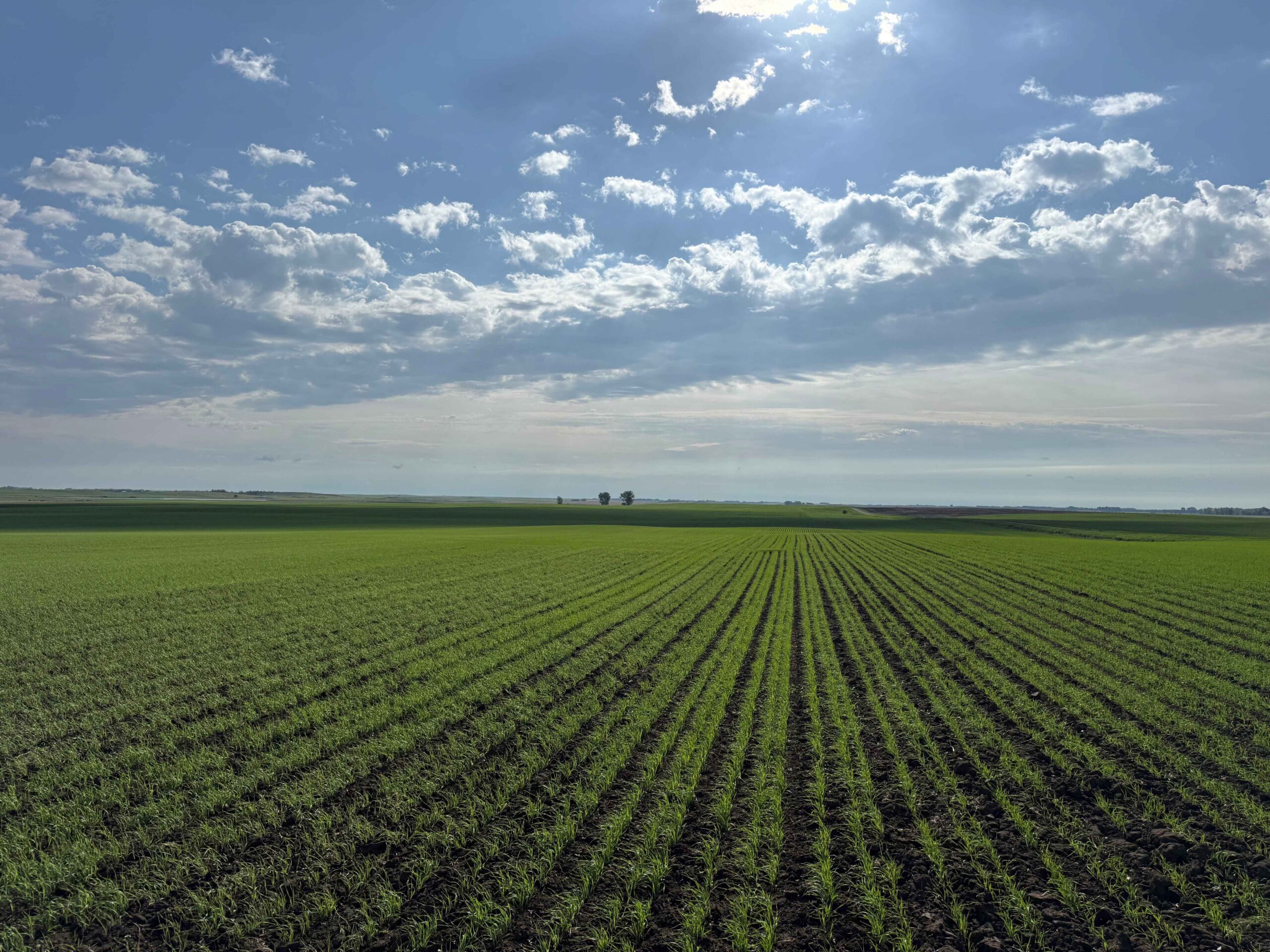
Certified Organic Regenified Grain Fields

Certified Organic and Regenified Heritage Red Wheat at Schmaltz Family Farm. Just look at that soil biomass!
One major attribute of the House Wren is  – like a morning Rooster – they keep you from sleeping in too long.  However, having had many roosters over the years I prefer the chatty voice of the morning wren.  In actuality they are not the first to wake; robins are the harbingers of dawn.  Some mornings I swear they get going before dawn!  And at the close of day, robins are one of the last to bid the day farewell.  A bird of many moods and voices, the Robin never ceases to amaze me with beautiful songs.  Its evening song can be the most urgent, and most sorrowful at the same time.  Alas, here we are with the birds again…

Birds can tell much about the health of a place, as fish can with a stream.  When I see a multitude of birds in our fields it gives me a boost and makes me think that the soils are alive and things are “good in the hood” so to speak.  Time will soon tell because as the full Flower Moon begins to fade, I recently finished sowing the  first field of our Einka einkorn.  I always try to use the power and pull of the full moon in hopes the high energy within will give the seeds extra vigor.  Once again, we worked to select out our top grade seedstock here at Bluebird – mostly in thanks to our lead Steve White who these past years has perfected the seed-cleaning line – and made sure I had top shelf, high density grain to fill our grain drill with.  

Given the mild spring, soil temperatures are plenty warm enough for germination despite  sowing seed the first week in May which is on the earlier side for us up here against the North Cascades.  Combined with all the residual moisture from the heavy late-fall rains, ground that never really froze and following our heavy cover crop of winter peas, I expect a great stand to pop up here any day.  Of course, Mother Nature could once again prove me wrong.  I will soon let you know.  There is also the off-chance that it may start raining one of these days, too!  We didn’t get a drop the whole month of April after the first couple days.  Not unusual here.  Our spring rains often come in the second half of May, and in June.

Spring in the Methow is rivaled by nowhere that I know of.  This marks my 33rd year farming here in the Methow and with the varying green hillsides of bunchgrasses, the lime-green of fresh popping aspen leaves, the full bloom of balsamroot and lupine –  the air is filled with the sweet, poignant smell of the earth’s juices.  It is an easy reminder to this farmer to treat our Earth with the up-most of respect and grace and this is sometimes conflicting because, as I have mentioned before,  “farming”, per se, is an invasive activity.  While this is not lost on me, it is one reason we began Bluebird with the ancient emmer and soon added the more ancient einkorn.  These are wild varieties and are gentler on the earth having learned to thrive for 10,000 years.

The nutrition that they give us is what all wheat used to contain.  While not big yielding grains that our modern farm systems strive for, nutrient-wise they are a power punch of vitality that is easily digestible for most.  Truth to tell, this is one reason we coined the phrase here at Bluebird: Ancient Grains for Modern Times.

Farm Bill update… Argh!  I will try not to sink here.  It is no secret that most “ Agriculture” is up against the wall for a myriad of reasons.  However, the recent 850 page version of the 2026 Farm Bill passed the House on the final day in April, and is on the way to the Senate.  The 2018 version has been running on extensions for over 3 years now.  Some refer to this version as a “skinny bill” but it contains 12 titles and endless provisions and sections and… well, in large, continues to prop up a broken food system through loans, price support insurance etc. all with continued tax dollars even as 41% more farms went out of business last year than the previous.

One bright spot is the lip-service paid to Local Farm to Community Program wherein the USDA must enter into cooperation with groups that support local producers with the distribution of fresh and frozen produce – at least 25% of the time.  Funding for this remains unclear?  Meanwhile, how about organic provisions…?  Ha, even the small cost-share program most of us Organic Farmers partook in so far has disappeared.  This was to help with our certification fees, or as I like to say “penalty” for growing organic.  I would say the very best news from the latest bill is that many of our legislators held strong and did not let Bayer Crop Sciences off the hook with all the Round-up lawsuits by passing provisions that would lay the blame on the users.  Complicated, but this would have been a huge loop-hole.  As MAHA stands in the shadows, both at odds, and caving into the current Administration I am confused like many as to what the USDA’s real path forward is?  Or isn’t.

Meanwhile ‘back at the Ranch’… No glyphosate, no subsidies, no problem.  Because we have so many of you loyal and informed customers who want to purchase clean food from our  tried and true small custom mill that always delivers fresh whole grain flours and grains week in week out and has for over 20 years now.  Thank you, and a special shout out goes to all the graduates nation-wide who will be moving on from college and into a new journey this month.  You are a smart generation who has as many challenges as any to resolve.  Rest up, and eat well!

Cheers,

Farmer Sam

Before full dawn flycatchers, robins, and blue grouse are already awake voicing their day’s agenda to a world otherwise asleep.  Not that Nature ever fully sleeps, but the idea of sleep permeates the darkest hour just before dawn.  Birds you say…?  Yes!  I’ve never had so many responses than from those of you wanting me to keep birds in the opening of these Notes.  I am flattered and thus, will keep birds safe here as I have all these past years.  And what better month than April to delight in their arrival!  Juncos, finches, meadowlarks; robins, phoebes and the brilliant mountain bluebirds.  Just yesterday I saw the bright blue from a flock of males flitting about similarly colored bluebells that are popping up throughout the just-greening shrub steppe.  No joke, April is the month of coming alive.  No joke, on the 1st we got our obligatory snow squall to remind us Spring is a slow process here in the foothills!

As I mentioned in my March notes, this spring we are seeing a major recharge of the valley aquifer due in large to last fall’s constant rains upon unfrozen soil.  All the seasonal potholes are brimming while freshets pour off the hillsides and down through various coulees dispute the valley’s meager snow pack this past winter.  As I say, Nature never sleeps.  April arrived not just with a little snow, but also on the cusp of the full Pink Moon.  This month should be very fun to watch unfold indeed.

Thoughts of farming come to mind as soils begin to warm and the biology within comes to life.  Living soils nurture food for life and that is what we are about here at Bluebird.  I will be taking soil samples here shortly, to ascertain how we are doing with our cropping systems insofar as nutrient levels; however, one can tell a lot about the soil’s biology by just feeling the soil.  Healthy soils have a softened texture and aren’t clotted but should adhere together with integrity once squeezed.  Walking across a field one should feel bounce or lift to pliant soil, and one’s footprint should not be too pronounced.  This in part is from leaving a certain amount of “litter” on the soil, otherwise known as “residue”.  Organic farming is big on leaving plenty of litter to protect the soil.  In true min-till regenerative farming, standing straw is common-place as we have discussed.  This protects the soils, and one should easily be able to step on a probe, or shovel when sampling and need no extra effort to push right in.

Of the things discussed at last month’s Cornell Organic Field Crops conference, tilth was not mentioned much.  I found this interesting, though not too surprising.  I did mention biology and tilth in my talk, however, trial results from various cropping systems performed by Cornell were measured largely by volume.  This seems to be the leading goal of all cropping these days – certainly in non-organic farming but in organic, as well – yield.  Price per bushel still leads the way for how a crop fits in rotation.  This is real.  However, some crops may not give the yield one hopes for, but may add other values to the whole.  Ancient wheats, I was quick to point out, are one such crop.  Under many circumstances the einkorn and emmer simply will not yield as high as more modern wheat will, yet they have other traits no longer found in wheat.  First, they are a far more nutritious whole food.  Second they will mine minerals from the field that more modern crops miss.  Third, they add agronomic value in Regen/Organic systems that want as much biomass out there as possible since they grow so much taller than modern wheat.  Also there is the allopathic compound.   What can be seen as a bane to many farmers, is a boost to organic farmers trying to build biology.  We come full circle here.

Please do not mis-read me; if we have good biology in our soils, and if we have nutrient balance   higher yields will be realized regardless of the crop.  What’s more, higher nutrient value in the crop will be realized most of all.  And that dear reader, is what we are after at Bluebird Grain Farms.  Superior nutrition.

There were some good parts of the conference and I was glad I was included.  Cornell has some of the longer running organic field trials of any of the universities.  I met a lot of folks I’d not met before.  That is always a joy, particularly to see a new “crop” of farmers interested in organic agriculture.  I was most fortunate to connect with an old friend Jay Goldmark from here in the Okanogan.   Jay Goldmark grew up part of  a wheat producing family on the Okanogan plateau and once grew a little organic wheat for Bluebird.  He has since moved to New York state with his own family and runs a large organic feed production/processing facility Stone House Grain.  There are too many highlights to mention from the weekend with Jay and his family, not least was a wonderful, impromptu evening at Levon Helm Studios next door in Woodstock where that very weekend one of the Midnight Ramble performances was taking place.  Levon had started these some years ago in effort to pay for his cancer treatments.   Levon is long gone but his daughter Amy introduced the show and what followed was some of the finest live music from the 16 – piece accomplished band which included Levon’s own grandson on drums!   So what does this have to do with Farming?  Look up the album “Dirt Farmer” that Levon and company recorded after a 22 year sabbatical since his last Band album.  Followed next by “Electric Dirt – both recorded right there in that barn studio, with cover footage from a nearby farm.

Speaking of art, those of you who enjoy the ramblings from yours truly – we still have a few copies of my latest book “Colors” available from our web store.  The opening piece is a poem titled Earth Day and it is a fair lead right into April as the waters’ rise.

Earth Day is every day on my calendar.  “Officially” it is this coming 22nd.  I encourage you all to give our Mother some extra love on this day, and at least a kiss on all others.

Cheers to Spring!

Farmer Sam

It stands to reason that what I’ve always considered one of the longest months is followed by the shortest.  Hello February.  Some years it could be spelled more appropriately as “Feburrary”.  Last year, our coldest temps were in February and I recall other years we received a fair bit of snow.  However, I will be surprised if that is the case this year.  Maybe the cold, but our big moisture cycle beginning back in October 025’ lasted up to the first of this year, and now has cycled out.  I am grateful for all the moisture we did pick up, as our snow pack on the valley floor remains quite thin.

As to the long month of January:  Goodbye.  It seemed plenty long this year as clear days were few, fog and gray skies dominated while hardly a snowflake fell.  Despite the gray days and some chilly temperatures at times, the silence of a frozen landscape in of itself held beauty.  Frosted trees; bitterbrush and sage coated in a rhime made them less skeletal looking and more alive.  Deer could be first noticed by their crunching footsteps before actually catching sight of them.  Our Labrador Clyde loved rolling in the snow at the top of our hill here, then sliding all the way to the bottom on solid crust.  Finches pilfer the feeder, and chickadees take a second seat.  Here from the  afternoon table, I notice our first nuthatch atop the elderberry.  Owls speak before dawn and coyotes sanctify twilight.  On my evening walk last, I wondered how a landscape so quiet and chilled could be so noisy!

February – being short to March – has always been a month when thoughts turn to farming as daylight grows.  Our production rotation is being worked out for another season which fits into the following season, and the seasons after that.   Larger the rotations are, the richer the soils stay and the denser our grains become.  With last year’s  red wheat testing 16 percent protein, emmer 17.5, and our einkorn testing almost 22, Bluebird quality grains certainly add nutritious punch to your menu.  Each year we challenge ourselves to hit a higher notch above the last, and this tells us how our soils are balancing out.  Mineral balance in the soil equivalates to that balance in our grains and flours.

Speaking of, here at the Farm our mill has been humming with fresh batches of grains and flours being turned out weekly.  Thus, the ship-out door has been busy as well.  Some might agree there is a lot of uncertainty floating around these days, and at times it is hard to know what is true.  Rest assured that we have a great supply of all our Bluebird products, and we remain consistent with quality and delivery.  Our crew here, both new and seasoned, is jiving right along.  I have spent a fair amount of time the past couple weeks on the fulfillment floor and time flies right by!  Thank you one and all for continuing to buy our products.

With the gathering daylight comes a little better chance of spending more time outside each day.  I always try to get at least a walk in with the dogs, and on the best days an early morning or evening ski.  Although our snowpack is paltry, the ski trails have been good and as long as you put on creeper chains for your boots, the walking isn’t bad either.  These are my times for reflection and time to remember how fortunate we are that Bluebird has grown over 20 years, and Brooke and I remain still such a part of it.  One of the biggest joys for me is talking to and meeting customers.  Please stop by.  If I’m not there one of our staff is always happy to help.  

Soon after I moved to the Methow in the early 1990’s I met a gal named Wanda Myers.  We became good pals.  Wanda had grown up here on a homestead on a country road with a 10 acre apple orchard behind her parent’s place.  After high school she went to work for a while as a back-country Forest Service and trail crew.  She showed me a lot about this beautiful valley I’ve since called home.  Wanda passed to the other side early in January, after many years of staying just ahead of a nasty cancer.  On what would be our last walk together around Thanksgiving, we stopped and sat on the banks of  Methow River not far from her place.  We watched the water ouzels play about the rocks with their suction-cup feet.  We saw the last of the  salmon come to spawn.  A pair of bald eagles sat awaiting.  We listened then, almost in unison, we mentioned how we loved this place more all the time and could never possibly take it for granted.  Because Wanda loved this place, and loved her life so much it is all the harder to say goodbye.  However, she never quit on the moment, and enjoyed each one as if it were the last.  I am grateful to know this truth.  Peace, my friend.  

And peace to all of you.  Enjoy February, because March comes next and one never knows how the shifty moods of March will play out!

Yours,

Farmer Sam

I begin these first-of-the-New Year notes on the cusp of the full Wolf Moon.  How can one not love that name?  As we strolled up the driveway last night with the stars still vibrant despite the growing brightness, the only sounds were that of an owl and a chorus of coyotes.  Although not the howl of wolves, a couple weeks earlier when daughter Mariah and I went hiking for a Christmas tree not far from our place, there in the fresh snow to greet us was a heavy, solitary line of wolf tracks.  To be outside at night under the waxing Wolf Moon knowing there are indeed wolves nearby sanctifies the mood of January for me.  What’s more, it fills me with an inner glow of hope.

Then there are all the finches new to the feeder, and juncos, chickadees, nuthatches and quail scattered beneath.  Following a truly torrential month of December for most here in the Northwest, we ended, finally, with some cold and snow – enough to whiten the hills and change the atmosphere just in time for the holiday season.   We feel grateful, and so enjoyed this time as I hope many of you did, also. 

2025 was another interesting year.  Given a myriad of uncertainties – economic and otherwise – Bluebird Grain Farms continued to hold its own.  In the final quarter of 2025 we engaged with a fair amount of prep work for expanded growth in 2026.  Aside from securing the winters’ on-site inventory of our high quality organic grains, travel plans were set for trade shows, speaking engagements, marketing material and such.  As things tighten, 2026 is going to be a year I believe where many of us are going to make more choices of value and really make decisions based on those values.  Food comes to mind.  

There has been much rhetoric this past year about health initiatives and such, and federal funding of $700 million has been promised for a “Regenerative Pilot Program”.  This includes helping farms make the switch to more soil friendly, and soil building farming practices.  Most of these funds will be channeled through existing programs like the NRCS and other branches of the USDA.  I am very interested to see how all this actually plays out.

Having the good fortune to already work with one of the premiere Regenerative certified farms in the country, we have seen first hand the eventual benefits of dedicated Regenerative practices.  Without question this is how we hope the world farms one day.  It would reduce the landmass needed as crop volumes gradually increase.  It will cut way back on carbon emissions: Minimized soil disturbance; minimal crop inputs; more nutritious food; less waste all contributing factors in this.  Twenty-five percent of the world’s carbon emissions are generated by agriculture.  True Regenerative farm practices would reduce this significantly.  I hope these funds go to those that want to make the change for generations, and not just dip into a short-term money pool.  We need the next generations of farmers to embrace true Regenerative farming. 

Meanwhile, we plan to keep chugging right along here at Bluebird Grains doing what we set out to do 20 + years ago and continue to practice daily and that is to inspire change, and offer up the highest quality whole grains and whole grain flours milled to order.  Authenticity is not guaranteed by a label.  Bluebird carries a lot of labels, too!  Rengentified, Organic, Kosher, Whole Grains, SQF… just to name a few.  And while we go through all of these annual inspections and pay the subsequent fees, it is our original story that we lean on the most and want to make sure all of our customers remain confident in.  Being pioneers in the small-mill/local grain movement, and first in the ancient wheat movement, here at Bluebird we aim to always stay true.  Fear not!  We’ve no intention of deviating. 

So… Here is to 2026!  Most of all, here is to your health.  We want to continue our role in promoting good food for all people.  My New Year’s resolution is to work to get more whole and nutritious foods into our schools and health care institutions. Please reach out of you have any creative collaborations you want us to entertain. We value local direct connections the most. 

Cheers,

Your farmer, Sam


“See how upon bare twigs they lie, 

Raindrops, lately of the sky – “


So begins the autumn poem After Rain by Rachel Field.  It sets the tone for the mighty month of November very well.  A month sometimes left unloved by many; November is one I love the most.  And rain we have had!  Perfect and pure; unabashed and soothing to the once parched countryside. I have mentioned before how Mother Nature always seems to even things out, and fall rains before the snow is a recipe for moisture recharge that will be most noticeable come spring.  The mountains themselves are already filling with snow which will soon be here in the Valley for keeps.  Amen.

As I tap these keys chickadees bounce about the aspen limbs that droop with their load of orange leaves not-quite shed.  The woodstove crackles, and snow flakes now intermix with the rain.  Robins rejoice in the easy pickings from the lawn, but their time is drawing short.  Ravens caw about during weather breaks; coyotes sing before dark; owls hoot sanctifying the cooling, and much faster falling evening time than a month ago.  One day sodden skies, the next sharp and brilliant with gathering afternoon shadows catching up in hillside coulees, and casting across golden grasses. One can fairly hear the land sigh in relief after the business of summer.   How can one not relish in this month of November?  

October stayed dry and mild and beautiful throughout the first couple weeks.  This enabled me to do a bit of fall field work, including some deeper undercutting (chisel plow) on the home field where we have a few perennial grasses encroaching after years of minimal cultivation.  Given a window of late dry weather – not likely at this viewing – I will pack down the plow ridges and try to get the field as prepped now and with this fall moisture, for next spring’s early crop.  The minimal amount of spring disturbance, the better for moisture retention and the less apt I am to stir up weed-seeds I don’t want.  My fall soil tests are showing balanced minerals, and good levels of available nitrogen due to the heavy cover cropping.

As has become an annual fall pilgrimage of sorts, last month I set off for the northern prairies with our Labrador Clyde riding along.  First along the various rivers of Montana, and then into North Dakota.  I love North Dakota; I love the prairie fall.  Good news for me, our partner and long time, well established organic and regenerative farmers the Schmaltz family happen to be my destination.  Year-long I look forward to this trip and this year was no disappointment as Blaine, Suzie and family welcomed us as always, and we spent a few days talking about farming, walking the land for pheasants, and taking to heart the whole ecosystem and wildlife sanctuary they have created through their farming practices.  Good stuff.  Their farming not only has made the wildlife happy, but the integrity of their harvests is rivaled by few as their lands now work for themselves keeping in balance.  We are fortunate to have such great farming partners and friends!  What they have achieved is a testament to the generational dedication to the land, and a stalwart work ethic that doesn’t always exclude some fun and games at times.  In regenerative farming, regeneration of all energy is a critical part, not the least of which is human energy and zest.

The quality of these grains shows when we go to hull and clean them, and then when we mill them into flour and ultimately show up on your plates!  From the vast wide open, to your cozy little homes, restaurants, and schools you can trust the organic and regenerative certification labels that come with Bluebird products.  This is a food system that is secure and consistent and healthy.  Elsewhere throughout the American “bread basket” maybe not so much.

It may not surprise some of you but it was commonplace to see mounds of soybeans, some corn and wheat surrounding various elevators.  Tariffs anyone?  A cruel irony here is the fact many of these “independent growers” are not so.  Tied to the realities and whims of a global market, in many cases tied to the banks, many of these subsidized growers are stuck in a bad spot.  Does it break my heart to know there may not be near as many GMO crops flooding the delicate prairies lands come spring?  No.  Does it break my heart to see families under such duress – some of it rather sudden?  Of course.  Would I rather see our government take this opportunity to begin subsidizing healthy crops taken from healthy, biological soils?  Absolutely.  Now is the time to double down on our domestic food systems, and make sure this supply feeds everyone in this country first of all.  We can do this.  While doing this, we may find we do not need near the sheer volume of some crops, but might instead enjoy a greater variety.  Yumm.

Which brings us back to our farm tucked away up here in the growing-cold foothills of the North Cascades.  We are doing what we do 5 days a week, year round and welcome you to drop by our small but vibrant entrance store.  Our staff is awesome, and we will be sure and get you what you need whether at our door, through the various stores we sell into, or on the web.  Times are spooky, but let’s not give up the ghost just yet.  Food security is vital to society.  This has always been.

Gather round, give thanks to our Mother Earth, and be kind to one another and in particular, those who may be in more need.

Yours, Farmer Sam

I can’t begin to list the reasons why I love birds.  It might be their cheerful, if not urgent dawn voice?  Is it the slower pace of their evening song?  Their color, their fragility, their resiliency?  Along with so much more, birds sanctify this place spring thru autumn.  When the days grow hot – an unwavering July promise – I am glad birds wake me each dawn and lull me to sleep at twilight.  Yes, 10 o’clock twilight this time of year is bedtime for some farmers!  

What does this have to do with Bluebird Grain Farms?  In some ways, everything.  Twenty years ago when we thought of what to name our farm, we settled on a bird that sanctifies this place we live and love most of all.  As well, by farming in a fashion that respects all of Nature, birds signify the health of a countryside the same way fish might reflect the purity of a stream.  When we have large varieties of birds at the Farm it makes us feel good knowing they are here for the habitat and food, whether creepy-crawlies in the soils, or the actual crops themselves.  Our partner growers feel much the same, and we often swap photos of the different wildlife at our separate farms.

Lots of birdlife means healthy soil and rich grains that come from these soils.  Of course, we take water samples and soil samples but there are few substitutes for actually strolling the fields, touching the earth and seeing what we see with our own eyes and the feeling it gives.  It may not always be positive, either.   Maybe a crop isn’t looking as we’d hoped, or there are field edges that need improvement.  Maybe we are having to water a little more than planned, or there is extra weed pressure.  These things do not always show up on tests.  As scientific as some have tried to make agriculture, last time I checked it remains inexact. Intuition can tell me a lot and generally if the early morning field is active with birds, bees, deer – I know we have something good going on.

And we do have good things going on here at Bluebird!  Lots of good summer visitors show up in our tiny valley to enjoy this scenic place.  Customers – both old and new – bring their smiles to the Farm door.  My favorite part is meeting new customers, or customers that have known us for years through the internet but stop by and visit for the first time!  There are few substitutes for authenticity.   We feel very fortunate to be part of a number of very authentic, and very small businesses here in our valley that work hard day in and day out to serve customers with consistency and quality.

Twenty years ago when we started Bluebird Grain Farms, Brooke and I knew we needed to offer the freshest and highest quality 100% organic whole grains and flours.  We knew we needed a brand with a signature that spoke to our ethics.  In that 20 years, many hatches and generations of bluebirds have come and gone, but each turn around the sun has taught us a ton, and in the end has kept us right here, doing what we have always done.  I am grateful we have been able to grow to meet your demands.  I am grateful for the support we have always had and continue to have as we maintain quality and consistency in growingly uncertain times.  Solid food supply will never go out of style.  For sure, this was one reason our forefathers fought for their independence!

June stayed cloudy at times, somewhat cool, but never delivered our rains.  July has come in hot – literally.  Residual moisture from the late fall rains last year, then the solid snowpack on unfrozen ground is what has kept the hills somewhat green all the way until now.  That is all about to change, and we are bracing for what could be a smoky and somewhat scary next couple of months.  Not a great scenario, yet Nature always holds surprises.

With our cover crop peas all turned under, and our summer cover of buckwheat up and running, I guess all there is to do is keep milling, packing and delivering our best around the West.  Oh, and maybe go fishing??  Or hiking?  Or swimming!

A family of grouse pecks around the clover just outside my door as I write these notes.  This month’s notes are dedicated, most of all, to our long lived Labrador named Tucker who made it to 15 and knew a thing or two about grouse, and cover crops, and how to wag his tail at most everyone he saw.  We said goodbye to him last month.  Now he rests down by the cool creek along with our others.  He wasn’t necessarily a big fan of summer anyway, though he did like to fish!

Democracy is perhaps the hardest form of government to maintain.  Two hundred and fifty years ago our forefathers gave us the opportunity to try and despite the ups and the downs, now is no time to quit.  Let’s celebrate by rejoicing in the freedoms we still have in this great country.  

Cheers, Tucker.  Cheers, America

Farmer Sam

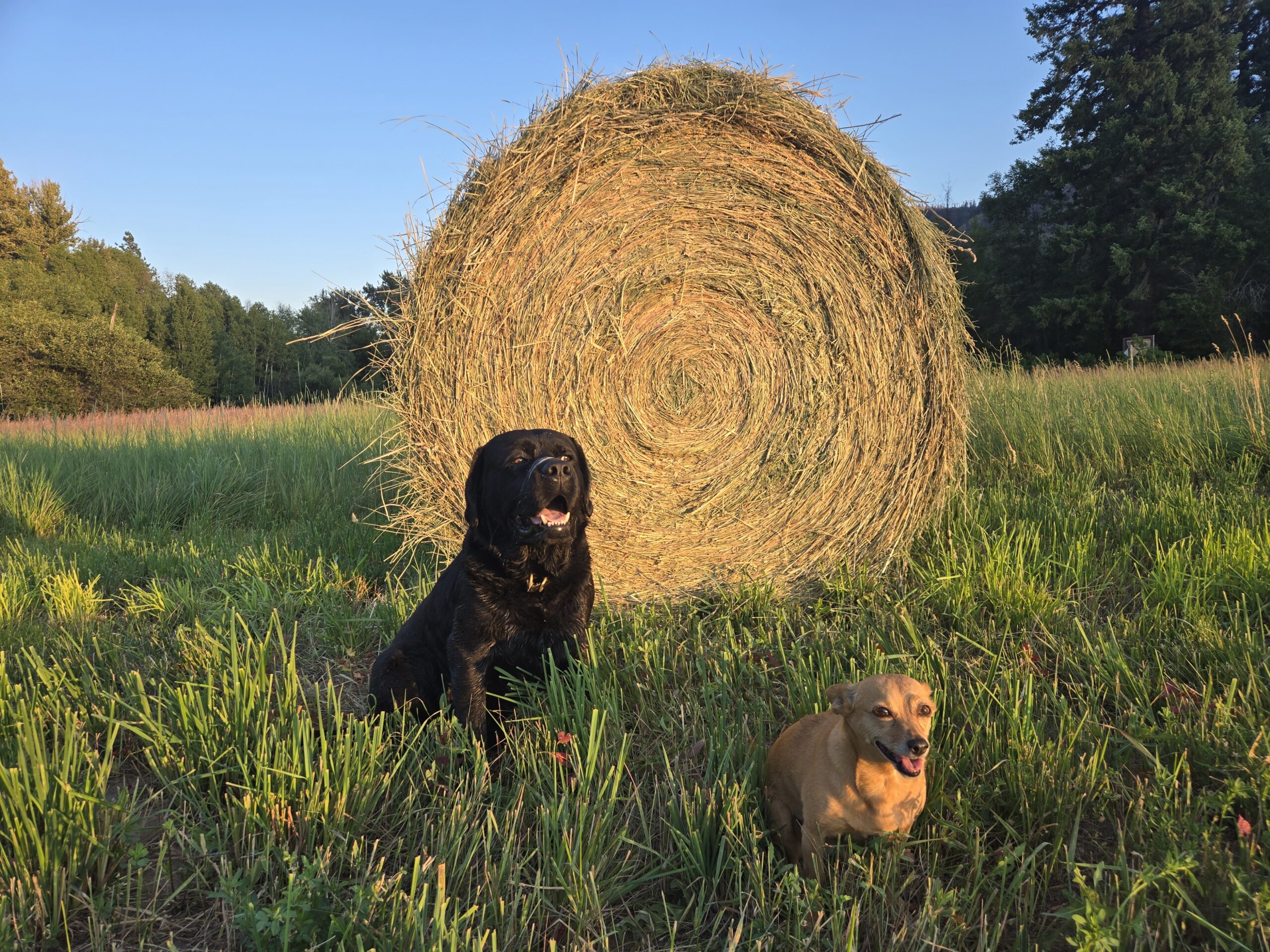
Farm Dogs


That fast, rising at 5 seems late while 8 in the evening seems early to the table.  June’s long light resets my clock year after year, and seemingly without notice.  The energy field shifts and across the countryside everything is busy.  The full Strawberry Moon is coming up, then the solstice arrives and things will stall, before more slowly tipping the other way by the month’s end.

Most years, June is our wettest of the spring/summer months.  However, this doesn’t appear to be the case this year and we sure could use some good rains.  With all the surface recharge from a wet last fall, then the early snowpack, the hills remain fairly green even as the blossoms of balsamroot and lupine fade.  That will change soon I believe, and the browning of summer will likely take hold for real.

Our winter peas here at the farm are blossoming and I just finished mowing them down so we can grow them out a bit longer.  I try to keep a cover crop cycling as long as possible if I am not cropping grain that year.  This fixes more nitrogen in the soil and adds biomass, or green manure to the surface.  I may plant winter grains toward the end of the summer, or wait until next spring so the more prolonged growth on the peas the better.  I will turn them under toward the end of the month.

All the other crops are in, and the long light of June will kick some real growth spurts off.  Our first hot weather is upcoming.  So far, 80’s have been the highest temps all spring so that, too, has been a bonus.  But, here comes summer!

The grain cleaning line and milling line have been busy, and we have been doing a lot of shipping these past weeks.  One of the nice things for me has been occasionally meeting some of our walk-in customers I get to help and visit with.  This is really enjoyable for me.  At times I can  feel pretty removed from our customers.  Please keep dropping by, and I hope I happen to be in the packaging area when you do!

Here is a poem I wrote called Evening Birds.  It is from my newest collection of writing entitled “Colors” .  You can find it here at the Farm, on our Bluebird website, Trail’s End Bookstore, or at White Birch Books In New Hampshire.

 Evening birds now


Late May arrivals

 Reminding us despite ninety degrees

Spring holds fast here to the foothills


Evening hummingbirds, thrush, warbler, vireo

As the last sun turns purple

Over distant and jagged peaks-

A breeze kicks up.


Evening spring birds grow in chorus

Dusk pushing down the ridges

Over the valley fields,

Heavy along the creek.


Evening birds as we finish, finally

Sowing all our seeds

An ancient dog nearby

Who still perks up- recognizes us

When we finish

Soiled head to toe.


Evening birds… so right

Reminders I’ve so much to write

Of hope I’ve not forgotten

These past seasons

Front and center

Of a different play entire.


Evening bird song in late May

So sweet it prevails

Above the travails

As the wind wails

And heat and frost and squalls

Singing of what is faithful

And true.

Congratulations to all the graduates!  Go forth with zest, be brave, respectful and I wish you the very best.

Yours 

Farmer Sam


Here are our April Farmer Notes: April… the month of awakening.  March might be noted as the month of change, however April is the month that leads once the script is flipped from winter to spring.  With the last of the snow receding from the foothills, a menagerie of birds have returned.  Meadowlarks; sparrows; hawks and eagles.  Swallows, robins, jays and yes bluebirds!  To name only a few.  Nothing so brilliant as a handful of male mountain bluebirds flitting about the otherwise drab countryside.  Oh my; it is no less shocking of a sight year after year.  To be sure, one that sanctifies the season.

I know from the years here that a wet late fall, followed by an earlier and solid winter, often gives way to a damp and invigorated spring such as the one that lies before us.  Already spring beauties, yellow bells and bluebells dot the greening slopes.  Soon enough we will see our first balsamroot in the lower valley and then the aspen will leaf-out and from there it will be a flood of daily changes.  I suspect the wind will kick up any day – another harbinger of April in the Methow.  This season for the senses is like no other.  Welcome!  

As we say goodbye to winter and switch out the snow removal equipment for farming tools, I am always amazed how fast the seasons come and go.  This may have something to do with growing a year older myself, but how can a place like this fit 4 full seasons into a year were it not otherwise?  As I walk the fields that were buried in snow only a month ago, I see the winter peas are not only awake, but beginning to color up and grow!  Our soil profile is in terrific shape moisture wise.  The snow pack in the mountains is decent and we will have plenty of moisture for our more user friendly annual crops here at Bluebird.  Bluebird farming partners in the Columbia basin and on the northern plains are also stirring and anxious to begin the farming season.

At our Mill

Our flour mill has been staying busy as the baking season never really ends.  The fresh milled einkorn flour just flies out the door weekly, and we are pleased how well used it is.  As are all of our other whole grain flours, and whole grains themselves.  Inventory is solid, and with planting season around the corner, there is little risk we will run short of your favorite grains and mixes.

National Organic Coalition

The organic food business has grown to be about $70 billion in this country.  It has done so largely unsubsidized.  This speaks volumes to consumer confidence, demand, and choice.  It is estimated that for every dollar invested in organic agriculture, there is a $20 return.  In the next 7 years, this national value is predicted to almost double.  Economy, food security, independence and health are all cornerstones of what organic agriculture has always been.  These are all points the National Organic Coalition – of which I was a guest member of this year – brought to Washington DC the last week in March during our “Fly-in” event.  

Bluebird was asked to participate this year by NOC member PCC Markets, as we are one of PCC’s  suppliers.  Their hope was for a farmer from District 4 to join the cause, as Representative Dan Newhouse ( District 4) sits on the Ag appropriations committee, and has shown support for organic agriculture over the years.  Thus, yours truly jumped on a plane for Dulles airport, DC.

I will say it was a full 3 days.  All of our meetings on the Hill were condensed into one day however, we took a full day to prep, and a full day to debrief.  There were about 25 of us in total, and we broke into sub-groups for most of the meetings.  Our Washington State group consisted of PCC Markets, Seattle;  Nature Path’s Foods, Blaine; the Organic Seed Alliance Port Townsend, and myself from Winthrop.  

Policy, policy, policy.  Each year, US taxpayers hand out roughly $30 billion… yes billion in subsidies to farm business and agriculture.  A whopping $23 million of that goes to the National Organic Program which has to cover label enforcement, research, minimal certification cost share and a host of other things.  Still, organic thrives.  It remains the only growing sector in Agriculture.  

NOC was there simply trying to save what little organic support we have at this point, and did ask for a $7 million increase to and even $30 million.  This was an ask directly to Newhouse, who I felt we had a very good meeting with, as well as several other Senators and Congress members while we were there.  Given the fact that the Farm Bill flounders along on extensions – going on two years now – all of this “discretionary “ spending is at risk.  It may seem like small potatoes, but seed spuds at the very least, to what I like to think will become a much bigger movement.  I think the timing could be ripe.  Organic: Independent, (import free), free market (capitalism), healthy (MAHA).  Making Agriculture Great Again.

I had a dear Uncle who once quipped that there were three basic rules to business: Politics, politics, politics.  Everyone seems to be enthralled with politics these days.  I encourage us all to be civil as we get involved while attempting to move the needle back toward the middle.  One  way to do this is to work with one another on the ideas we agree on, not always the ones we don’t.  This is politics – frustrating as it is at times.

Thank you NOC for inviting me along on this informative trip.  Thanks to all of you conscientious and loyal customers!  I wish you all a healthy spring!

Your farmer, Sam

Our March Farmer Notes:  Ahhh… the mighty month of March.  This year it comes in lamb-like on the coattails of a February wherein we experienced both the coldest, and warmest temperatures of the new year. In truth, February seemed more like March can be with a fierce start but mellow finish.  Following a few -10 degree nights, the final couple days rose above freezing and that fast, March is rolling along with stunning, sunny days and a torrent of bird life as the snowy hillsides begin to soften and south ridges shed their winter blanket.

At first there was a shift in the chickadee’s song, then a handful of robins showed up then the winged parade began for real: blackbirds; juncos, finches, grosbeaks; phoebes; geese and yes, even mountain bluebirds!  All in a week’s time.  Never have I seen the shift so sudden nor so musical.  The pace seems almost frantic.  Coyotes sing throughout the night and sometimes even during mid-day.  Owls keep to the dark woods except one evening just as the sliver of a moon rested atop the Butte with Venus straight above, a great owl soared across the lasting horizon.  The silence and swiftness of that bird sanctified the mood.  I just love this place!

Meanwhile, back at the Farm the main yard has all melted out.  Now freight and grain trucks can come and go more easily as they resupply our field crops, so that in turn we can clean, grade and fresh mill them for packaging and then send them back out to a door near you.  Or maybe your own door?   Our supply remains solid and our thoughts turn toward spring and subsequent plantings.  There remains plenty of snow on the fields here, and I suspect excellent soil moisture this year as we had wonderful late fall rains before the snows that insulated the ground winter-long.  This is so important for planting purposes, plus it will ease the strain on irrigation needs.  Our grain crops are pretty gentle on water-supply.  However, I’d guess there will be good water supply for even the water-hog crops such as alfalfa, too.

I do not like to see winter go yet with the rapidly building daylight and strengthening sun. I can’t help but feel the age-old excitement that spring brings, particularly if one is a farmer.  I will do my best to keep skiing so long as it lasts, but I’ve also begun switching the tractors over from their winter duties of snow plowing and removal.  Now they are ready for farm implements, instead.  By next month the fields will be melted and full of robins.  Did I mention this month’s upcoming full moon is the Worm Moon?  Here’s to all those wageless workers of the soil.

These are strange and interesting times some might agree.   As I’ve been mentioning more in recent notes, policy is very important and current Agricultural policy can use some improvement.  The Farm Bill’s latest extension runs out Sept. 30th, if the federal government doesn’t shut down sooner (Mar. 14?).  With so much rhetoric flying around right now??  It so happens that I’ve been invited to travel to DC the last week in March as part of the National Organic Coalition to weigh in on farm policy, and lobby for strengthening organic farming support.  The organic industry receives very few subsidies and thus, the few that we do receive – such as certification cost share – are very important.  Keep in mind we have to PAY for the USDA’s organic certification label.  And this certification fee is based not on profit, but on gross sales.  In other words, the stronger the sales, the more we pay.  Hmmm.  Such incentives?

Regardless, as many of you know Bluebird has been a voice for organic agriculture for 20 years now, and I’ve been a certified grower for 25.  I believe in what we do as much as I ever have, but also realize the difficulties and realities of all the paperwork involved, and that many small farms can easily become overwhelmed.  Also, there is an increasing temptation by some to “cook” the system.  Therefore, more and more enforcement of the guidelines is needed.

I will be part of a team meeting with State Rep Dan Newhouse, and also with Maria Cantwell’s team and Patty Murray.  Do they have more important things to do?  Well, is there anything more important than our health?

I will report back soon.  Stay tuned!

Your farmer, Sam

That fast, we are at the beginning round of 12 more moons!  The dark month of December was all the darker due to continued storms and thus, very few nights were clear enough to see the moon whether full or new!  Truth to tell, December delivered a lot of moisture right on the coattails of a wet November and our snowpack is in very good shape as we begin this new year.  I love the silence and comfort of full snow banks and pure white fields.  However, as I pointed out in last year’s notes, this sort of snow is hard on many other creatures.

Birds like the chickadee we might associate with joy for a white and quiet landscape, wherein their ‘chickadee-dee-dee’ cadence sounds more cheery and poignant.  Owls of the night sanctify the depth of winter, and one snowy day I saw the most perfect little northern pygmy owl along a brushy, unfrozen seep.  A deep winters’ landscape can be so quiet, one’s own breathing can seem disruptive.  Let alone the sound of squeaky footsteps… 

The fields are snug, the holidays have come and gone, and the new year of work has begun here at Bluebird Grain Farms as we enter our 20th year.  Twenty years…  As the younger generation exclaims: Really!?  It has gone that fast and we have learned so much.  We’ve met a vast host of customers over these years, and look forward to continuing to serve them while  welcoming many new customers.  

We took a week here at the Farm to regroup following the holiday buzz, and have streamlined a few of our systems even further.  We’ve added a couple new and energetic staff members as we plan for a busy year ahead doing the same thing we have always done: Delivering top-quality, organic whole grains and flours grown with deep care, and custom milled on a weekly basis.  

With our recently certified Regenerative food processing facility, as well as a number of our Regen certified products, we now offer not only the USDA organic certification, but a Regenerative certification as well.  We feel confident that true and certified Regenerative crops will play a very large role in the future of agriculture, and consequently, our climate.  And the Regenified certification is as comprehensive and thorough as any.  The goal is not only to protect our precious soils, but to improve them.  These have always been our main beliefs at Bluebird.  We do not go through sometimes expensive, time consuming certification processes just to add another label on our brand.  We do it because we believe.  As always, we welcome feedback.  

We’ve had our hands full with all this new snow while just keeping the Farm cleared for operations!  Storm cycles are a double edged sword.  While they add twice the work to operations, they bring beautiful moisture for our semi-desert landscape, and this is critical for it to thrive.  I always am willing to put up with the greater work load for the overall gain.

Farm Bill update: Another extension has been passed, to the tune of 10 billion USD in farm aid.  The majority of this aid will go to three crops: Corn, soy, sugar.  None of which will be certified organic, Regenerative, or otherwise.  Diabetes anyone?  The incoming administration mentions not being in support of this extension?  Obviously, there will be a lot to do on any actual Farm Bill – now two years overdue.  The most recent extension ends March 14.

Meanwhile, please know that although there are few subsidies for organic crops, our inventory is very strong going into the new year and we will not be running out of our grains anytime soon.  Although we think of the holidays as the eating season, really, it is just the beginning of the eating season!  Hearty soups and fresh breads warm the soul during these deep winter months.  So, please enjoy.  We love the thought of our goods leaving our Farm directly for your table.  Let’s hope field- to- plate never goes out of style.

Up next: The full “Wolf Moon” !

And the holiday season has begun! This is hard to believe yet as I write this on Thanksgiving weekend I’m quite aware the year is nearing the end-zone and next up is the “Big One”. Like many, I actually enjoy Thanksgiving as much as Christmas. More so, in some ways. No matter, the joy and thankfulness of both sanctify this darker and quieter time of year I love. November.

Blessed and glorious November that, once again, delivered. Big time, giving us the nice, steady rains I’d so hoped for, as these rains softened and opened the soil. Then before the ground could freeze, we received a substantial dollop of first-snow to the tune a foot or so, with more that followed. The snow itself had a lot of moisture in it, as temps stayed barely below freezing. Now we have pliant, soft ground under a beautiful winters’ quilt and this starts a great moisture profile for the next growing season. Thank you, November. My favorite month and perhaps one of the most reliable, like any old friend.

Now the chickadees chime in and the nuthatch crawl up and down the porch beams and winter seems to be settling in as the calendar turns to this final month. It was another fulfilling year here at Bluebird as we still worked out some adjustments and made more efficiencies within our new digs that are already over two years old! Many of you may have noticed that the quality and consistency of our products have remained good as ever. As is our promise, we are just doing more of what we feel we do best: Offering quality foods and punctual service.

Punctual as we can be on our end, that is. Many might have noticed the poor ole’ postal service has been struggling as of late, as have a few other freight companies. We can’t always predict these sorts of things. If you are planning holiday orders please consider giving both us, and you some extra ordering time! We love putting together gifts for so many, but we want to make sure they get to where they are going on time! There are lots of empty spaces out there, still. That isn’t a bad thing.

Thinking of empty spaces, the night skies have been quiet around here lately. If it hasn’t been raining or snowing, there have been some crisp stars and a waning moon. However, I’ve not heard the owls as of late, and the coyotes come and go like usual. To step out and stroll before bed this time of year is a lesson in listening. Deep listening can lead to reflection, particularly when the only sound is one’s own rustling. I remain amazed by Nature.

I am more amazed by Nature all the time, I should say. The sudden and heavy snow is beautiful in my mind, but not all creatures feel this. Most, actually, feel undo stress. Walking up our driveway the other evening several deer were using the roadway and were not anxious to bound out across the snowy fields. I saw where both partridge and quail had moved toward the crabapple tree at the edge of our yard where they’d been scratching away for fruit. Up on the hill above our place, I noticed small partridge tracks weaving among the bunchgrass tips that barely poked above the snow. Not much to eat there, but something at least. Being ground feeders, these poor little birds were having to make fast adjustments. Likely too fast for all to survive. Some silence is lovely; some eerie I suppose. Nature. Resilience. Easy for me to say beautiful.

This time of year we think of Peace on Earth if for some reason we’ve not been thinking about Peace the rest of the year? It is always my wish. And I wish that all of you have had a nice Thanksgiving gathering, and look forward to Christmas as do I. I hope we can all take some quieter moments and think about what we can do for others.

I appreciate all that you customers do for us here at Bluebird as we enter our 20th year! Couldn’t have done it without so many of you and we are most grateful. Here is to your health. Here is to many more years together. More so than ever, we truly do rely on one another.

Merry, Merry and I’ll be in touch with you next year!

Your Farmer, Sam