Author: Brooke Lucy

Here is Our Rural Small Business Award Video!

As we’ve grown and evolved, we’ve been very aware of our local and online community’s part in making Bluebird successful. We’re grateful for the recognition and excited to see what else 2022 has in store for our expanding business. And big thanks to the Washington State SBA for creating this video clip for the SBA awards that were held in May of 2022.

The SBA Seattle District celebrated National Small Business Week on Wednesday, May 5. Hosted by SCORE and supported by the SBA Resource Partner Network, the event took place at the Museum of Flight and was attended by more than 300 SBA resource partners, small business lenders and small businesses. The annual event, which typically takes place during National Small Business Week has not been held in person during the past two years due to the COVID-19 pandemic.

An evening full of awards and recognition for local small businesses and resource providers was kicked off by keynote speaker Dr. Lisa Brown, Director of Washington State Department of Commerce. SBA Seattle District Director Kerrie Hurd greeted the audience in the spirit of “collaboration across our ecosystem of small business supporters.” Acknowledging the SBA resource and lending partners in attendance, Hurd thanked everyone for the tremendous undertaking and collective teamwork that has taken place to deliver SBA COVID Relief Programs and small business funding across Washington state and northern Idaho.

Lew Blakney, SBDC representative, presents the rural business award to Brooke and Sam Lucy.

The evening culminated with the presentation of awards to small business winners in 4 categories. The award for 2022 Rural Small Business of the Year was give to Bluebird. Brooke and Sam Lucy attended the event with  Okanogan County SBDC representative Lew Blakney, who nominated Bluebird in December.

SBA is the only cabinet-level federal agency fully dedicated to small business and provides counseling, capital, and contracting expertise for small businesses. Some of the guidelines for SBA recognition include growth in net worth and business expansion, increase in jobs and sales, innovativeness of products or services, response to adversity and contributions to community-oriented projects.

Bluebird  has  worked with the SBDC services over the years for education and planning purposes. During the pandemic, Bluebird utilized SBA resources to provide funding to hire more employees during the baking and cooking boom, and to help transition to Bluebird’s new facility which they are scheduled to move into next month.

Dining in the Museum of Flight.

This week Bluebird Grain Farms has teamed up with the non-profit organization, World Central Kitchen, to help bring food relief to people of Ukraine. Now through April 3rd, 5% of our  proceeds via our online store will be donated to World Central Kitchen’s relief efforts and the chefs of Ukraine.

World Central Kitchen posted the above phot of their website of chefs cooking paella in their kitchen.  They state “The new WCK Relief Kitchen is located in Przemysl, a polish city just several miles from the  order with Ukraine that is receiving tens of thousands of refugees every day.  From this kitchen, our team has the capacity to scale up and cook 100,000 meals per day utilizing 12 massive WCK paellea pans and 12 large ovens.”

When faced with a devastating war so far away, it is hard to know what to do or how to help. We love food, we love chefs, and we love and believe in democracy. This effort felt like a simple way that we can help.  Our goal is to raise $2000 to donate to WCG.org by April 3rd.  As of 4/1 we have raised $1050.00.  Will you join us?

To learn more about WCK and to read about  their boots on the ground efforts visit: WCG.ORG

You can follow them on instagram @wckitchen / #chefsofukraine

Shop now and 5% will be donated.

Ends April 3rd, 2022, 11:59 PM

Good Food Awards Announces the 244 Winners of 2022.


We are honored to have our Cracked Farro Porridge as one of the 244 Good Food Award Winners of 2022. Our Cracked Farro Porridge is finely cracked, from our whole grain Emmer Farro. Just one ingredient, pure and simple.  Always cracked, fresh, to order. Cracked Farro Porridge can be used as a hot cereal or be prepared as a polenta, savory style, or used as a soup enhancer, as shown in our Cauliflower soup recipe. In celebration of our award we are offering 15% off all of our cracked farro porridge items, now through February 6th. For recipes and information about our Cracked Farro Porridge, please click HERE.

“The Good Food Foundation exists to celebrate, connect, empower and leverage the passionate and engaged, yet often overlooked, players in the food system who are driving towards tasty, authentic and responsible food in order to humanize and reform our American food culture.” To Find more information about the Good Food Foundation please click HERE.

For the first time, a live pop up shop stocks the award-winning food and drink from 39 States & D.C. through January San Francisco, CA (January 14, 2022) – The Good Food Foundation is thrilled to introduce the 244 exceptional crafters of food and drink from 39 states and Washington, D.C. who rose to the top to become 2022 Good Food Award Winners. With safety in mind, the Awards Ceremony has been postponed to Friday, March 4, and will be preceded by the San Francisco Good Food Mercantile on Thursday, March 3 (tickets here). To mark the announcement of the Winners today, both Alice Waters and René Redzepi, legendary chef of Noma, sent congratulatory videos. Speaking to the sustainability and social responsibility practices of the Winners, Redzepi noted: “I believe it is our collective efforts that can turn the tide and ensure our shared earth will survive. You are the champions of the future, and you are leading the way.” This year’s Good Food Award Winners hail from 39 states and Washington, D.C. Chosen in a blind tasting from thousands of entries before passing a further sustainability and social responsibility vetting process, nearly half of the Winners are first-time awardees. 56% of the Winners are woman-owned businesses and one in six are BIPOC-owned businesses. Across 18 categories, each recognized crafter demonstrated exceptional taste and a deep commitment to building a more sustainable, just food system.

For those eager to taste these extraordinary products, over 100 of the winning food and drink – many not typically available in the Bay Area – are stocking shelves for a limited time only at the two-week Good Food Shop in the Ferry Building (within The Epicurean Trader storefront, January 15-30). THE FULL LIST OF 2022 GOOD FOOD AWARD WINNERS CAN BE FOUND HERE.
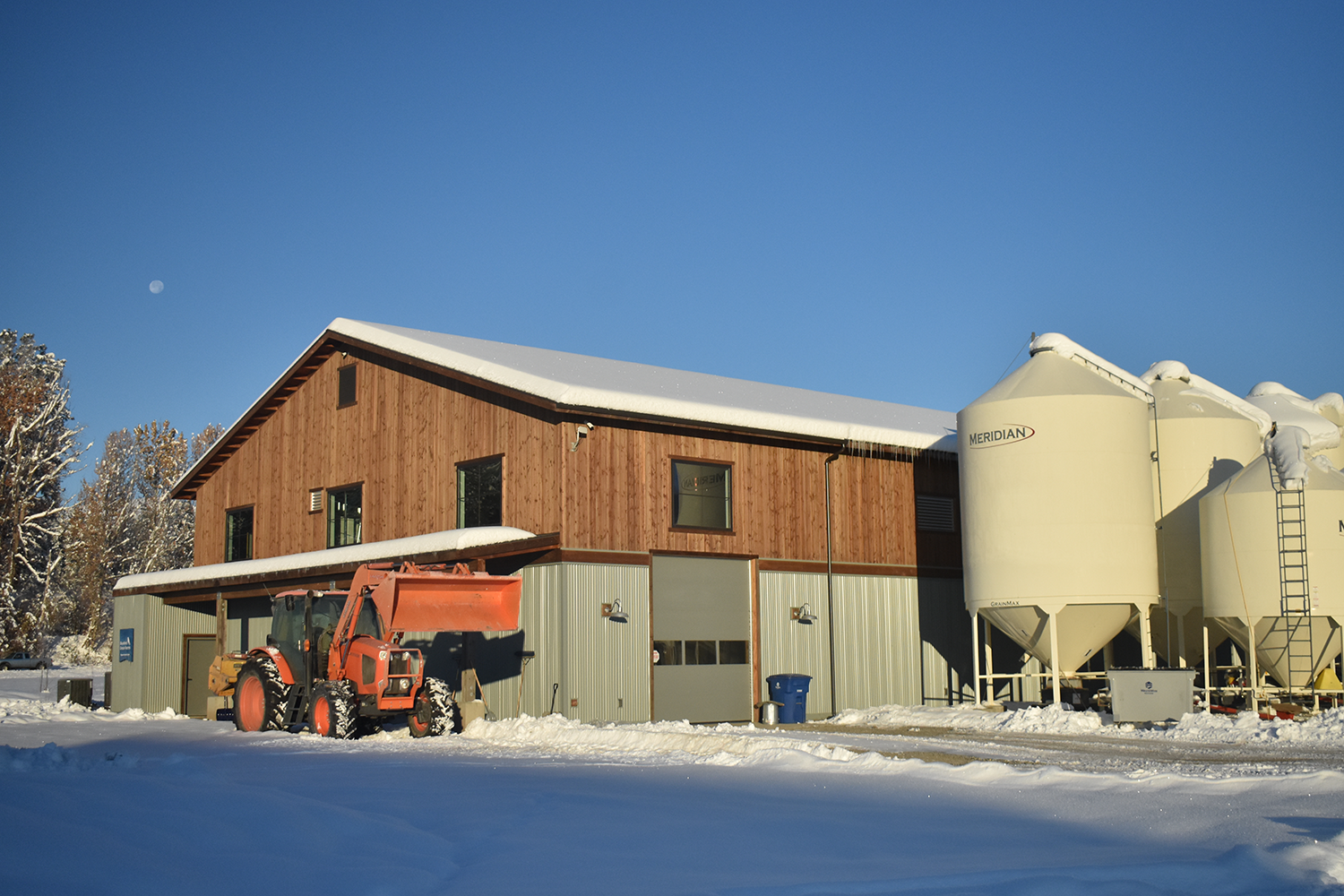
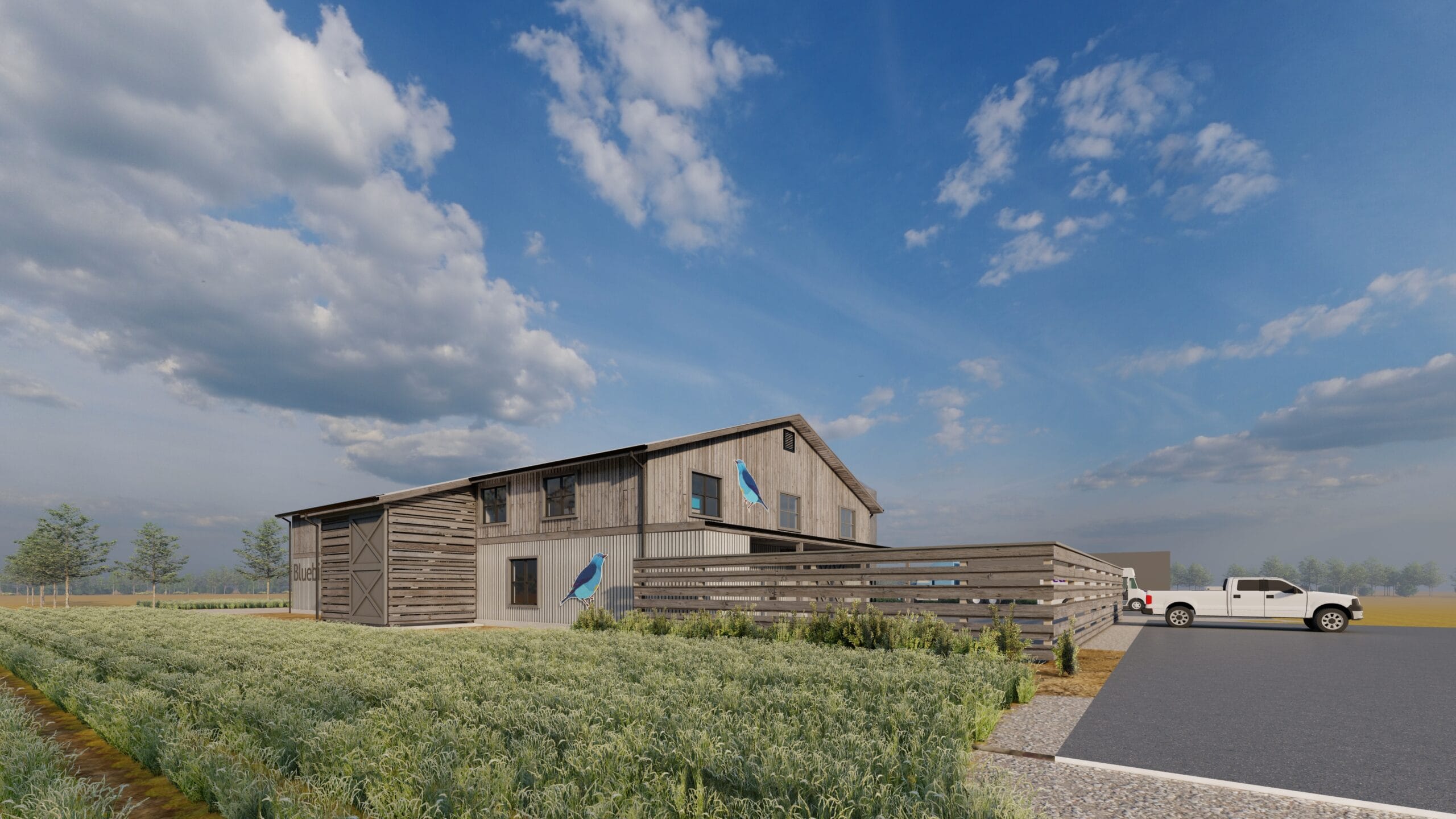
After several years of planning and many gentle nudges from our Bluebird community, we are delighted to announce that we have broken ground on our new processing facility. Our new building will be located just off of Highway 20 between Winthrop and Twisp (about 5 miles south of our current location) on our 32 acres of farmland.   The first phase is a 6000 square foot building, that will be grain processing, packaging, shipping and receiving,  and office space.

It is our goal to build a facility that allows us to increase our production capacity so that our farm business can keep up with the demand for ancient and heritage grains.   We are looking forward to creating a better work environment for our dedicated and growing staff.  We want the public to have easier access to picking up product, along with inbound and outbound freight.  We hope to offer education classes, particularly with our local kids and regional farm networks in the near future.  It has always been our vision and dream to be able to showcase our vertically integrated farm business, in one spot, and here it is!

As our commitment to regenerative agriculture grows and expands beyond the Methow Valley we want to engage our community in the planting, growing, harvesting, storing, processing, packaging, and selling of our grain products.  It will be a year, at least, until we are moved in, and perhaps a few more years until we have a formal store and are able to offer classes (phase 2).  In the meantime, we want to share with our community what we are up to. The photos here give you an idea of what our building will look like.  We are also curious: What would you like to see on our site? Please feel free to share your thoughts and dreams for agriculture in the Methow Valley with us. Reach out to co-owner Brooke Lucy , and let her know your thoughts (we’re sure you have some!) as we embark on this new journey together.

Prototype of Bluebird's new facility.

Spelt: youngest of the bunch.

Let’s learn some facts about Spelt. Scientifically known as Triticum spelta. Among the trio of ancient wheats, it stands as the youngest, born from a cross between emmer and a wild grass. It is the latest addition to the Bluebird product line, meaning you can now acquire all of your ancient grains from our farm.  Not all spelt is created equal.  Bluebird Spelt is a ancient variety that came from the University of North Dakota who has been preserving and maintaining landrace varieties of Spelt.   Bluebird Spelt is harvested in the hull and has to be de-husked before human consumption, unlike modernized hulless spelt that has been hybridized for industrial agriculture. Are hulless varieties a true ancient grain?  We will leave that up to you to decide.   Our focus is preserving and maintaining ancient varieties.

Spelt’s nutrient-rich properties enhance baked goods with its high protein and fiber supporting better digestion. Both as a crop and as a food, it nourishes well-being, enriches fertile soils, and promotes a climate-resilient future with its time-tested ancestral genetics.

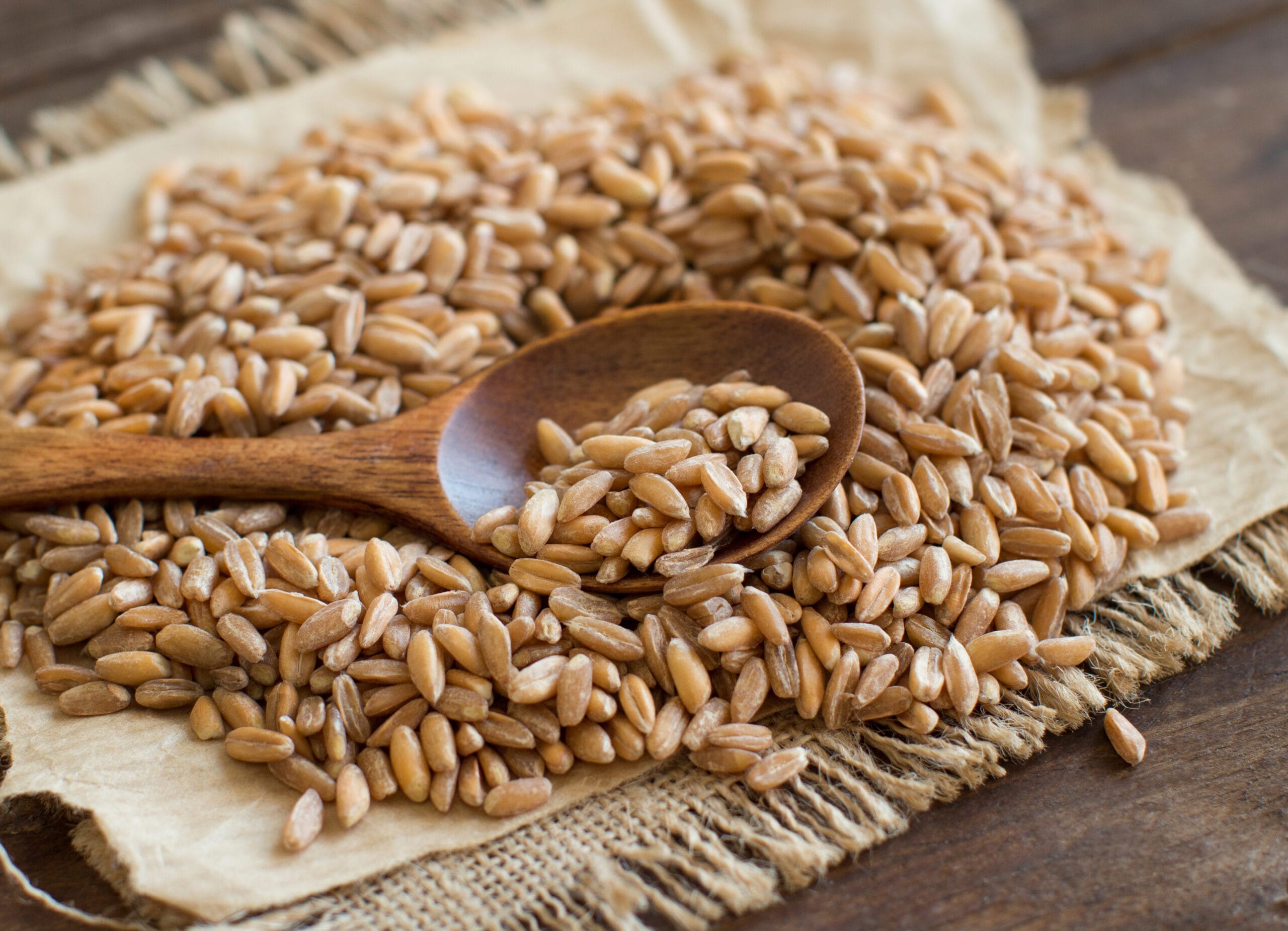
Spelt on Top of Rag on Table

Spelt vs. Wheat

Unlike common wheat, spelt has not undergone widespread cultivation, resulting in fewer genetic modifications from domestication, with only 42 chromosomes. Like einkorn and emmer, spelt has the outer husk that protects the kernel which is a main differentiator between ancient and modern wheats.

Spelt is an excellent substitute for common whole wheat bread flour, making it the favored ancient grain for yeast and sourdough breads. Additionally, while it is not gluten-free, it contains less gluten and a lower glycemic index than modern wheat, making it an excellent choice for those seeking healthier alternatives to standard wheat products.

Spelt vs. the other Ancient Wheats

Spelt is a slightly more complex grain than Emmer (Triticum dicoccum) with a 42 chromosome count and differentiating flavor profile.  Emmer yields a rich nutty flavor, while spelt is sweet and malty. In terms of appearance, spelt has a distinctive rounded shape, setting it apart from the robust rust-colored kernel of emmer or the petite blonde kernel of Einkorn. It produces a softer, slightly more glutenous dough than the other ancient wheat varieties, which makes it an easier product to bake with, especially when just beginning to explore the ancient grains.

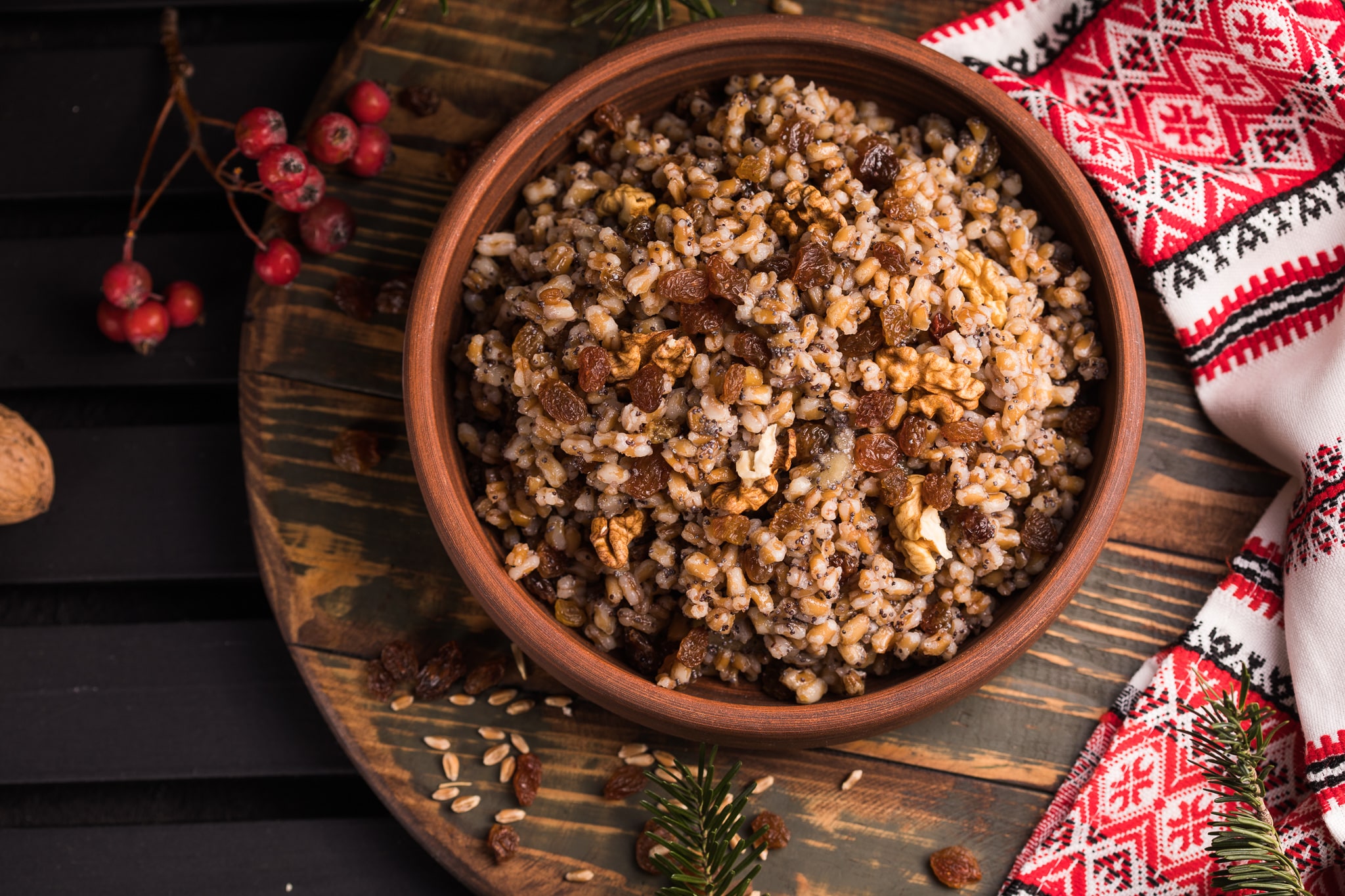
Spelt in a Bowl on Table

Fun Facts about Spelt

  • Cultivated since the Bronze Age (c. 3300 BC)
  • A staple food in Europe for centuries.
  • Known as dinkel in Germany, where it is very popular.
  • Can contain 20%+ Daily Value for protein and several B vitamins.

Good Food Winners!

We are delighted to announce that three of our grain products won the 2021 Good Food Foundation “Good Food Award” in the Grains category.  This is our second year in a row that our products have won, last year was the Einka & Lentil Blend.  We would like to  acknowledge the Good Food Foundation and its mission which is “to celebrate authentic and responsible food in order to humanize and reform our American food culture.” We love this foundation because it allows us to connect with food buyers and food producers who share the central tenant that good food really does matter!  There is nothing that we feel more passionate about than this topic, as it has been central to our business mission.

The Good Food Foundation does have a pop-up shop through February 7th where you can purchase some of this year’s winning product. If you are interested in the pop-up shop click on the POP-UP SHOP image below. We are offering a 10%  discount on a bundle of three of our winning items now through the end of February via our online store.


Check out these recipes to complement our winning products

Leek & Squash Einkornotto   Farro & Vegetable Winter Casserole 

Old World Cereal with Cinnamon, Vanilla, Walnuts & Dried Fruit

Leek and Squash Einkornotto, Einkorn, organic whole grains


Join Us at the UCCS Grain School! 

Saturday, February 6th, Bluebird owner, Brooke Lucy will be participating in the University of Colorado at Colorado Springs Grain School panel.   For the last 5 years, Grain School has brought a community together ranging from grain growers, millers, maltsters, brewers, chefs, educators, scientists, and students to share and complement knowledge and skills and build business relations in relevant topics. These topics have included whole and heritage grains and their relationship to health, nutrition, dietary fiber, and the microbiome, environment and climate change issues related to agriculture, and topics of biodiversity, grain’s role in sustainable farming practices, and the newest in crop science to leverage the traits of old varieties of grain for nutrition and flavor in more modern strains. On Saturday 6th to learn about adding value to your grain products along with many more topics.

Check out this series at UCCS Grain School.

by Ashley Lodato, Bluebird Grain Farms staff writer

photos courtesy of Alyssa Jumars and Red Shed

Miles Griffin of Posterity Farm

It doesn’t always happen, but when demand and supply are aligned, it’s a collective win.

When the COVID crisis hit the United States, several things happened simultaneously in Methow Valley food systems. First, The Cove, the Methow Valley’s food bank, experienced a surge in requests for food assistance, many from people recently laid off. Second, with farmers markets and restaurants closed, as the growing season waxed, food surpluses from farmers and growers began to accumulate. Third, the Methow Conservancy established an online portal where food producers could sell items that they would normally be selling at the local farmers market.

It was the fourth thing, however, where demand, supply, and system converged. Longtime valley resident and board member Gordy Reynaud, along with his wife Adrian Chavey, asked the Methow Conservancy about making a monthly donation that would allow a low-income Methow Valley family to shop through the online farmers market channel. And suddenly the idea took shape: pairing local households in need with fresh foods grown on Methow Valley farms.

Lazo Gitchos of Red Shed delivering carrots to The Cove

Within a few short weeks, the Methow Conservancy’s Farms to Neighbors program launched, in partnership with The Cove and sponsored by donors who were invested in helping Methow Valley families in need access fresh foods, as well as supporting the local farming and growing community. Alyssa Jumars, the Methow Conservancy’s Agricultural Coordinator, says “The idea was to invite donors to contribute to this fund, and then find a few farmers and buy what they had to spare, and distribute this surplus through The Cove to its clients. We thought we might get enough donations to work with a couple of farms for four to six weeks.”


Amy Wu, Rest Awhile Fruit, provided six hundred pounds of tree-ripened peaches

To everyone’s delight, the program was popular for all involved: donors, farmers and growers, and recipient families. “We ended up purchasing more than 6000 pounds of food from a dozen farms over the course of twelve weeks and distributing it to families throughout the valley,” Jumars says.

“Growers whose normal market channels had been disrupted–restaurant orders were cancelled, farmers markets were cancelled–had a means of selling their crops,” Jumars continues. “We’d buy from these farmers and they’d deliver straight to The Cove on Thursdays, when The Cove is open for people to come get food.”

The harvest bounty couldn’t have come at a better time. The Cove usually serves about 40-50 Methow Valley families each week, but with COVID-related unemployment that number surged to 60-70 families. And while some food banks are able to access only unsaleable surplus or #2 quality produce, with bruises or blemishes, the Farms to Neighbors program prioritized top quality produce. “It was really important to everyone involved in the program to give families produce that was every bit as beautiful as what you’d find at farmers markets,” says Jumars. “The farmers and growers appreciated being able to give their best products to families in need.”


Jumars worked with The Cove to learn what food types would be most useful each week, and sourced those items from the participating farms: Bluebird Grain Farms, the Channing Family Farm, Hoodoo Blooms Farm, The King’s Garden, Posterity Farm, Rest Awhile Farms, the Red Shed, Ruby Slippers Farm, Sunny Pine Farm, Twisp River Organic Apples, Wild Plum Farm, and Willow Brook Farm. “We all learned together,” Jumar says of figuring out the details of the Farms to Neighbors program.

Emmer flour has a sweet flavor with caramel undertones

Pancakes were a definitive favorite for Cove customers, and Bluebird’s Organic Emmer Pancake & Waffle Mix satisfied that hotcake craving. Not your mainstream spongy tasteless disks, Bluebird’s emmer pancakes and waffles melt in your mouth with the sweet nutty flavor of freshly milled emmer farro. High in protein, fiber, and B vitamins, the pancake mix is a great source of energy and nutrition for all ages.

Glen Schmekel, the Executive Director of The Cove, says that the Farms to Neighbors program was “A wonderful gift from the Conservancy to the food bank.” He continues, “We were able to give a full bag of fresh fruits, vegetables, and grains to each family every week during the season. Sometimes each bag was 20#.”

Schmekel acknowledges the donors that made the program possible. “What a fantastic idea,” he says. “It helped everybody.”

Farms to Neighbors was a pilot program for 2020 and its future in the next growing season is uncertain. But the 6,000 pounds, bunches, bags, and cartons of locally-grown peaches, apples, pears, tomatoes, peppers, cucumbers, green beans, carrots, beets, cabbages, potatoes, onions, garlic, leeks, leafy greens, goat cheese, free-range eggs, and pancake mix distributed to hundreds of community members are a testament to the Methow Valley’s commitment to its farmlands, its growers, and its people. When a need arises, the Methow Valley finds a way to fill it.

Learn more about the Farms to Neighbors pilot program HERE.