What is Emmer Farro?
Emmer, known in Italian as Farro, is an ancient ancestor of modern wheat. It is a toothsome, chewy grain when cooked, with wonderful nutritional benefits and a delicious flavor profile.
Our emmer berries are intact whole grain, which means that they require some time for correct preparation. Keep reading for more information on soaking, cooking, serving, storing, milling, and more!
Emmer Cooking Times
If you’re familiar with farro from the grocery store, you may have tried using the same techniques for preparing our emmer farro. Most store-bought farro is “pearled” – an imported Farro with the germ and bran removed that results in a quicker cooking time, fewer nutrients and a softer texture.
Our whole grain Farro can seem “chewier” than standard farro, and it is, in fact, a plump chewy berry when properly cooked. Please note that while it makes an excellent substitute for rice in a risotto preparation, it will not have the texture of rice, but a pleasant ‘al dente’ resistance when fully cooked. It will need at least 60 minutes to achieve the right consistency.
Prefer a softer texture? We recommend soaking our grain overnight, then cooking it for 40-50 minutes and draining excess water. Having plenty of water is key for achieving the best texture. Even though it may take a while to cook our emmer farro, the benefit is that it does keep its chewy texture over time. You can cook a big batch on Monday and enjoy the same taste and texture throughout the week.
Yet another beautiful thing about this grain is that you can’t overcook it. It can be simmered for hours and remains a chewy berry, which is why we highly recommend it for soups and other preparations where you might be reheating it frequently.
Preparation Methods
We understand that not everyone has time to sit over a stove stirring their pot of emmer. Luckily, this grain adapts very well to preparation in a rice cooker, slow cooker, instant pot, and even pressure cooker.
We recommend using the brown rice setting on your rice cooker (if it comes with settings, that is!). Slow cooking also works great, but remember Emmer takes a long time to cook, so you’ll need 3-4 hours on a high heat setting in a slow cooker or crockpot to fully cook the grain. For pressure cooking, remember to use plenty of water – at least twice as much water as grain to ensure that the emmer doesn’t burn and fully cooks.

What about cracked emmer?
We also sell an emmer product where the grain’s hull has been cracked (but not removed or pearled, so you still get the full nutritional value). Because it is cracked, the cooking time is reduced to 12-15 minutes. You can also soak it overnight to decrease that time even further for use in hot breakfast cereal.
Cracked emmer works as an excellent overnight oats substitute, if you soak it in milk overnight and then heat it up for a few minutes before eating. It is also a much healthier alternative for cream of wheat. Serve it up with shredded coconut, fresh or dried fruit, yogurt, nut butter, and other toppings for a tasty, filling breakfast.
Milling emmer berries
Let’s just get this question out of the way immediately: do not try to grind your Emmer berries in a coffee grinder!
All ancient and modern wheat berries are too hard for a coffee grinder to process and you will just end up ruining your machine and losing both the grain and your freshly brewed cup of coffee! If you need to grind small amounts of Emmer berries into flour at home, you can look into one of our small batch mills as a perfect solution. If that sounds like too much work, you can always order some of our emmer flour. We mill it in small batches to order, so you can always rely on having the freshest flour at your disposal.
Bulk-cooking and storing emmer berries
The good news is that our emmer freezes beautifully after cooking. If you’ve got a big bag of emmer berries and don’t know what to do with them, we always suggest doubling or tripling the recipe on the bag of our bag. After 60 minutes of cooking, drain the excess water, cool the cooked grain completely, and then freeze in bags or containers to be used at your convenience.
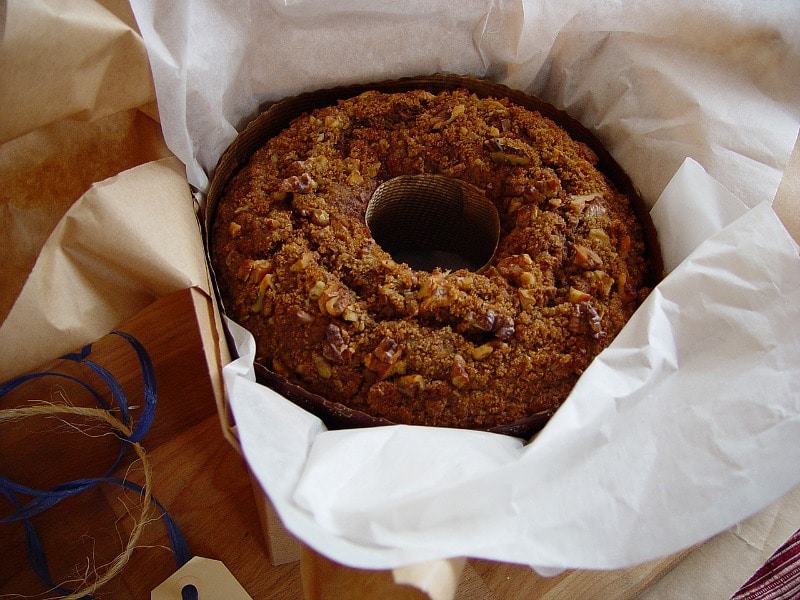
Baking with emmer flour
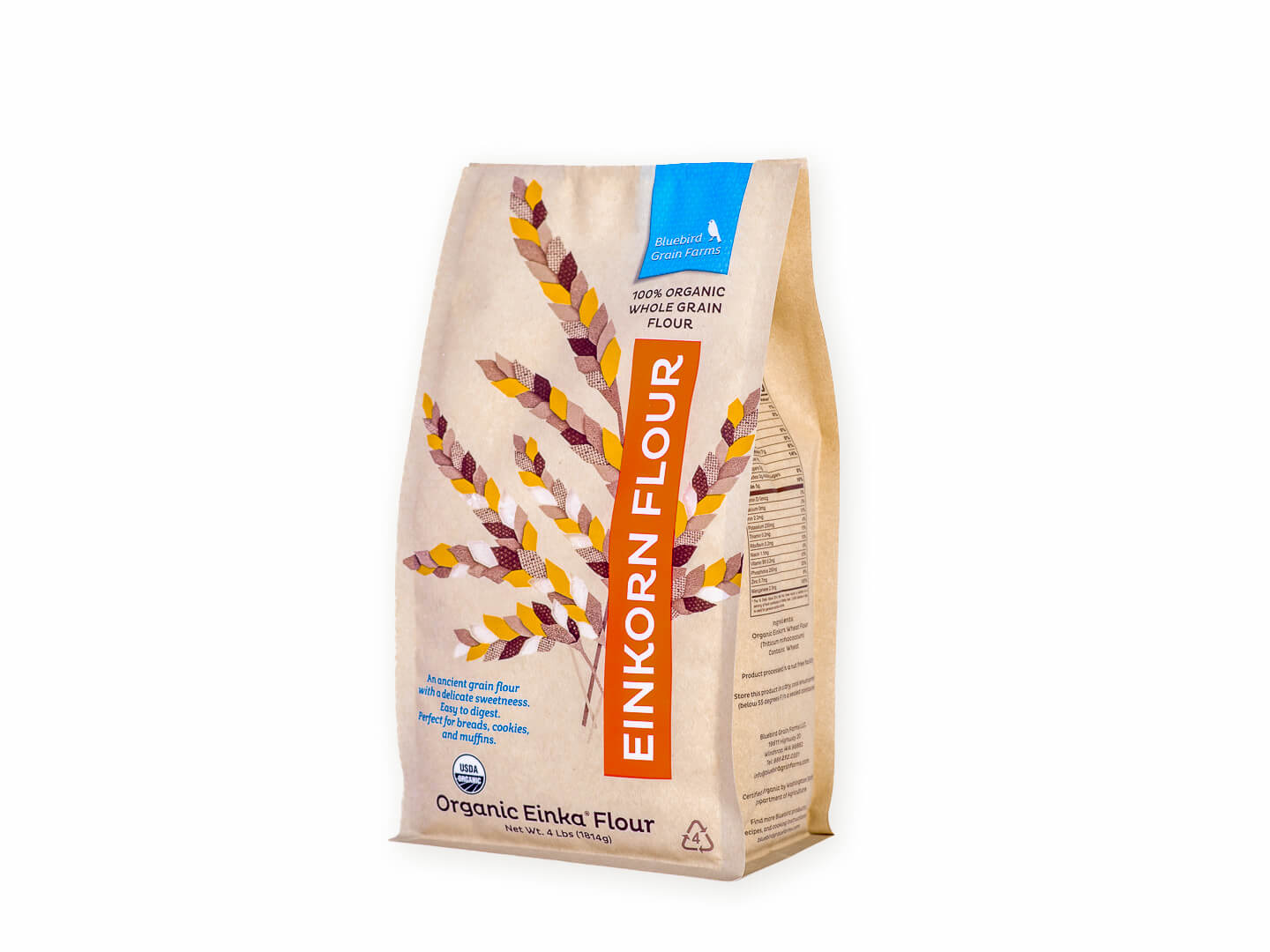
Our organic, fresh-milled emmer flour is excellent for baking! It features a sweet nutty flavor, especially used within a few weeks of milling. As an ancient form of wheat, Emmer behaves in a similar fashion to the durum whole wheat flours we are already familiar with. We mill our flour very fine so you can use it to make fabulous wide noodle pastas (a tradition in northern regions of Italy), dense breads, cookies, muffins, and crusts.
Find Emmer Recipes here.
 Look for our 2 lb. Emmer flour and 2 lb. Methow Hard Red Flour- it should be landing on the shelves in the next month. Our organic Whole Grain Emmer, and Hard White and Red Wheats should also be found in your bulk sections. Don’t see the products you would like to? Please let your local grocery store buyers know what Bluebird products you would like to see.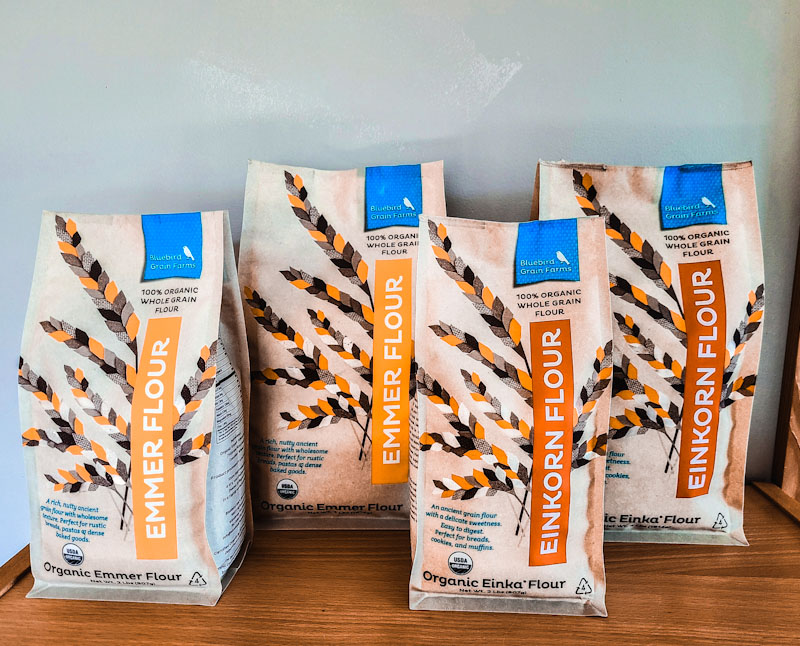
 Bluebird Grain Farms is partnering with friends of
 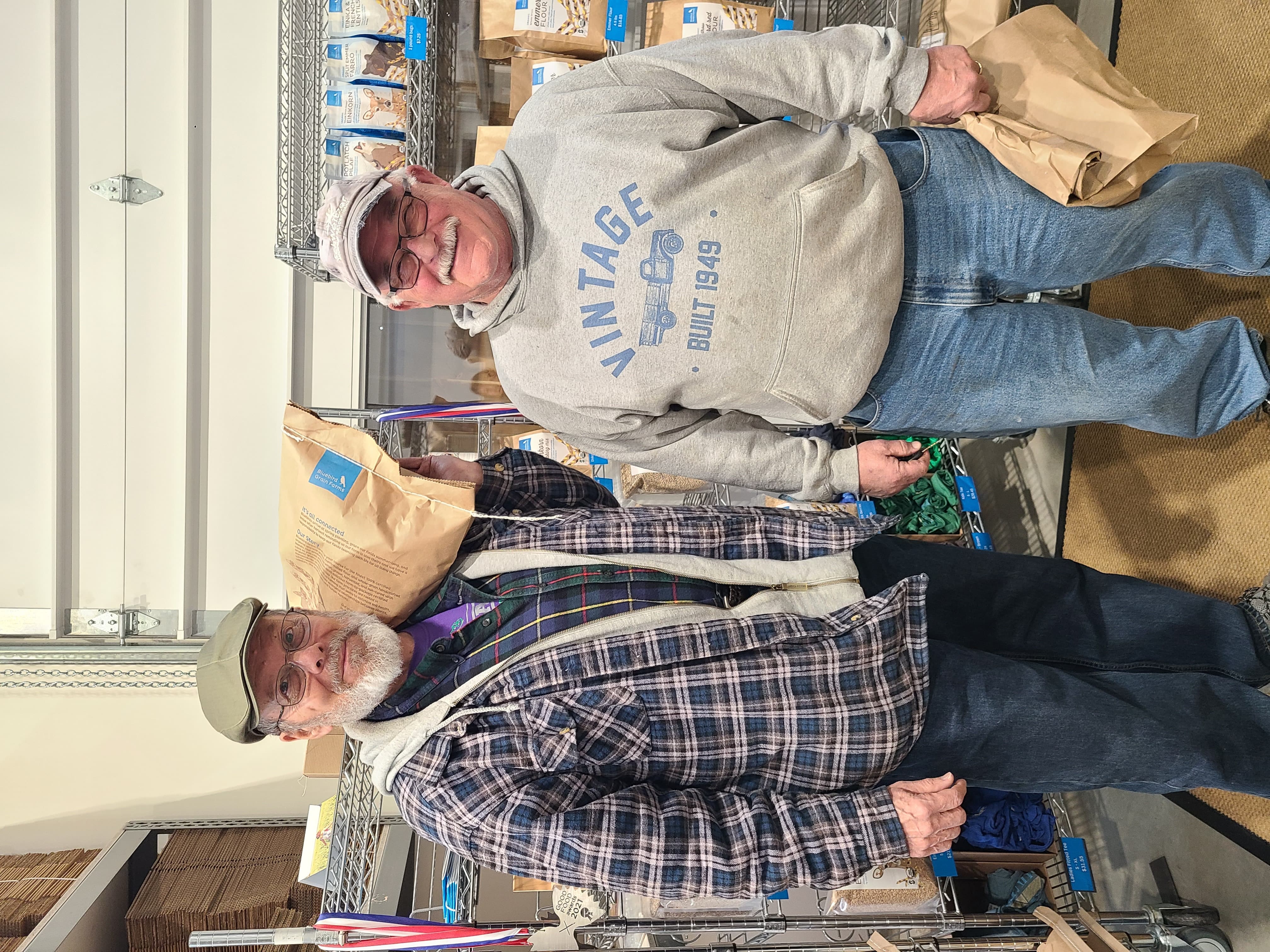 Bruce has been a long time customer at Bluebird. He stopped in to get his Pasayten Hard White Wheat Berries for his sourdough bread. He reports that he mills everything at home for his weekly bread baking routine. His buddy Bob, who has a cabin in the Methow, is not much of a baker but loves to eat Bruce’s Bread.
 Our daughter Larkin and her friend Rupert Dyer saved my bacon a few weeks ago; the day before I was to travel to Las Vegas to the Fancy Food Show I tested positive (yes for the first time) for COVID. With a Bluebird Grain Farms booth set up and product waiting in the wings, Larkin and Rupert raced to my rescue. Before I had a chance to consider canceling the show, Larkin responded “I got this Mom,” and off they went to Vegas from Eugene, Oregon.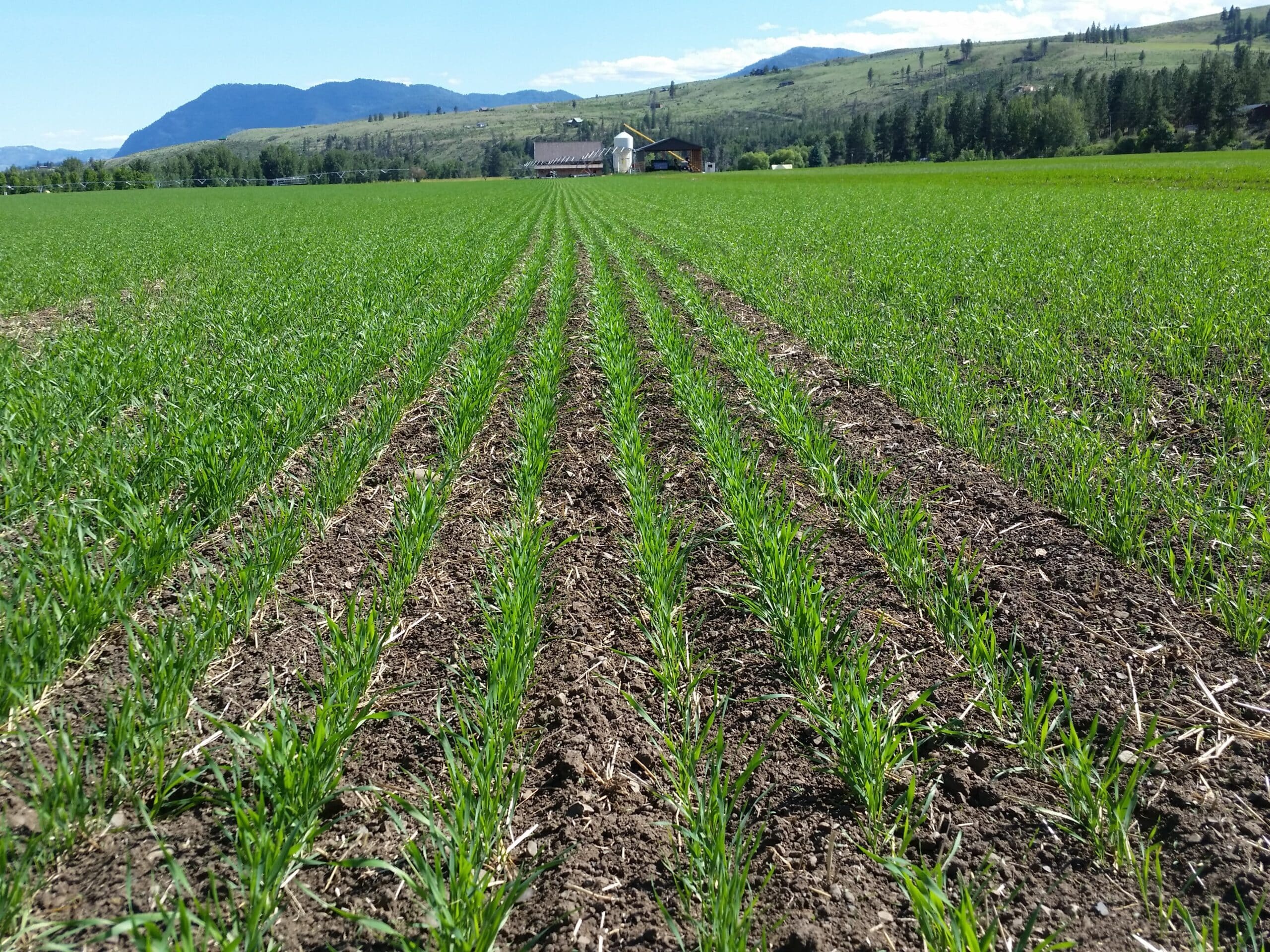
 Nationally, The National Sustainable Agricultural Association is doing some hard work. NSAC advocates for federal policy reform for the sustainability of food systems, natural resources, and rural communities. They are located in Washington DC and are actively working on making policy changes to the Farm Bill to include:
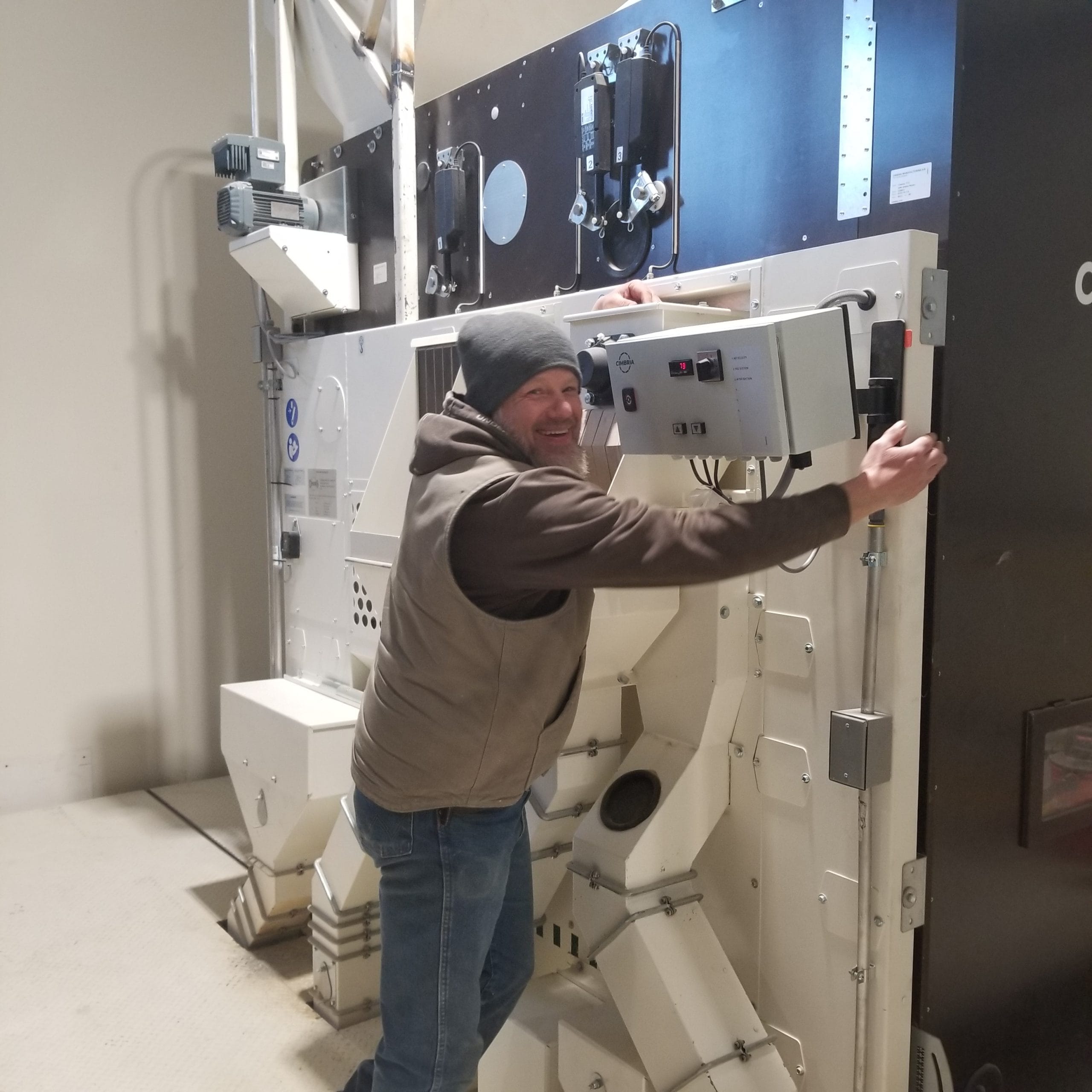
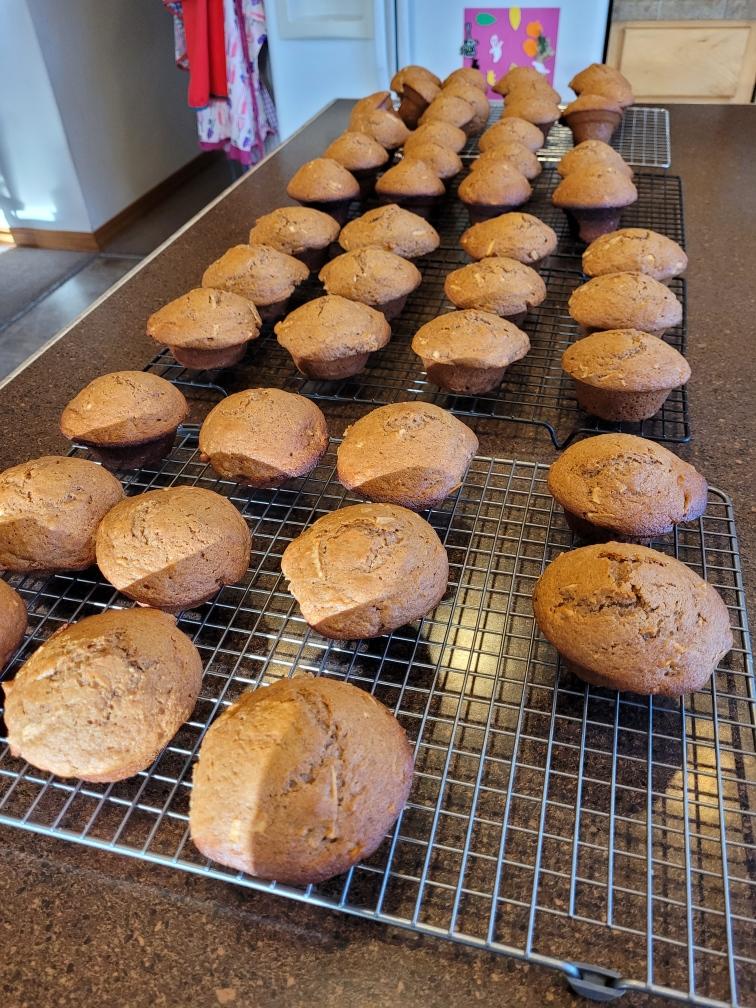 Sharee was no stranger to home-grown foods; she grew up on a 40-acre farm north of Winthrop, “in the midst of but not part of the Big Valley Ranch.” Sharee’s father, Walt Holcomb, worked at Okanogan County Electric Co Op for 35 years and her mom, known to many as “Mrs. Holcomb” was a secretary for the Methow Valley School District for 30 years. “But those were just their day jobs,” Sharee says. “The real work came in the form of raising three kids on a farm as self-sustaining as possible. However, we relied on the grocery store for all our baking ingredients, including flour.”
 As far as using whole grains in baking, Sharee says she was apprehensive until she stumbled across a You Tube video on 100% whole wheat bread with freshly milled grain. She was hooked. Once Sharee learned about all the grains and what they are best used for (for example, hard wheats are for yeast breads and soft wheat like
 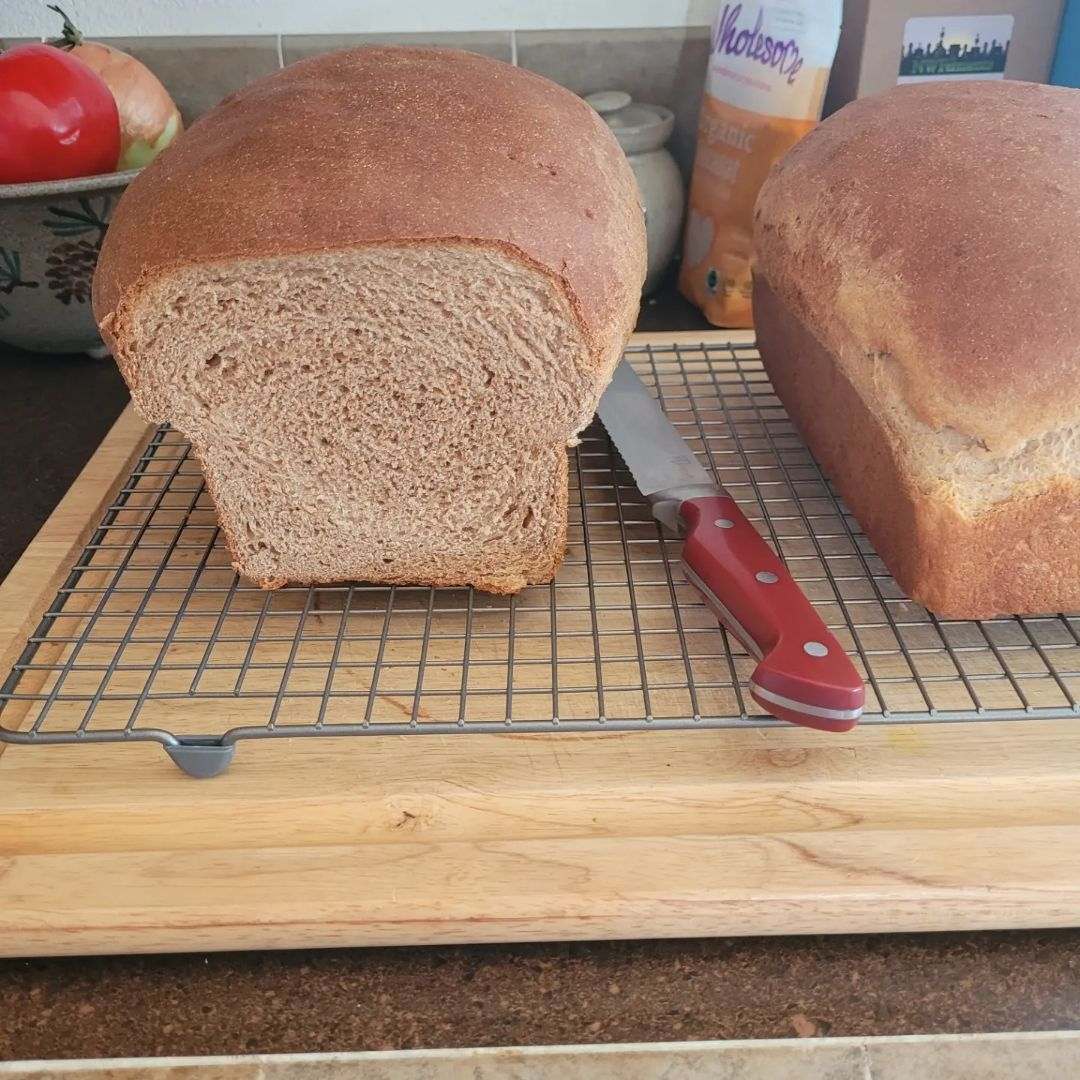 Sharee’s family isn’t her only test audience. According to Joy Randall, Bluebird Grain Farms Marketing Coordinator, “Sharee is an excellent baker and is always sending Steve with bread and treats for us!” The test products get high marks from the office staff.