by Ashley Lodato
Bluebird Grain Farms staff writer
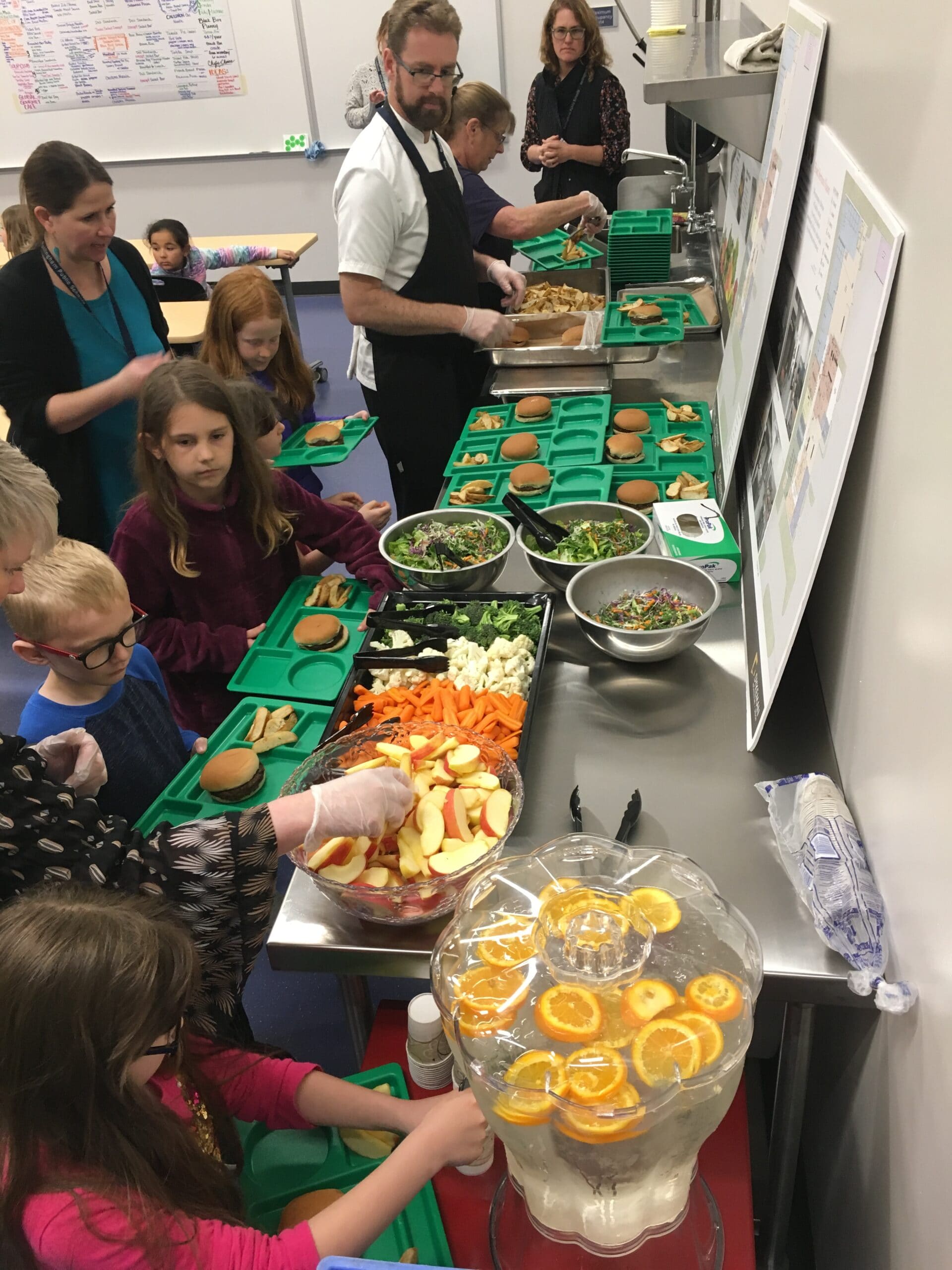 Imagine these items on a menu: Asian Beef Rice Bowl with Broccoli Spring Roll, Chicken Cordon Bleu Sandwich, Chicken Yakisoba. Vegan Chickpea Masala. Sounds like the kind of place you’d want to eat, right? Then imagine those menu items created from scratch using locally and regionally sourced ingredients. It sounds like the lofty goal of a trendy bistro but it is instead the vision the Bellingham Public Schools (BPS) has for its food services program. Called the “Bellingham Good Food Promise,” the mandate seeks to “encourage a lifetime of healthy eating by serving students nourishing, delicious, whole foods in a welcoming environment.”
Says BPS Executive Chef and Food Services Director Patrick Durgan, “we want to make sure every kid eats nutritious and tasty foods at school.” And the way to best accomplish this aim, says Durgan, is to change the school food culture from one of processed foods to one where entrees are prepared from scratch–a long-term goal that he and his staff are focused on, even as they go about their daily task of providing breakfast and lunch to 6,000 students in the BPS.
Converting to cooking from scratch is not an overnight process for a kitchen of any size, but it’s particularly challenging for institutions feeding large groups of customers. Add in local, state, and federal guidelines governing school lunch nutritional guidelines and budget constraints, and you’ll find it unsurprising that most public school kitchens rely on processed foods. But about a decade ago the BPS began to closely examine its food program, and with help from a farm-to-school advisory board and numerous conversations with and surveys of stakeholders ranging from students to parents to teachers to community members, the district determined that it needed to prioritize whole foods cooking, and has been moving methodically in that direction ever since. And for the past 3.5 years, Durgan has been at the helm of this movement, doing a job he seems destined for.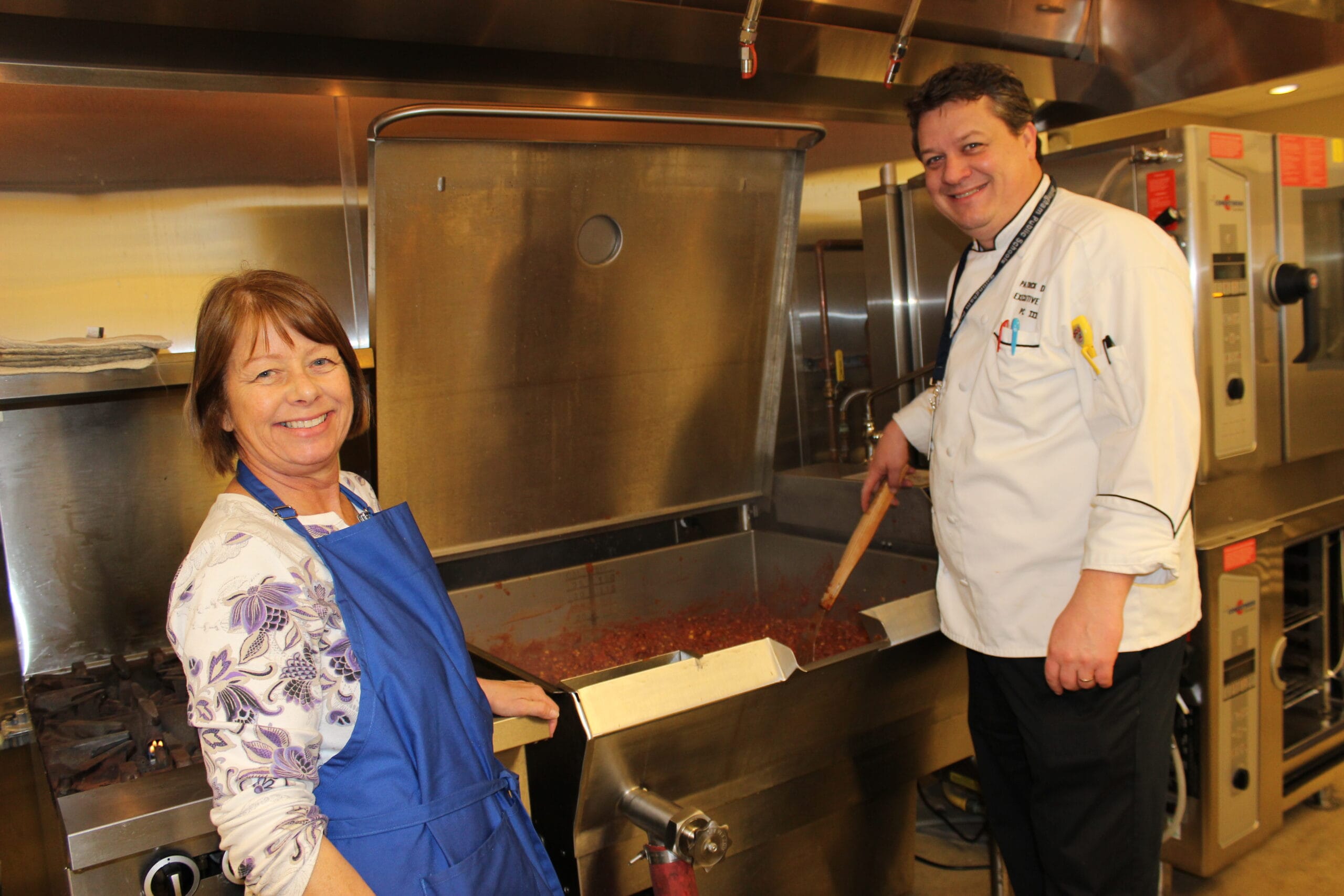
Durgan grew up in Mukilteo, in a family that appreciated the social aspect of food. “My family has always been great about entertaining,” Durgan says. “There are a lot of really wonderful cooks in my family.” Although Durgan loved cooking for others and recognized it as a way to make people happy, he says he never thought about cooking as a career potential. “I didn’t want to lose the love I had of cooking by doing it as a career,” he says. So Durgan dipped his toes in the waters of many other professions, thereby learning “exactly what I DIDN’T want to do”: vacuum cleaner sales, retail, cleaning grocery stores, making espresso, food delivery. He never stopped thinking about cooking, though, and one day in 2000 he thought to himself, “let’s just try it out,” and enrolled in the Western Culinary Institute, which was affiliated with Le Cordon Bleu.
Attending the Western Culinary Institute in his birthplace of Portland, Oregon, says Durgan, was deeply satisfying. “I learned a great work ethic,” he says, “and the art and science of food were such amazing things to me. It became clear that I could never learn it all and know it all. There would always be something new.” Cooking, Durgan realized, “would always bring me joy and satisfaction.”
No longer worried that he’d lose his love of cooking by doing it professionally, Durgan threw himself into the food world. “I did my externship at [Oregon’s] Sun River,” he says, “and I worked all the different elements of the business: cafe, fine dining, banquets.” Durgan fell in love with high-volume production at Sun River, and upon his return to Portland got a job at a convention center, where he “got 20 years of experience in five years of employment.” Menu planning, employee management, food science: Durgan learned about it all. Those were busy years, Durgan says. “I missed reunions, weddings, and funerals.” But he was still young and unmarried, and ultimately, he says, “It was a good sacrifice for my career. I gained a lot of confidence, as well as learning that I’d need a better work/life balance for my own longevity in the profession.”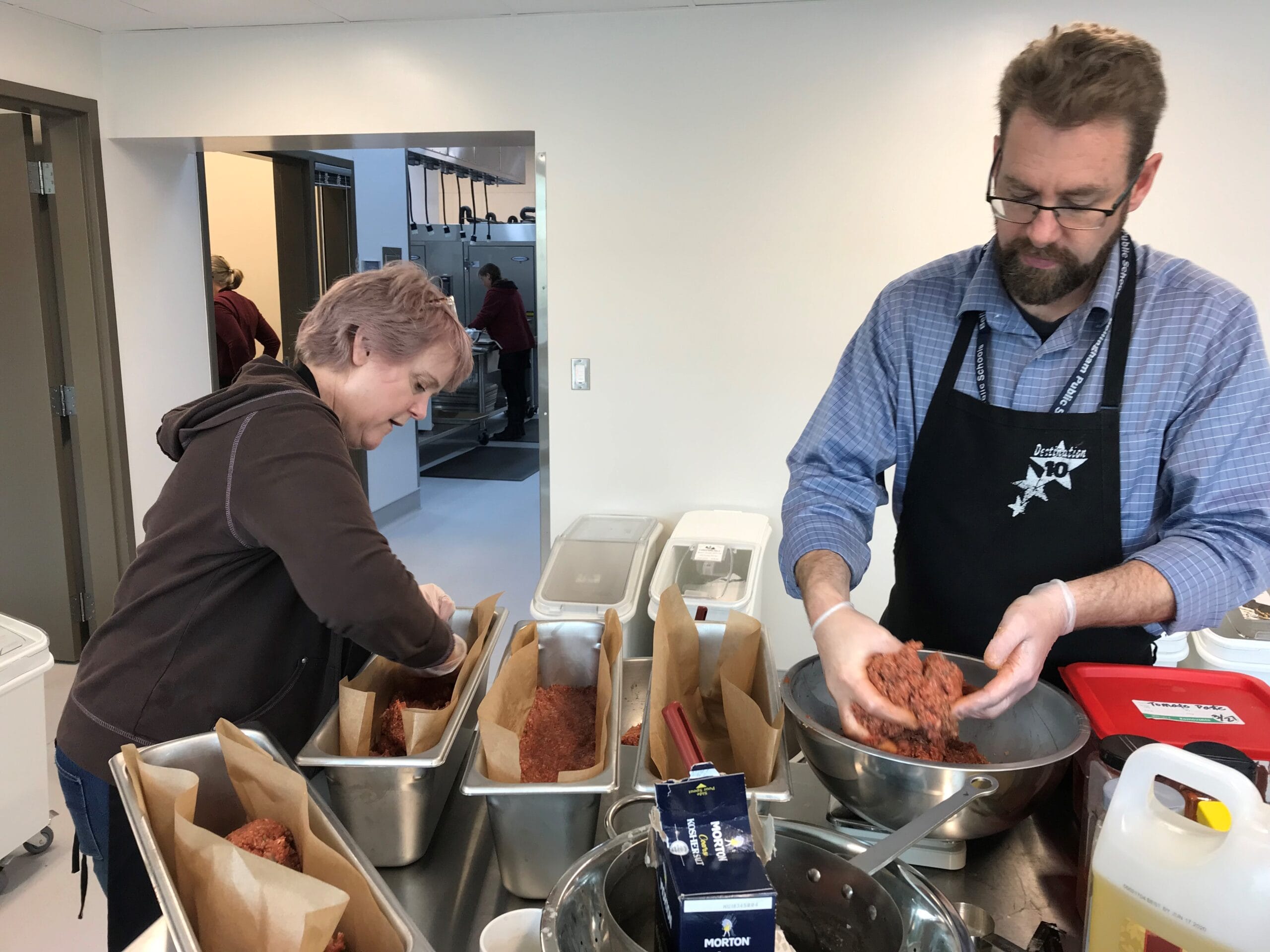
Seeking this balance, Durgan found a job with a food services contractor at Portland State University (PSU), which operated student dining halls, campus catering, and retail outlets. “It was a step in the right direction,” he says. “And I loved the education world. I loved watching kids grow and learn.” Five years later, this contractor bid on and won food services operations at Western Washington University (WWU) in Bellingham, WA, and Durgan was offered the opportunity to move.
Durgan is a man who takes opportunities seriously, embracing the chance to consider what each might do to his life, his path, his family, and his own personal growth. “I was married and had a two-year-old by then,” Durgan says of the Bellingham offer, “and it was a way to reorganize my life and to come back home to western Washington.” Durgan and his family moved to Bellingham, where he spent the next six years serving 40,000 meals/week on campus. Part of Durgan’s job at WWU was to engage with farmers, producers, and growers in the area and help them understand what was involved in providing products for the institutional world. “It was a phenomenal opportunity for the farmers to bring a lot of products to market,” Durgan says, “as well as for us to be able to serve locally grown products on campus.”
Understanding the farm-to-school supply chain later proved even more useful to Durgan, as did his experience weathering two management transitions, one at PSU and one at WWU. “I learned that these transitions are all about the people,” he says. “When things like this happen, there is a lot of apprehension and unknowns. We need to always be concerned about the people.”
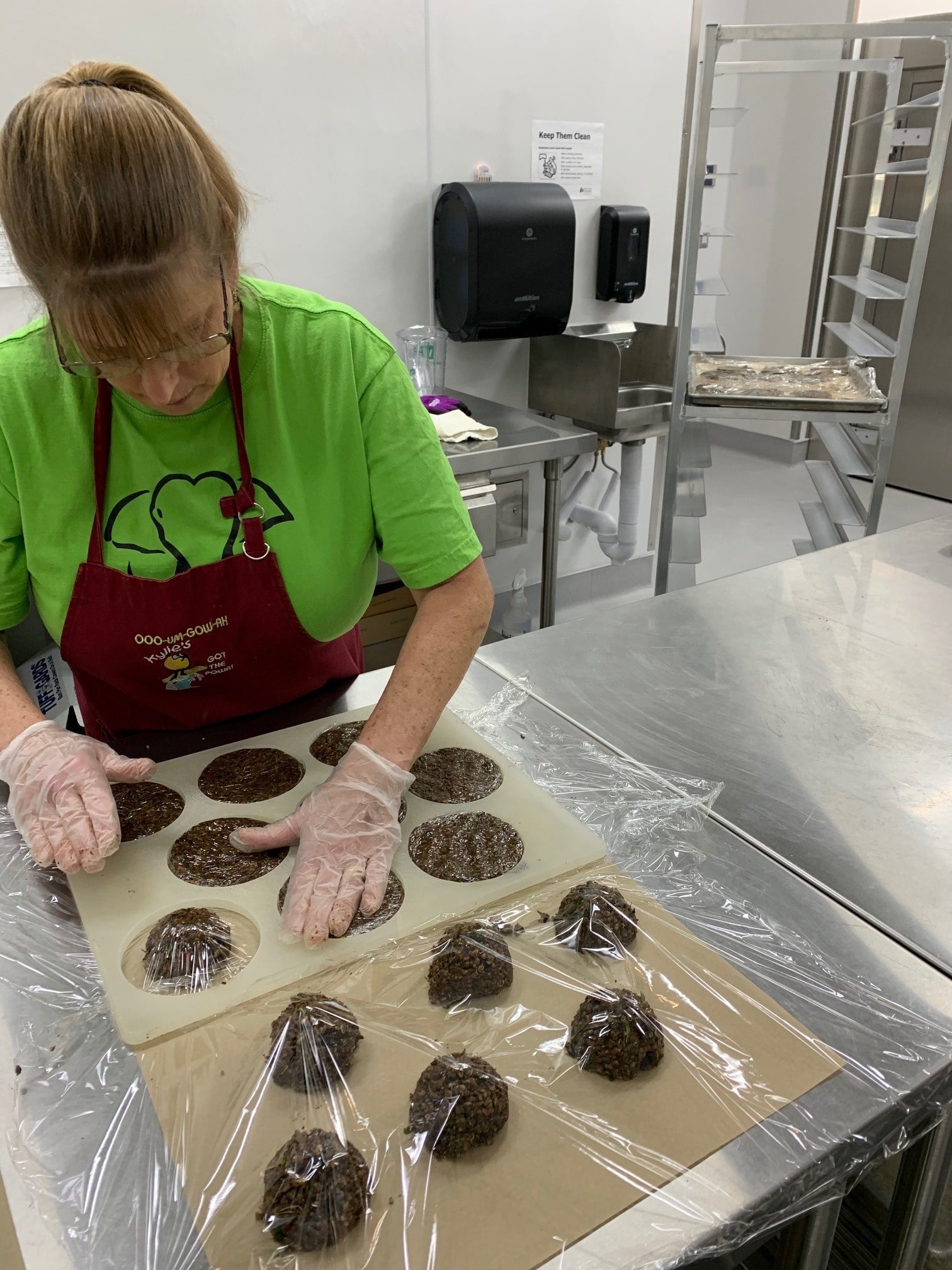 Because of his work with farmers and growers, Durgan was asked to join a farm-to-school advisory board that the Bellingham Public Schools had formed to examine its food services program. “As we went through this process, the district realized they didn’t have the right people in position for the transition. They needed a chef with a particular skillset.” Durgan was, to some degree, uniquely suited for this position: high-volume institutional cooking, educational food services background, management transition experience, and proven ability to bring farm products straight to institutional kitchens. And more importantly, Durgan understood that establishing a new food culture would be challenging for the existing staff, fraught with unknowns, and emotionally charged. “I knew I didn’t have all the answers,” Durgan says, “but I wanted to create this path, where together we could move forward in building a kitchen that would serve us well now and into the future.”
Durgan began work as the BPS’s Executive Chef and Director of Food Services on January 2, 2016, and since that day has never stopped thinking about ways to implement the priorities the district and its stakeholders laid out in their strategic planning sessions. “We realize it’s a long, slow road,” says Durgan of their systematic approach. “To do it in a smart way, we needed to take time, and continue to go back to our foundation. We appreciate the patience our community is showing with our process.”
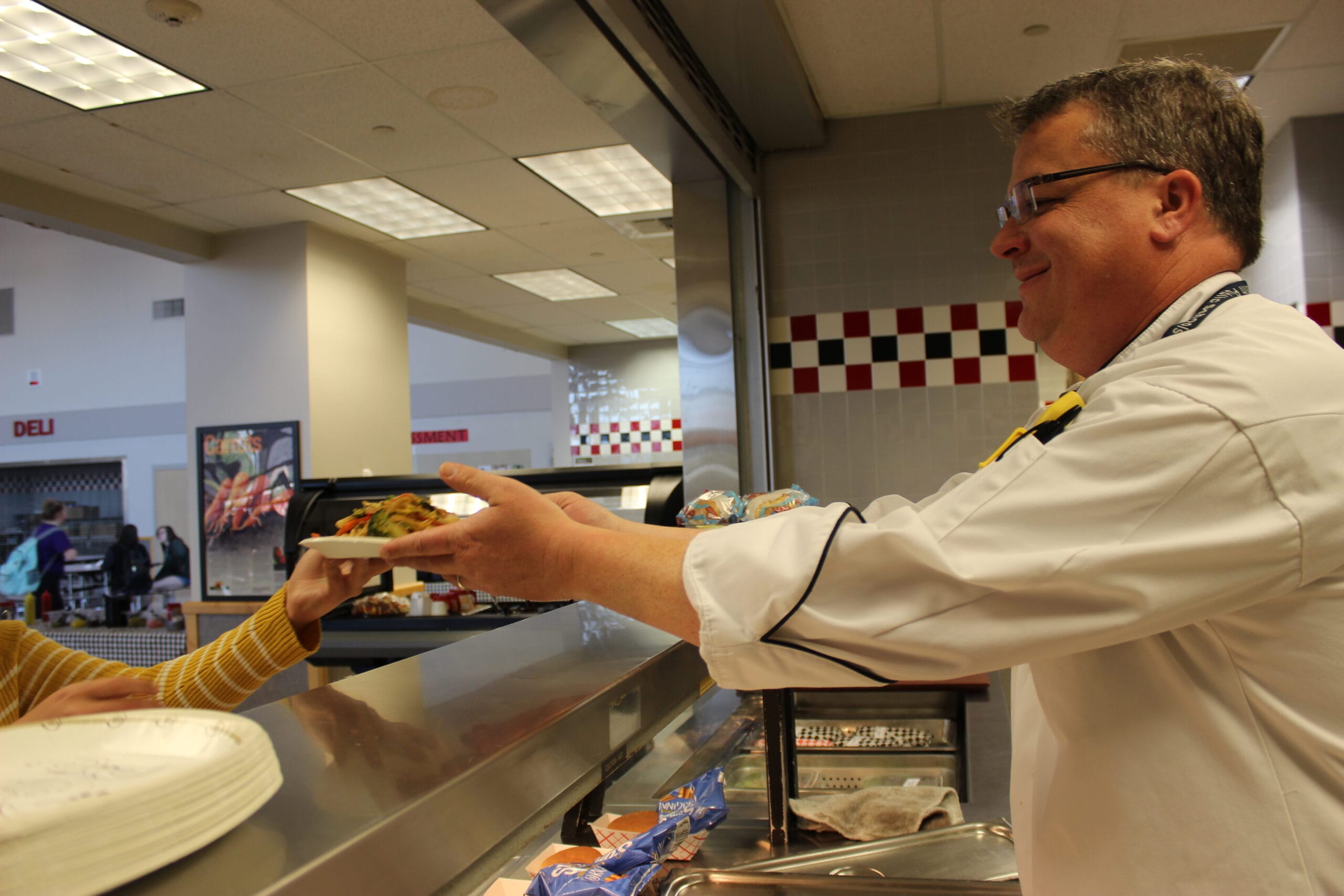 Progress may take time, but changes are noticed. “We celebrate the little things,” says Durgan. “Parents, teachers, staff, and students all were really happy with one of the first initiatives we implemented to get things going in the right direction: a salad bar.” A salad bar is so simple, says Durgan, but it provides so much. “First of all,” says Durgan, “a salad bar allows you to offer, not just serve food. In a salad bar kids can choose what appeals to them, and they’re likely to eat it. If you just serve them something on a tray, they may eat it, or it may go straight into the waste stream.” Salad bars also provide the opportunity to offer more variety of produce, says Durgan.
Other small but celebrated changes include things like the food services staff creating a recipe for “queso cheese sauce” from whole ingredients to pour on tortilla chips for nachos, rather than using the institutional cheese sauce product. “We put in cauliflower and onions,” says Durgan, and the staff and kids love it. “And, Durgan notes, the food services employees are excited by the positive feedback and proud of what they create. “They love these kids and they are proud to serve them delicious food,” he says.
 Fairly recently, Durgan was thrilled to hire Chef Mataio Gillis, who owns Bellingham’s popular Ciao Thyme restaurant. “Mataio embraced everything we have in our Good Food Promise,” says Durgan, who cannot praise Gillis highly enough. “Mataio has helped us get almost a full year ahead in our menu planning,” Durgan says. “We are already well above 50% transitioned toward scratch cooking for Fall 2019, and I only expected to be at 10-15%. It’s so exciting.”
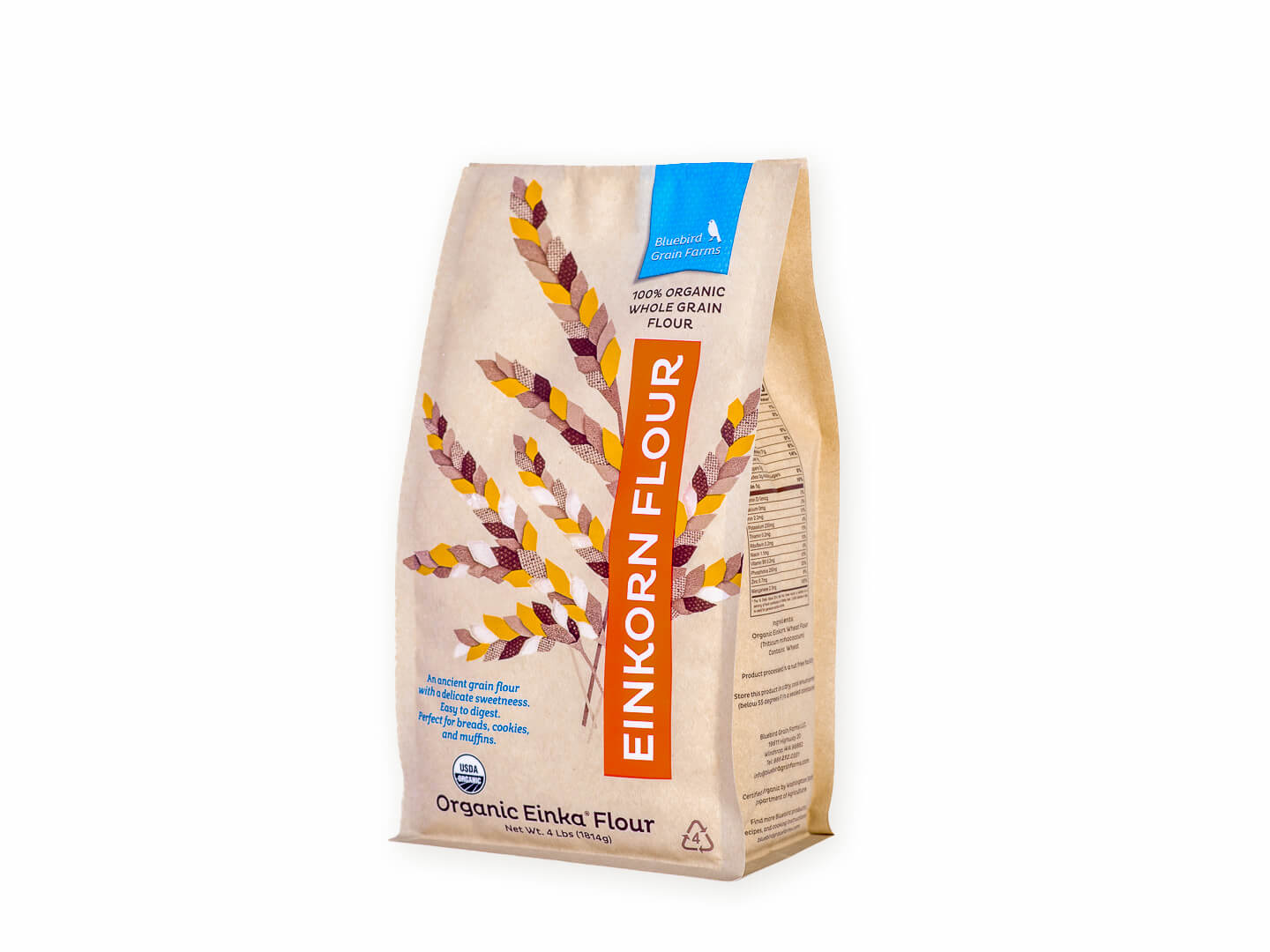
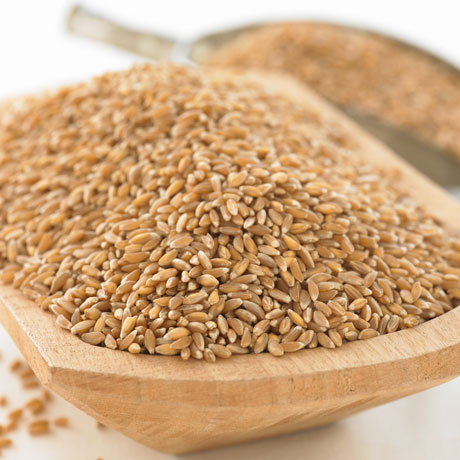
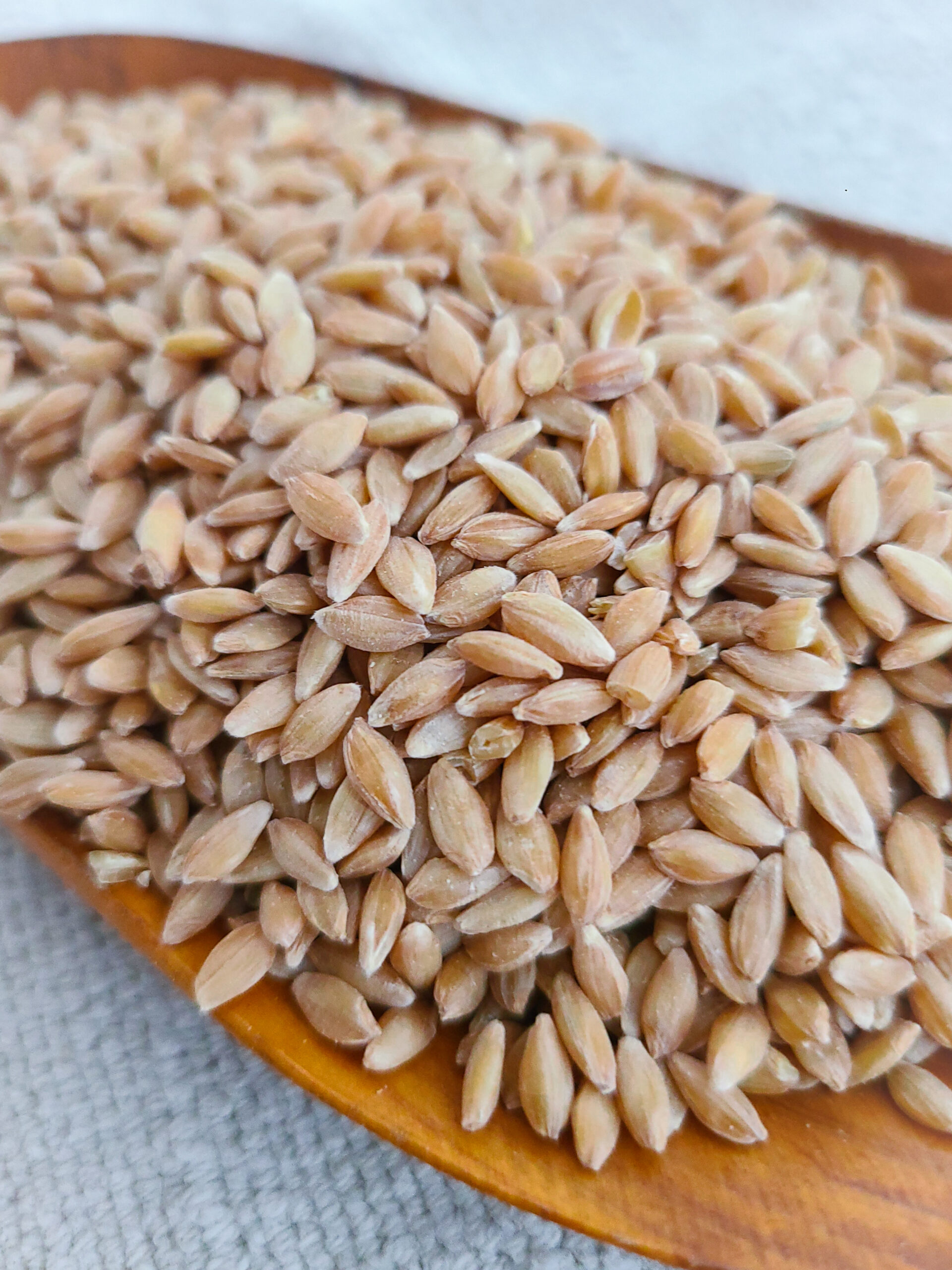
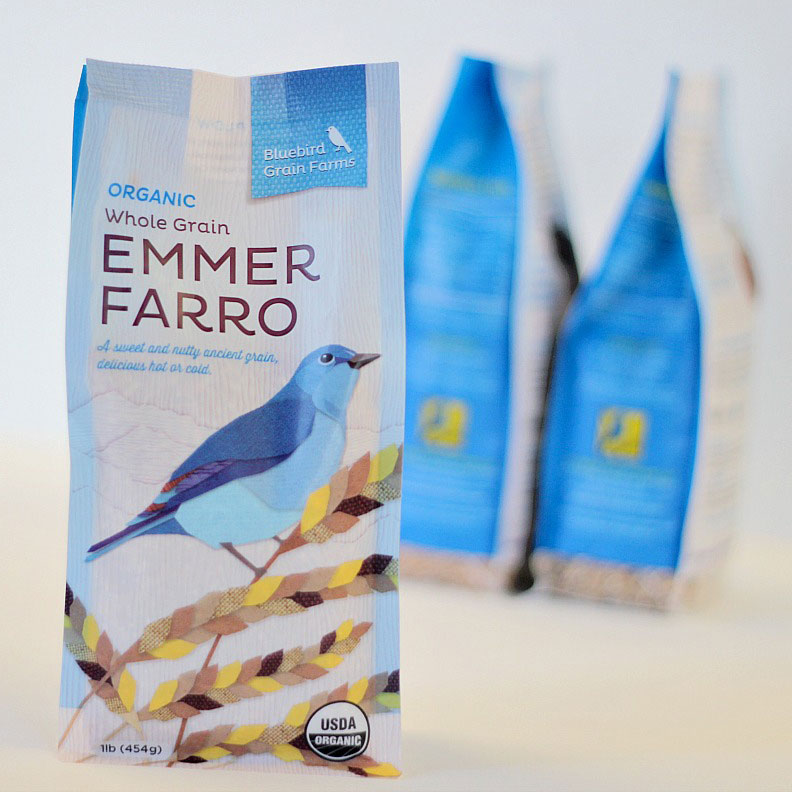
In addition to menu-planning wizardry, Gillis also brought to the BPS a grower that Durgan is excited about: Bluebird Grain Farms. “Mataio already used Bluebird’s grains at Ciao Thyme,” Durgan explains, “and he loved it, said it was so versatile. So we tried it at community events and we worked with the product a bit to see what feedback we’d get from kids and community members.” The response was overwhelmingly positive, says Durgan, especially for Bluebird’s Emmer Farro options. “We’re so ecstatic about these products,” says Durgan, who uses farro in grain salads, as a hot grain pilaf, and as texture in black bean burger patties. “You can abuse it a little, but it always resuscitates itself.” The BPS has to “abuse” products, Durgan adds; it’s the nature of institutional cooking. “This grain stands up,” he says.
Emmer farro is also fairly different than what most kids are used to. It’s a grain with texture and flavor, unlike most pastas and rices. “We like to expose kids and staff to new things,” Durgan says. “Even if something looks unfamiliar or unappealing, we encourage them to ‘take an adventure bite.'” Stepping out of one’s comfort zone appears to be a theme for all involved in the BPS’s Food Services Program, from creators to consumers.
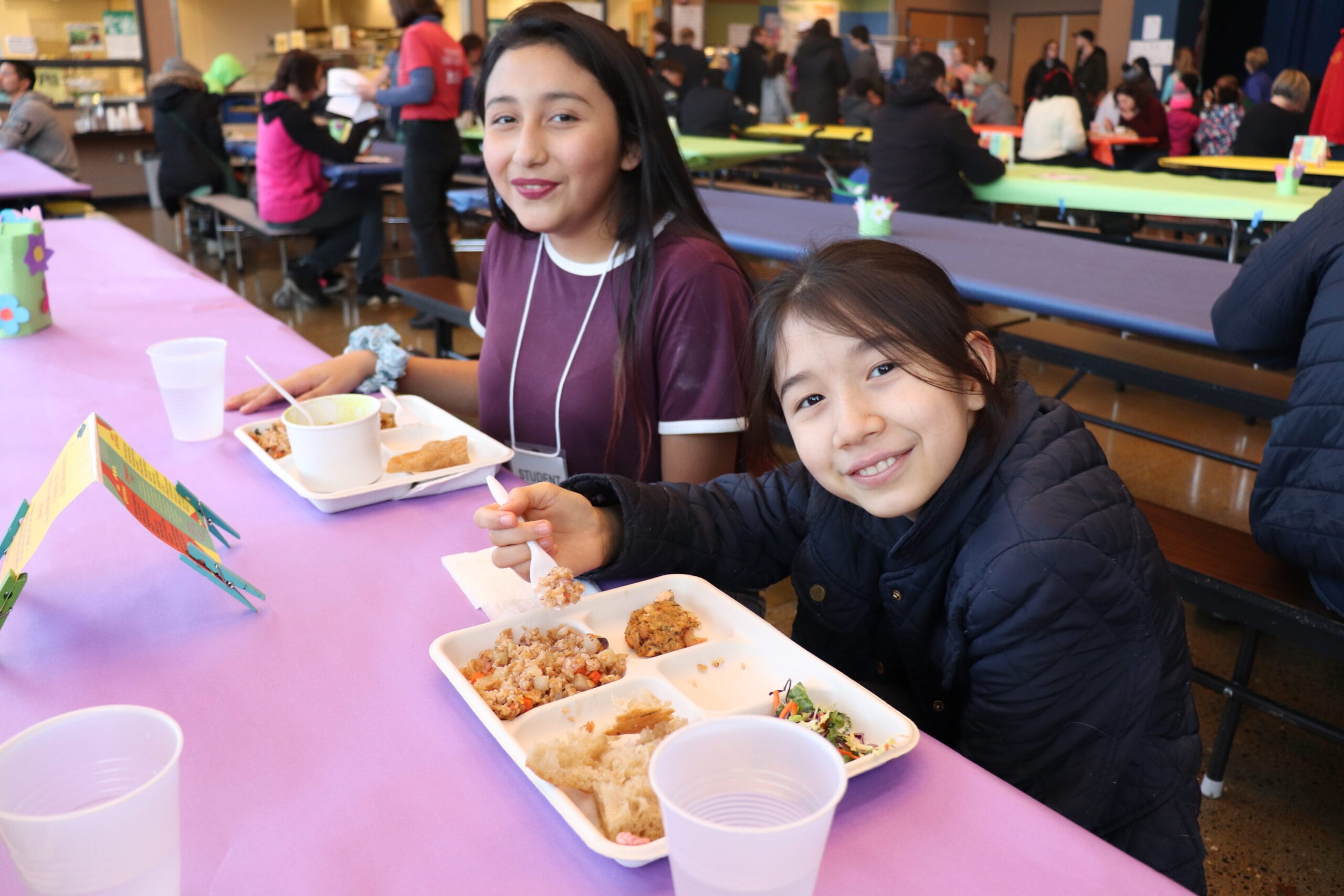 School’s out for the summer now, but Durgan and his staff remain busy, serving roughly 16,000 free meals to kids under 18. “It’s a standard bag lunch now,” says Durgan, “but we are hoping to maybe grow our offerings.” Durgan is always asking, “How can we do more? How can we address a need, while still balancing our capacity and our ability to deliver on core things, and our long-term sustainability?” This desire to feed hungry kids was put to the test over the winter, when the BPS had a week of snow days. “We knew there were kids counting on getting meals at school,” Durgan says. “We figured out a way to serve nearly 800 lunches to kids in need. We made things hamburgers and vegan curry. AmeriCorps helped us deliver the meals. Those kids got fed.”
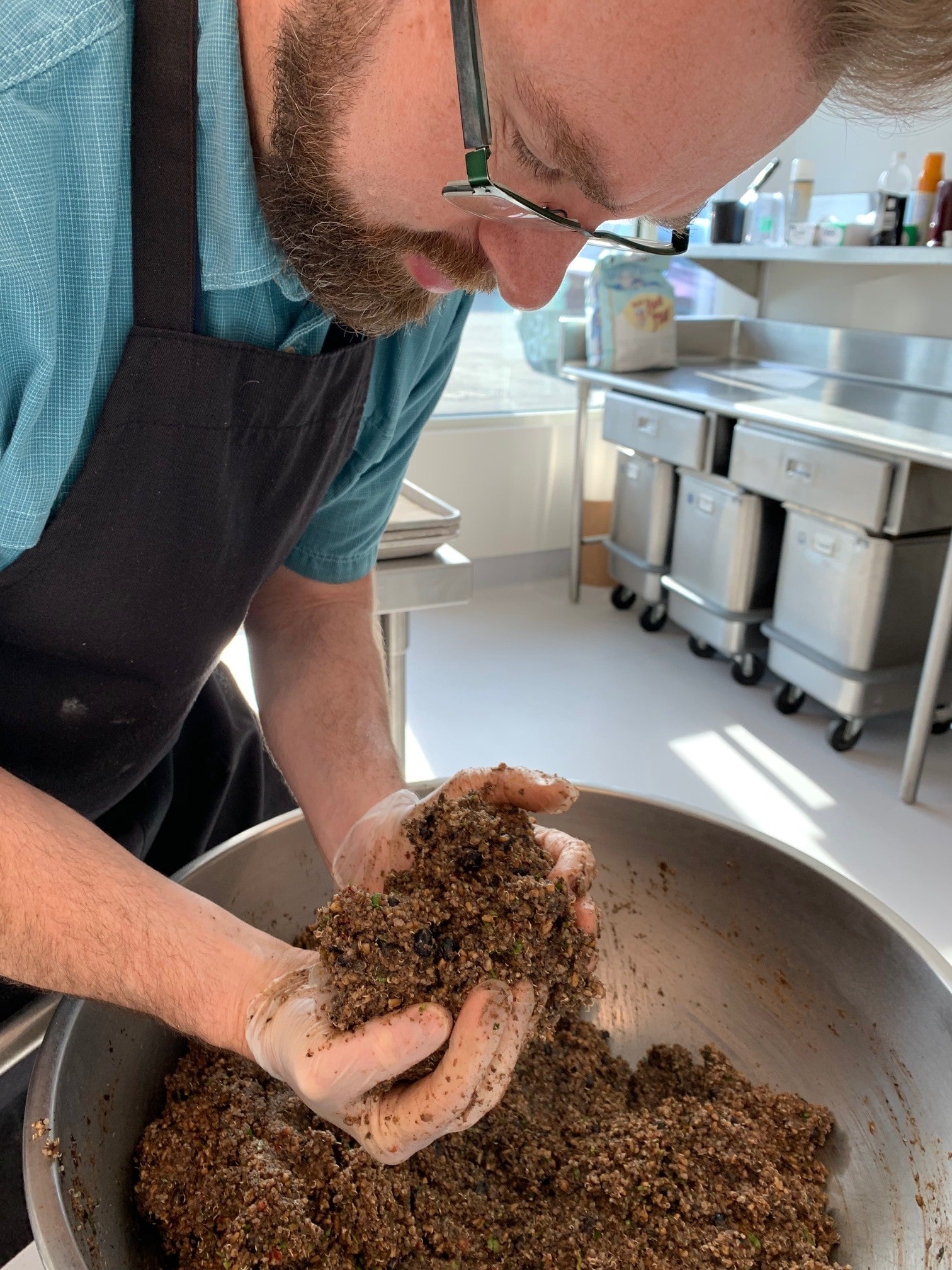 Unlike restaurants, the BPS is not competing for customers. “Our customers are our students,” says Durgan. This makes the BPS well-positioned to be a leader and a resource in a fairly revolutionary approach to institutional cooking. “We want to share recipes and processes with other school districts,” says Durgan. “We want to be an example. We’ve learned a lot and want to share that knowledge.”
Indeed, as a food service program testing with great success recipes like beet hummus and felafel, the BPS Food Services Program under Durgan and Gillis has much to offer. “We’ve taken all these things that used to be highly-processed, like meatloaf and sauces,” says Durgan, “and transitioned those to scratch. We tested, got feedback, revamped.” The kids are so ready for this kind of change, Durgan adds. “They are far more prepared for it than I had dared hope they’d be.” The staff, too, are embracing the changes. “We have such dedicated staff who bring all this excitement to work every day,” says Durgan. “We all own a piece of this change.”
Learn more about the Bellingham Public Schools’ Food Services Program and chefs Patrick Durgan and Mataio Gillis on the district website.


 Interspersed with farming, marrying, and bearing three children, Gibbs started fermenting vegetables and producing three flavors of live sauerkraut as a value-added product for the farm, as well as teaching for WVC and managing the campus greenhouse. It was during her tenure at WVC that Gibbs first encountered
 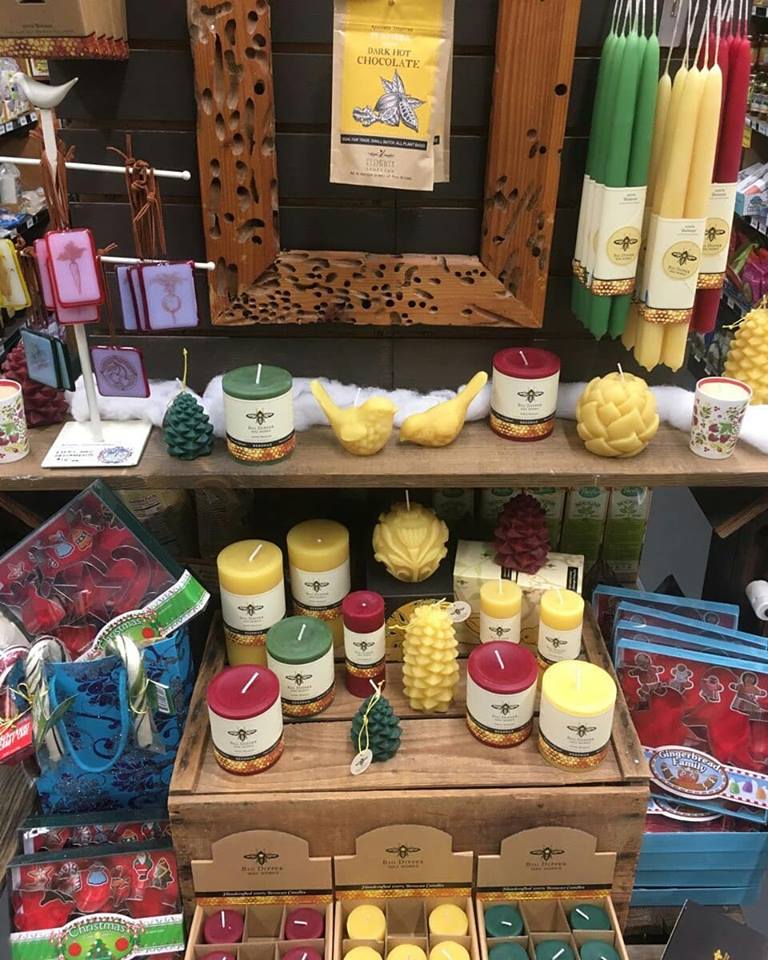 Sage Mountain Natural Foods is a feast for the senses for anyone who visits, from local to tourist, and even those just passing through and unlikely to buy the ingredients to make a meal from scratch can find many delights to take home, from soaps to wildflower mixes to gifts to deli and bakery treats. Local shoppers can stock up on everything from bulk cleaning and beauty products to grains to dairy to produce. And shop for produce they have indeed. Gibbs says “Our produce sales are six times what they were when I first bought the store.”
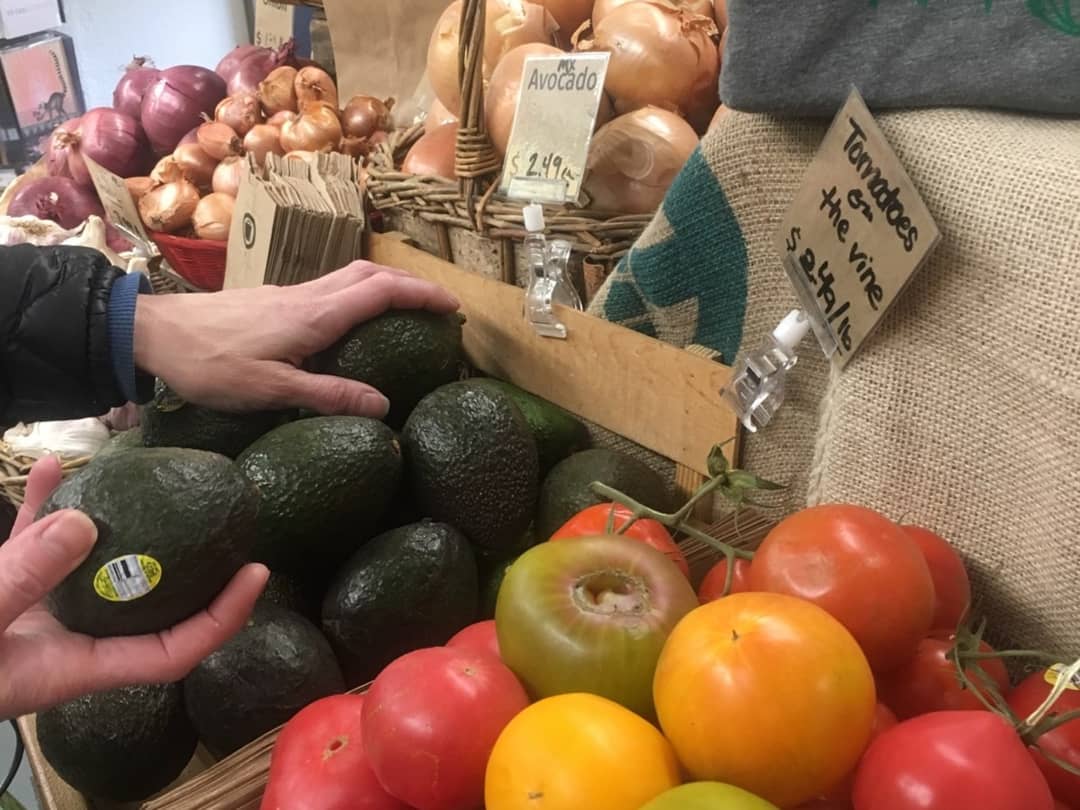 To support the store’s increased emphasis on produce, Gibbs also installed a new cooler and assigned produce to a larger area. She keeps prices low by participating in a natural food cooperative that gives her access to steeper discounts on fruits and vegetables. And, Gibbs says somewhat apologetically, “I do the produce myself. I like to control the display and how it looks.” She is, however, training another store employee to pinch-hit for her on occasion. “We have the best produce in town and people come in for that,” Gibbs says, adding that “Dan’s Food Market [another local grocer] also has a great selection.”
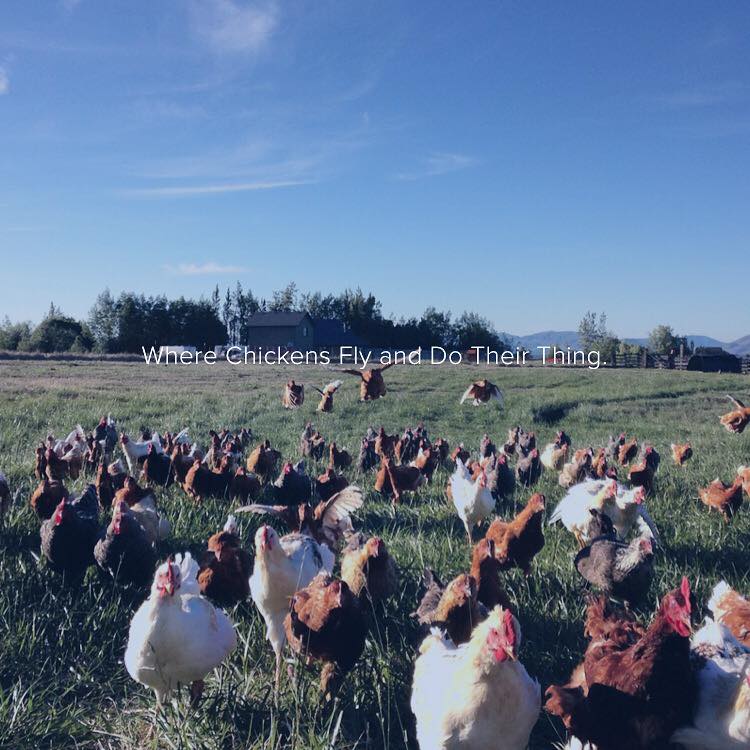 “We believe that farmers are an essential part of a healthy community,” Gibbs continues, “and we want to keep our farmers viable. We also want to keep the money in our local economy. So we buy from local farmers as our first option, and Charlie’s [an independent regional produce company] next, then other Pacific Northwest growers, then California growers.”
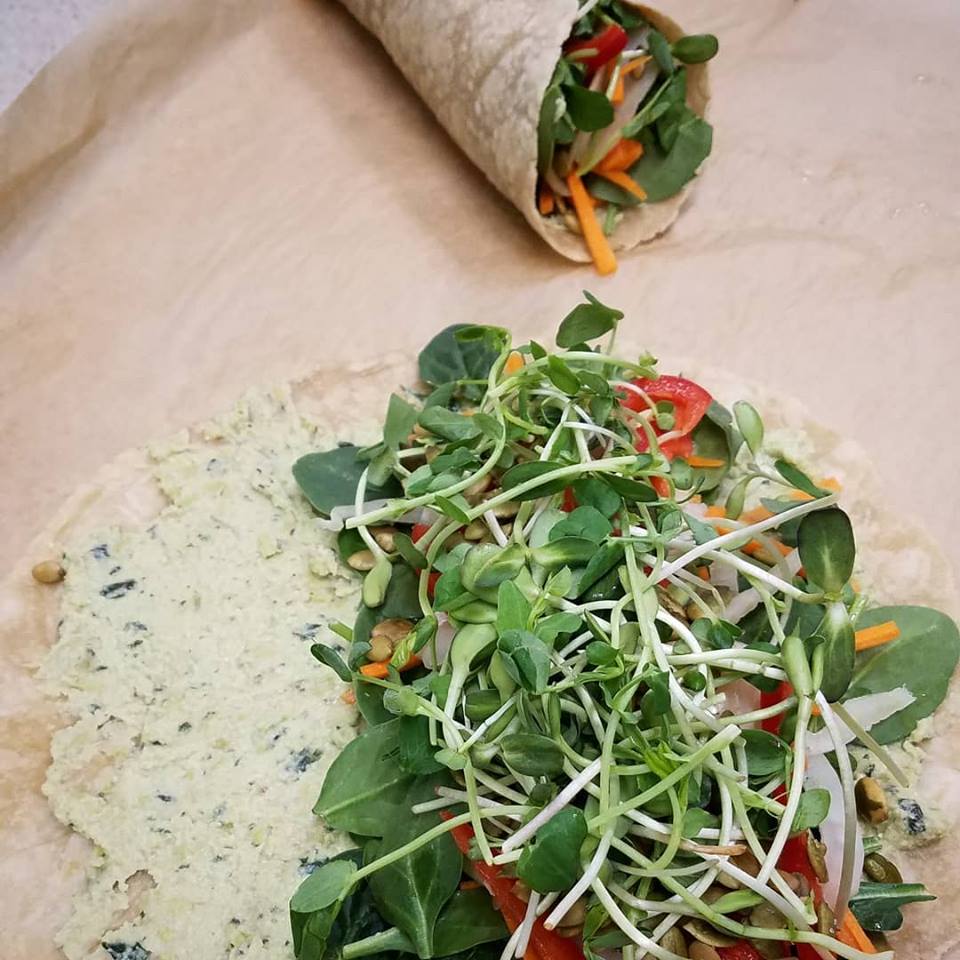 Through her work at Sage Mountain, Gibbs has learned how many people really do cook from scratch, despite popular impressions that Americans are all about quick and easy these days. “We’ve offered quick meal packages,” Gibbs says, “but we don’t sell a lot of them. People are buying really basic ingredients from us.” Some of those basic ingredients are somewhat surprising, like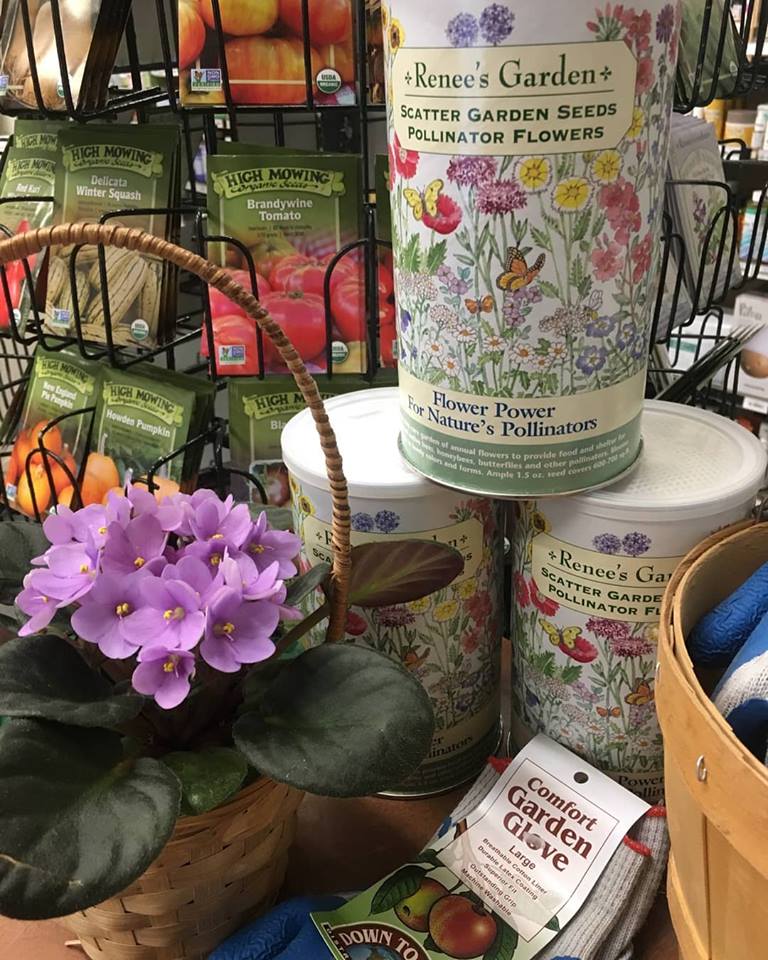

 Lane became acquainted with
 Davis grew up in the kitchen with her grandmother and says that her grandfather always had an impressive tomato garden, giving her an early taste for the perfection of a home-grown, sun-ripened tomato: a product rarely found in large mainstream grocery stores but readily available in season in co-ops like Sno-Isle. Although her immediate family was not focused on local or organic foods, says Davis, “they did put a lot of energy into preparing whole foods for the family to enjoy together. Those hours spent in the kitchen as a young person undoubtedly shaped my love for food and my desire to improve our food system.”
 Sno-Isle is invested not just in the health and longevity of individuals, but also that of communities. To that end, Sno-Isle offers
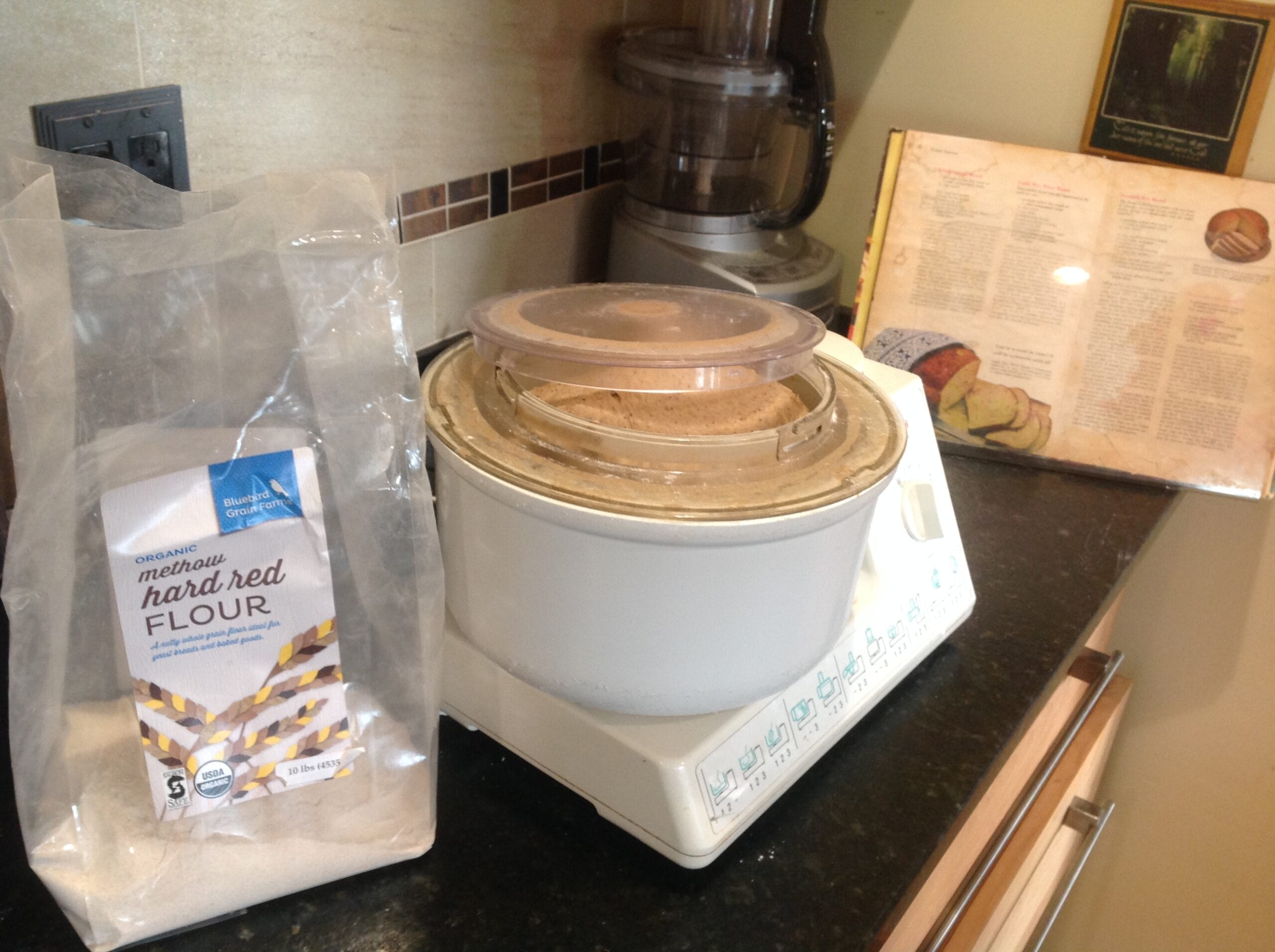 Judy notes that she and Gail routinely substitute
 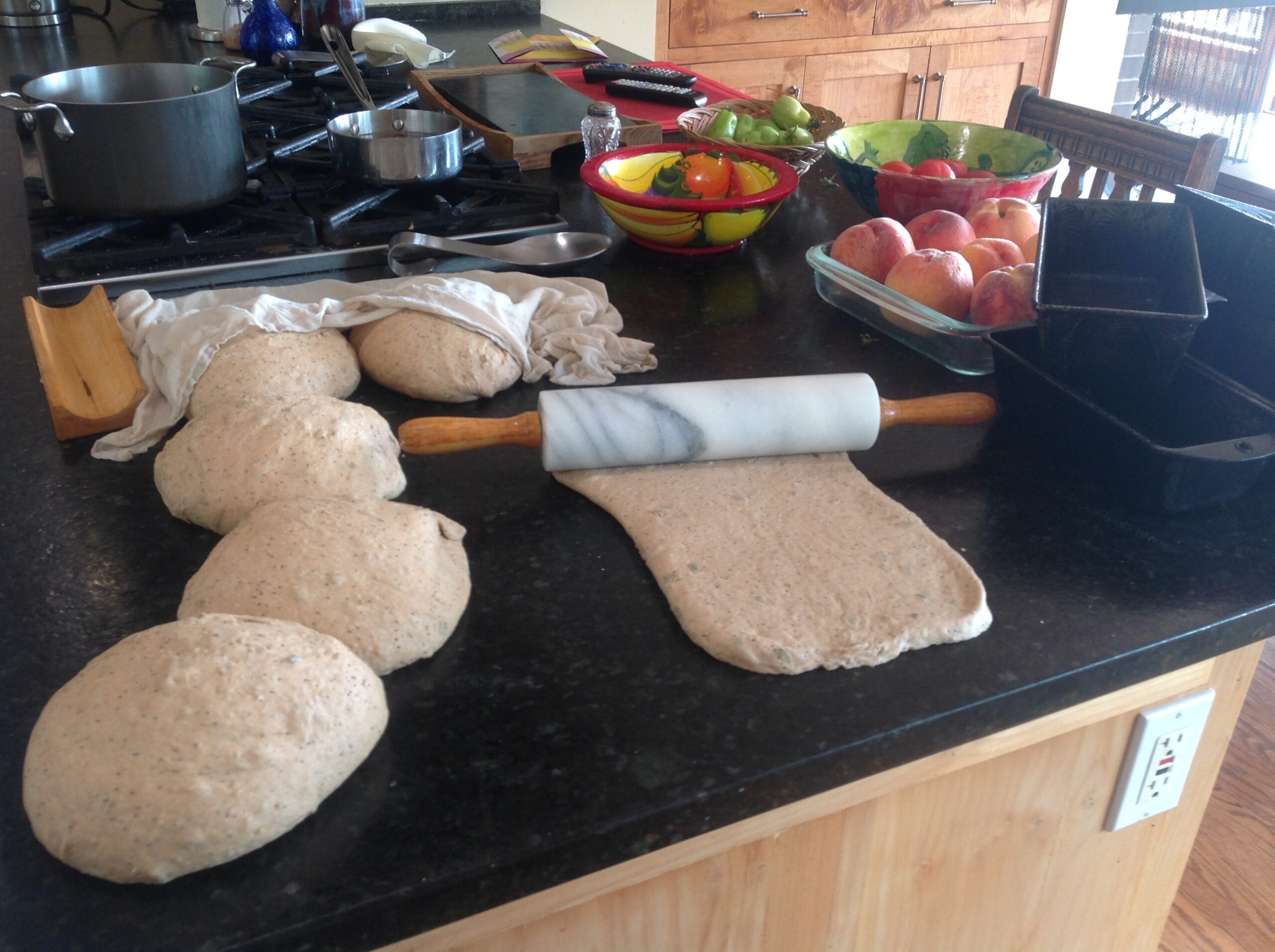 Judy and Gail’s home on Whidbey Island is not all that far from the Methow Valley as the crow flies, and although delivery service is available, Judy tends to rely on her daughter Susan’s frequent work trips to the west side of the state to keep her supplied in Bluebird Grains. Of the flours, whole grains, and cereals Judy says, “It’s probably the most local product that I know about.”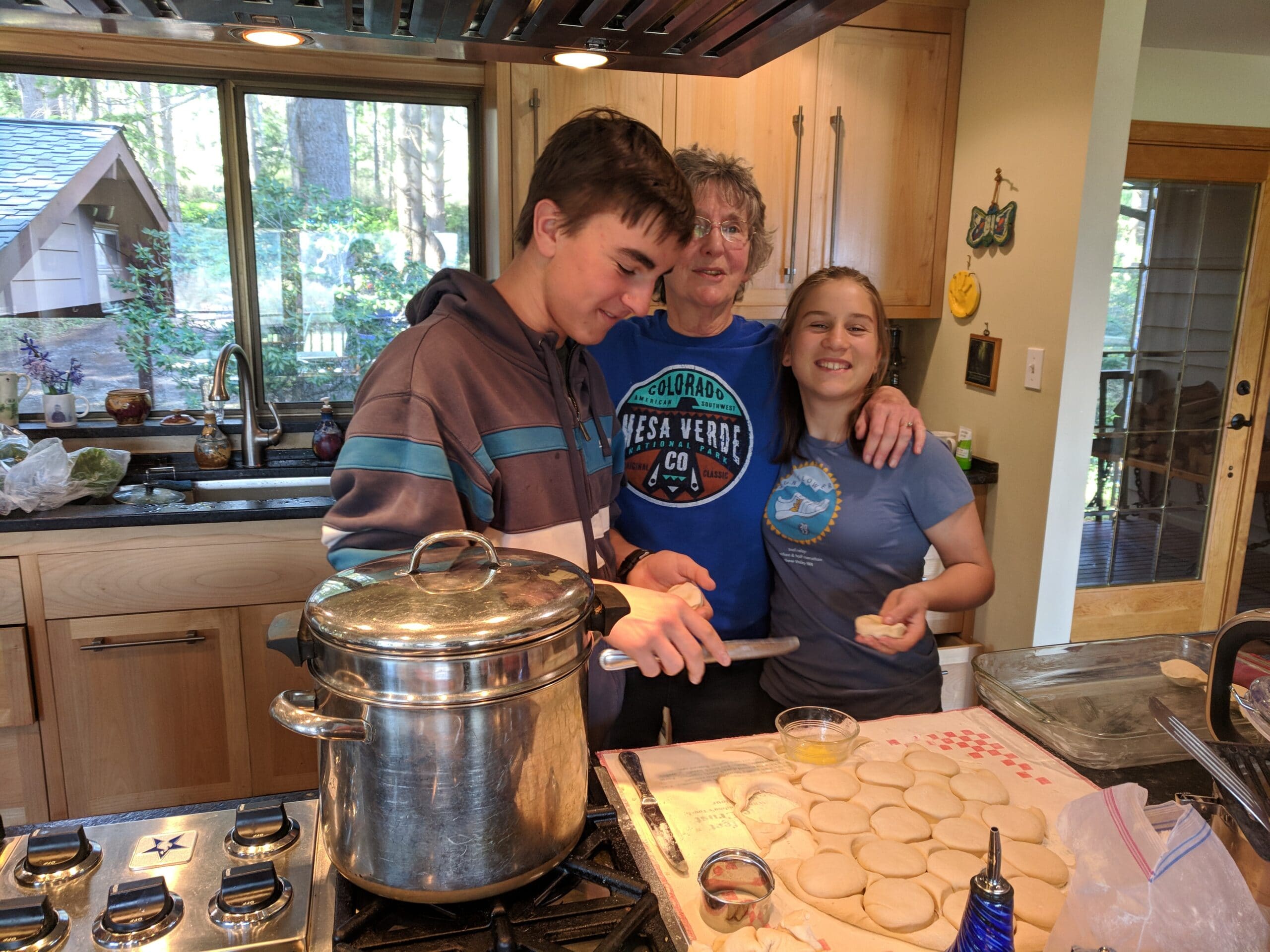
 We have also added a new social media coordinator position, daughter Larkin Lucy who is managing and developing content for our social media accounts. It is fun to have the younger generation plug into this important marketing role and nice to have “the kids” interested in the business.
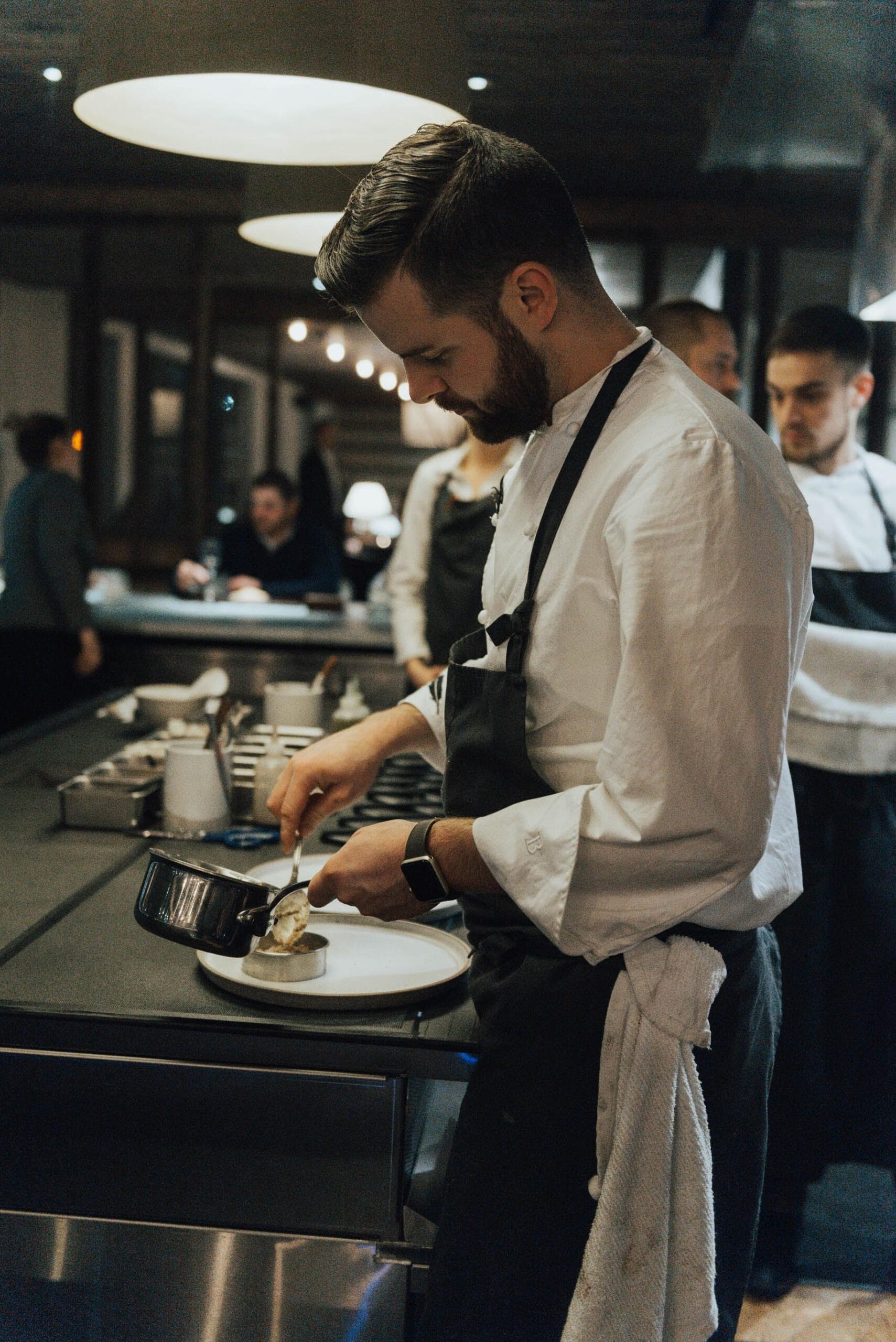 The “farm to table” movement has swept the country by storm in recent years, but for those brought up like Chef Cameron Slaugh (rhymes with “raw”), farm to table isn’t a movement–it is a way of life. Raised on a rural Utah subsistence farm, Slaugh grew up eating gorgeous produce served raw or prepared simply, freshly-laid eggs, and whole grains. So even while his peers were slurping up popsicles as an after-dinner treat, Slaugh found pure pleasure in the form of a warm vine-ripened tomato or a handful of berries for dessert. And at the impressionable age of 8, Slaugh began seeking inspiration in the kitchen, surrounded by the bounty of his family’s farm and the freshest ingredients he could ever hope to handle.
 “Everything really started for me there,” says Slaugh. “I loved the way that everything changed with the seasons at Park Avenue,” he says. “The uniforms, the menu, the dining room decor. It was very refreshing.” Mentoring with the acclaimed Chef Craig Koketsu at Park Avenue, Slaugh learned to maximize the flavors of each season’s freshest available produce.
 But most of all, Eleven Madison’s lasting impact on Slaugh were the lessons he learned about cooking from the heart. “In an intense environment like Eleven Madison you can forget about that,” Slaugh says, “but the best advice I ever got there was to cook with heart and soul. Your technique can be flawless, but the best food has to also be delicious, and you can really only get that if you invest yourself in the process.”
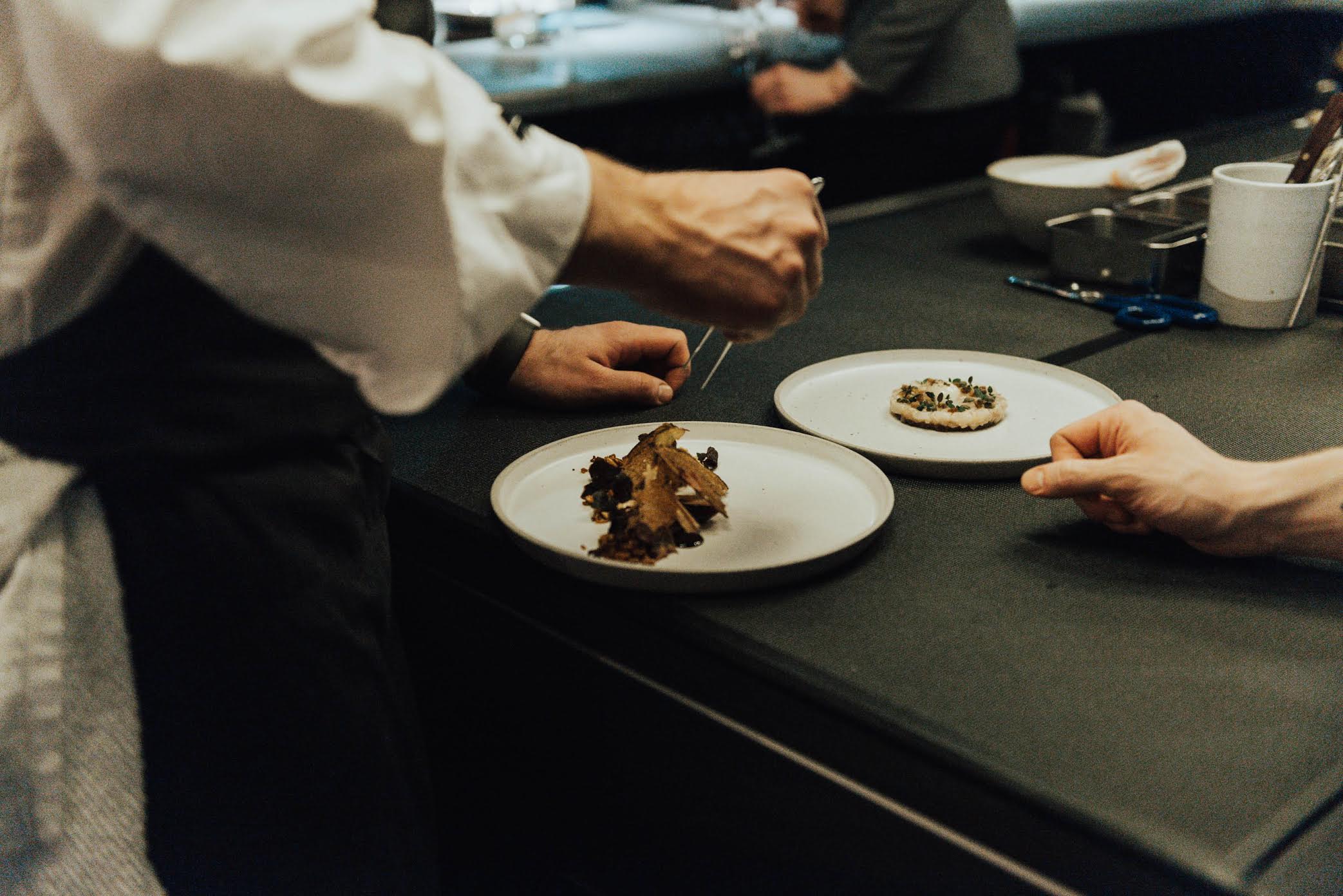 Slaugh and his wife eventually moved back west to his mother’s hometown, Los Angeles, and Slaugh began cooking at
 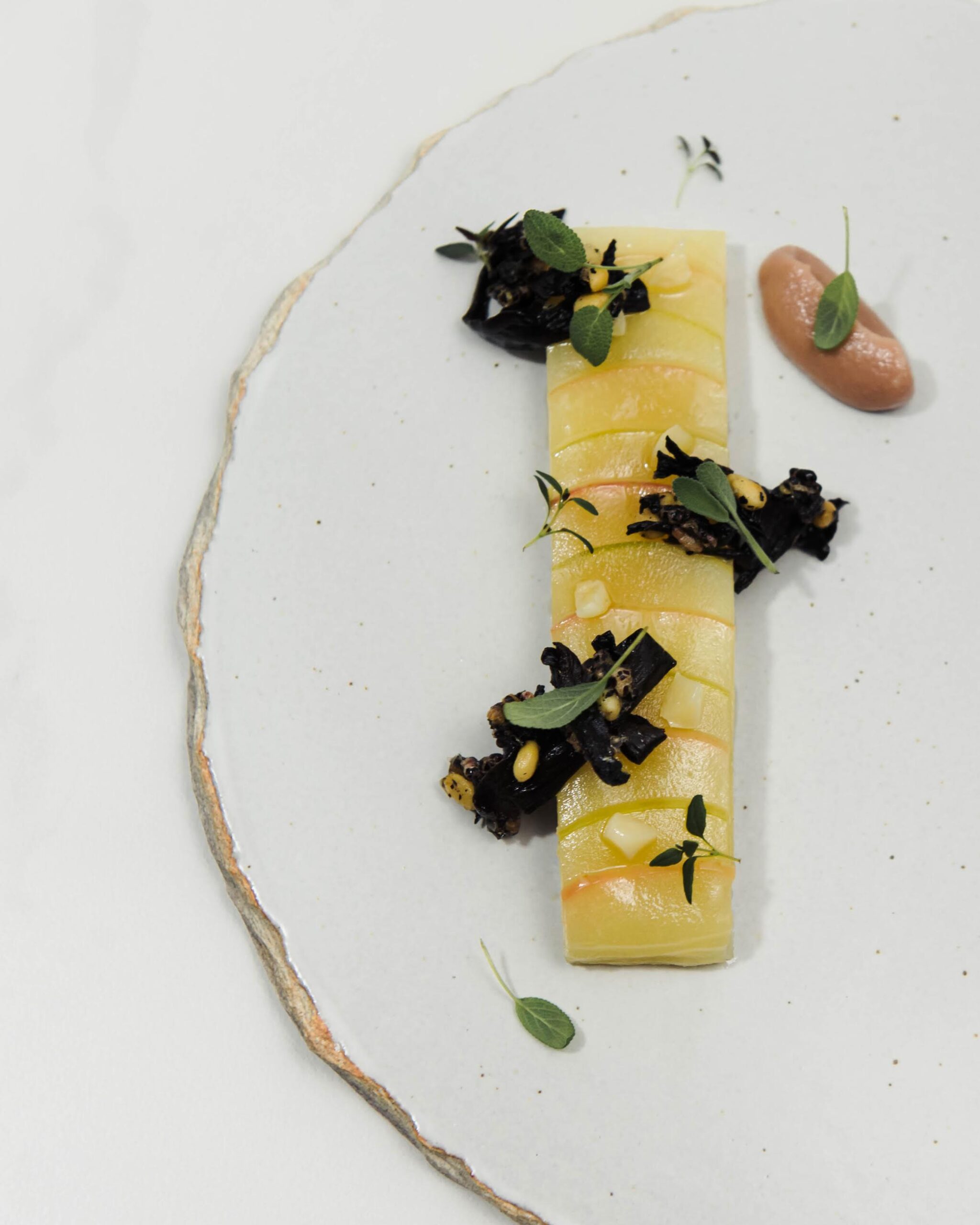 Meanwhile,
 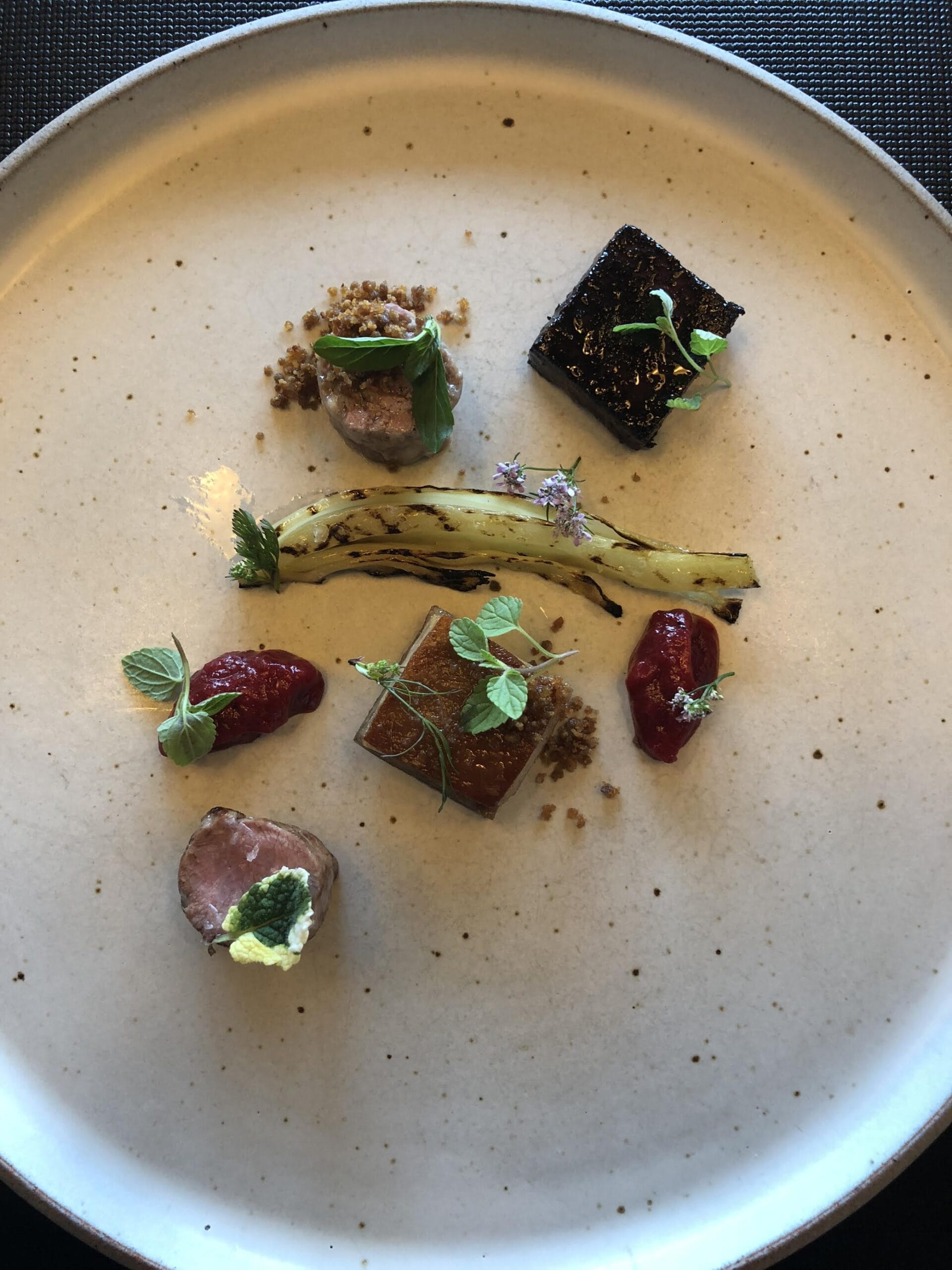 Slaugh continues, “Bluebird sent me some samples–
 May is always a busy month for us at Bluebird, but we have been loving the beautiful wildflowers and steady soil moisture in our fields. Our thoughts go out to those who have been adversely affected by the recent flooding in eastern Okanogan County. Thank you to all who work hard to keep our communities safe during events like these! Here are a few notes on what’s been going on at Bluebird the past few months:
 to recover from a race! Stew served over 1,000 of these bowls at the event. If you’d like Dietz Catering to help out at your event in the Methow Valley (they do an amazing job with weddings), you can get in touch
  They say some things are so addictive you can get hooked on your very first try. Patrick Jeannette (aka “Grampy Pat”) had this experience the first time he sampled a true Alaskan sourdough bread, and he’s had nary a sourdough-free day since.
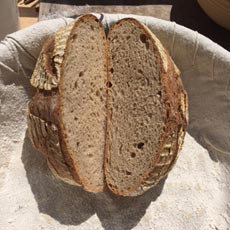 Still, many years passed between those Bridgford rolls and Grampy Pat’s signature sourdoughs–years that Grampy Pat spent, in his wife’s words, as a “serial entrepreneur.” Life moved at a fast pace in the 70s, says Grampy Pat, and after a couple of failed ventures a successful printing business allowed him to “buy the big house on the hill for my wife and 2 kids,” before migrating north to Alaska to use his design minor to create fabulous kitchens for affluent Alaskans. When Grampy Pat had completed a kitchen, he always cooked the first meal in it for his clients. One night a client said “That’s great–you cook dinner and I’ll bake Alaskan sourdough bread to go with it.”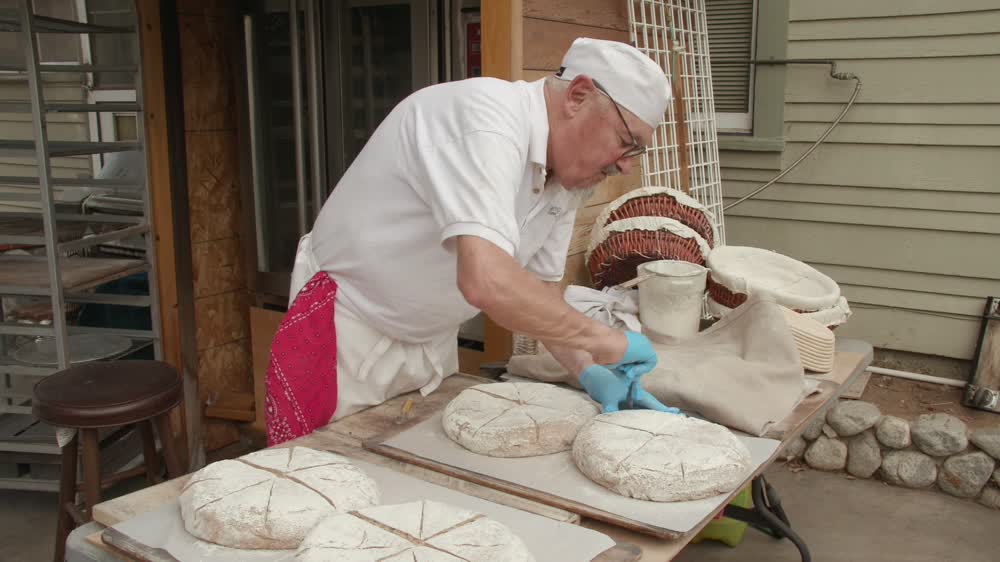
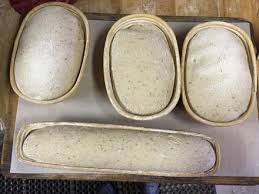
 A few years ago Grampy Pat got the opportunity to bake in a 17th-Century wood-fired oven in Cortona, Italy. It’s a bit of an “Under the Tuscan Sun” memory for Grampy Pat: fresh Italian Asiago cheese, an aged Borolo wine opened the day prior, 16 loaves baked in the village oven, his wife, and friends, in a villa near an olive grove. “It was incredible!” says Grampy Pat, (only he added an expletive before “incredible” for emphasis). “Stupefacente!” the Italians might say. “Amazing!” Read more