
by Ashley Lodato
Bluebird Grain Farms staff writer
photos by Ashley Loyer
 The “farm to table” movement has swept the country by storm in recent years, but for those brought up like Chef Cameron Slaugh (rhymes with “raw”), farm to table isn’t a movement–it is a way of life. Raised on a rural Utah subsistence farm, Slaugh grew up eating gorgeous produce served raw or prepared simply, freshly-laid eggs, and whole grains. So even while his peers were slurping up popsicles as an after-dinner treat, Slaugh found pure pleasure in the form of a warm vine-ripened tomato or a handful of berries for dessert. And at the impressionable age of 8, Slaugh began seeking inspiration in the kitchen, surrounded by the bounty of his family’s farm and the freshest ingredients he could ever hope to handle.
At 12 Slaugh started washing dishes at a small local ski area, then helping with banquets, then serving in the dining room of another ski area. “At 17 I finally found my way to the kitchen,” says Slaugh. “I’d always had that desire to cook. Cooking made sense to me.”
When Slaugh decided to pursue cooking full time, at 20, he proceeded full steam ahead, jumping onto a train bound for New York City–a place he had never before visited–and entered the French Culinary Institute. He got a room in the dorms, started school, and almost immediately found a job cooking at Park Avenue, a restaurant with a seasonally rotating menu then located in New York City’s Upper East Side (it has since moved downtown).
 “Everything really started for me there,” says Slaugh. “I loved the way that everything changed with the seasons at Park Avenue,” he says. “The uniforms, the menu, the dining room decor. It was very refreshing.” Mentoring with the acclaimed Chef Craig Koketsu at Park Avenue, Slaugh learned to maximize the flavors of each season’s freshest available produce.
Slaugh’s next job was at NYC’s renowned Eleven Madison Park, and landing that position took special effort. “I basically annoyed the chef at Eleven Madison until he let me into the kitchen as a sous chef,” Slaugh says. But it was worth the effort; being part of the culinary team at Eleven Madison Park’s kitchen was both professionally rewarding and personally meaningful. “I took so much away from that experience,” says Slaugh. “The detail and organization, the technique and creativity.”
 But most of all, Eleven Madison’s lasting impact on Slaugh were the lessons he learned about cooking from the heart. “In an intense environment like Eleven Madison you can forget about that,” Slaugh says, “but the best advice I ever got there was to cook with heart and soul. Your technique can be flawless, but the best food has to also be delicious, and you can really only get that if you invest yourself in the process.”
In the fast-paced, stress-filled kitchens of the world’s finest restaurants–of which Eleven Madison Park is one–preparing meals takes on game-day proportions, day after day after day. “Being one of the best restaurants in the world doesn’t come without sacrifice,” says Slaugh, “but while in many restaurant kitchens there is a pervasive fear of failure, Eleven Madison wasn’t about that.” Instead, says Slaugh, at Eleven Madison the kitchen team worked toward common goals, with a high enjoyment factor. Still, “It’s like a Super Bowl every day,” says Slaugh. “You have to push yourself, it’s like you’re pushing through battle every day, sprinting to the finish. But you feel like you accomplished something. And when you look back you see the growth.”
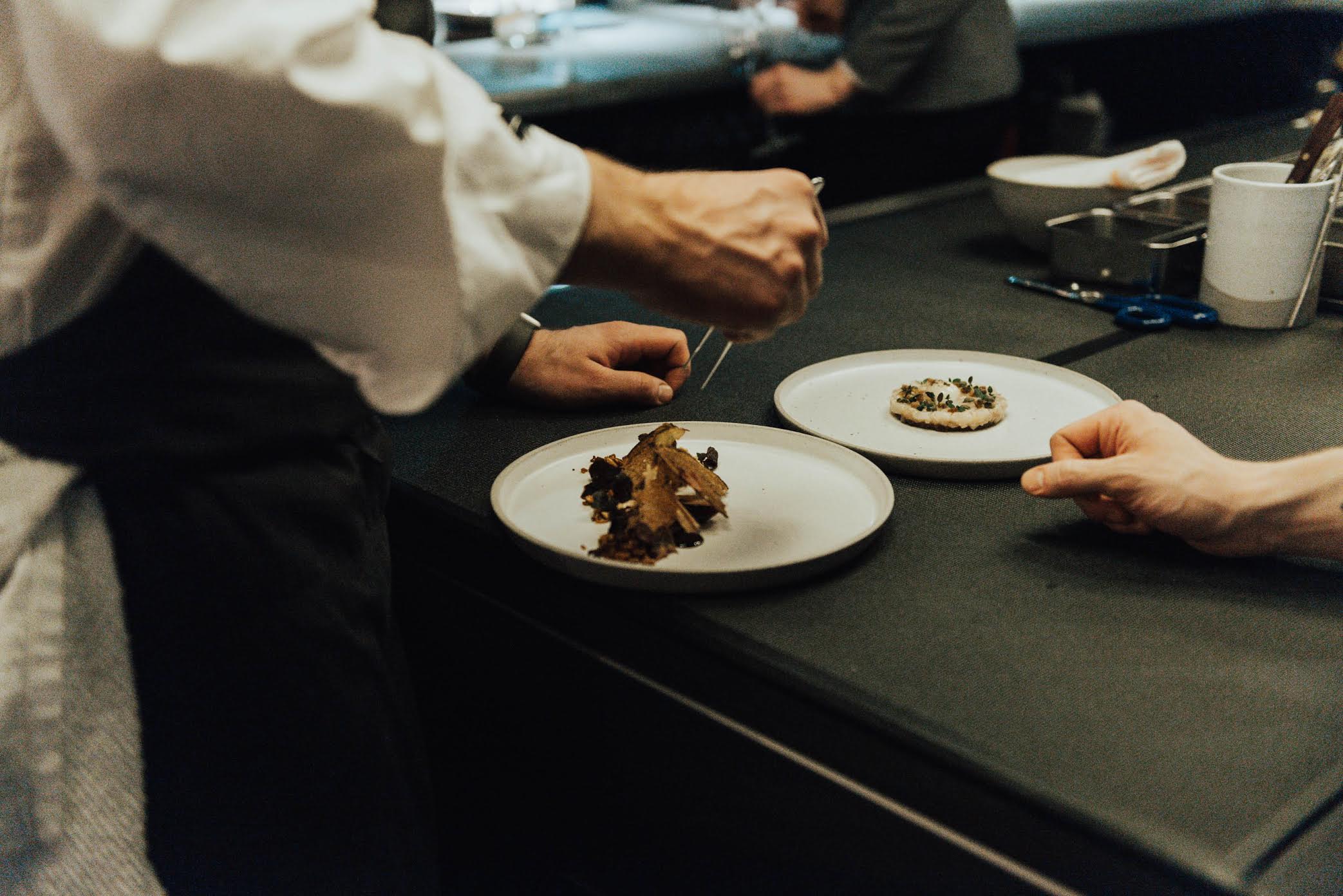 Slaugh and his wife eventually moved back west to his mother’s hometown, Los Angeles, and Slaugh began cooking at Osteria La Buca, a country Italian tavern focusing on “grassroots Italian cooking.” Slaugh’s legacy at Osteria La Buca is the West LA farmland he leased and used to grow produce for the restaurant. This allowed Slaugh and his team to plan seasons ahead in their menus, planting what they wanted and creating menus around the daily harvest. Restaurant staff picked produce just hours before it was to be served to La Buca diners. “It was a different way of thinking about menus,” says Slaugh. “It was more spontaneous. Sometimes we had no idea what a dish was going to look like, but we grew the best produce, and we bought the best of everything we couldn’t grow: from salt to grains to caviar to oil.” Quality ingredients make quality food.
This implementation of farm to table in its most literal sense brought Slaugh right back to his childhood. “We ate so much in a raw state at home,” he says. “Tomatoes sliced with vinaigrette, peas just shelled, the sweetest carrots.” Slaugh says he fell in love with cooking all over again at La Buca.
In early 2016, Slaugh ran an Osteria La Buca pop up restaurant in Yakima. “We did it in the Icehouse Bar,” he says. “There were 8 seats. We did 4 dinners–2 dinners each day for 2 days. We sold them all out. There was no menu; guests had no idea what they were going to get. They just signed on to this journey with us.”
That visit to Yakima turned out to be fateful for Slaugh; he was recruited shortly after by Cowiche Canyon Kitchen owner Graham Snyder to move to Yakima full time and embark on a new restaurant with a farm-fresh mission. The rural aspect of Yakima appealed to Slaugh, but he also sensed a hunger–both literal and figurative–in Yakima patrons for his style of cooking. “There was a community desire for adventuresome eating,” he says. “I just connected with it.”
Not long after Slaugh joined the Cowiche Canyon Kitchen as its executive chef, he and Snyder launched Restaurant Wahluke. Although the concept of a four-course prix fixe menu served at a family-style 14-seat table is not new, it’s not exactly commonplace in rural areas like Yakima. But to assume that rural diners are not sophisticated enough to embrace a micro-restaurant like Wahluke would be narrow-minded; Yakima diners filled the dining room night after night for the 90-120 minute dinner services.
Riding Wahluke’s success, Snyder and Slaugh decided to develop an Asian-inspired eatery in what once was Wahluke’s lounge; they opened E.Z. Tiger in April 2018. The dim-sum and noodle house features “the flavors of the Pacific Rim” and caters to a regular local crowd. “It is a better fit for the space, and we had a feeling this might work better,” says Slaugh. “There was nothing in Yakima really like this.”
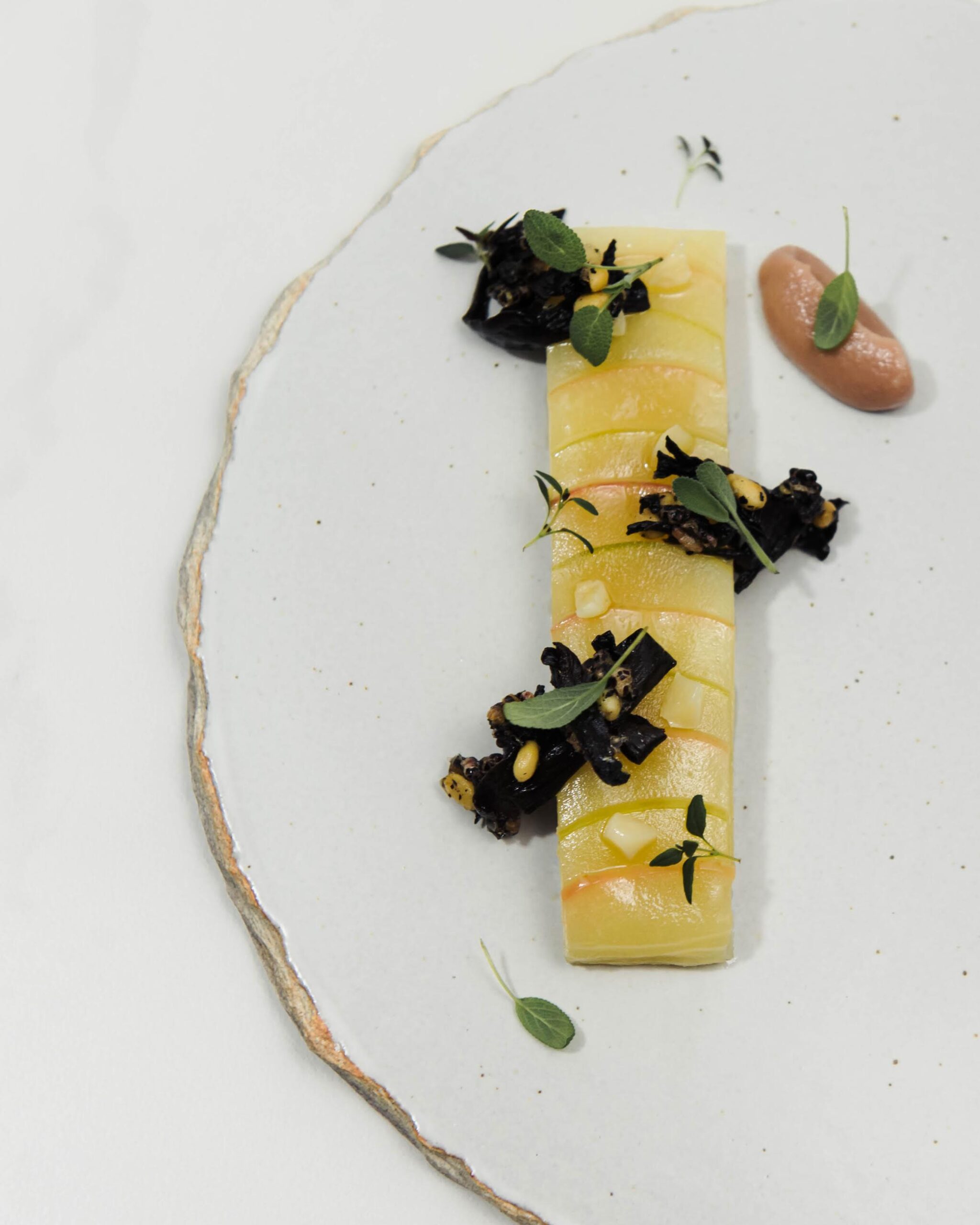 Meanwhile, Wahluke operates as a pop-up restaurant that will serve season-based menus out of various Yakima Valley venues. Response to Slaugh’s menus has been “huge,” says Slaugh. “Way more than I ever could have imagined. The reviews are off the charts. We are just thrilled by the positivity. We feel blessed to have people that believe in us so much.”
Both EZ Tiger and Wahluke are quite young and are still evolving. It’s this evolution and innovation that feed Slaugh. “I can’t be doing the same thing all the time,” he says. “That’s who I am, that’s how I cook. I can’t grow as a chef and as a person if there isn’t evolution.”
Slaugh learned about Bluebird Grain Farms from the 21 Acres Center for Local Food & Sustainable Living in Woodinville (a center for “conscious consumers who want to learn new, more sustainable ways of living”). “They sold Bluebird products and I tried some,” says Slaugh. “It was the summer before Wahluke opened and we were looking for the best of everything. We needed quality grains, so we bought whatever they had and started cooking with it. I was blown away.”
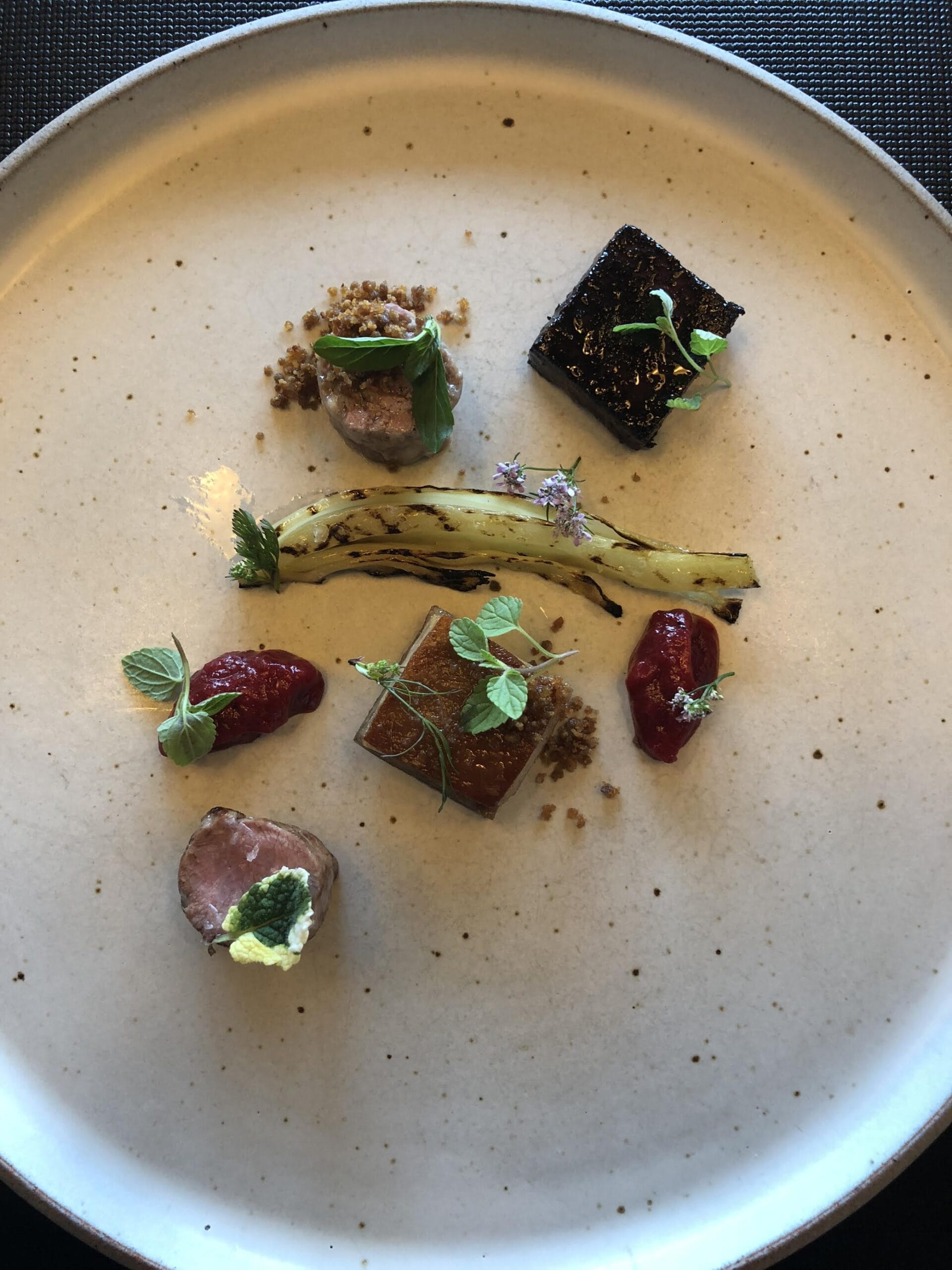 Slaugh continues, “Bluebird sent me some samples–milled flours, Einkorn, emmer farro–so I started a little R&D, playing with the ingredients. All of the flours, all of the whole grains–everything was just excellent.” One of Slaugh’s most surprising innovations is his popular farro/celery root dish. “That dish was such an unexpected hit,” he says. “It’s almost literally just emmer farro and celery root. People love it.” He adds, “Vegetarians always get short-changed. I want the vegetarian entree coming out of my kitchen to be as special as any of the meat dishes, if not more so.” The celery root farro is indeed that, evidence that Slaugh is honoring his commitment to “cooking properly” for all guests, not just the omnivores.
For Slaugh, “cooking properly” means maintaining a steadfast connection to food sources. He adheres to the basic food principle he learned as a kid, and which was reinforced early in his career in fine dining: the best chef is the one who uses the best ingredients. Slaugh and his wife settled in Yakima with not just a house, but also a farm. His parents moved from Utah and bought a farm as well, where they grow some of the produce Slaugh uses at E.Z. Tiger and Wahluke. “Farmers are the real superstars,” Slaugh says. “If the ingredients are right, we don’t have to do a lot with them in the kitchen. We let the ingredients shine.”
To learn more about Slaugh’s food ventures, follow him on Instagram (Wahluke) and Facebook (E.Z. Tiger).
 May is always a busy month for us at Bluebird, but we have been loving the beautiful wildflowers and steady soil moisture in our fields. Our thoughts go out to those who have been adversely affected by the recent flooding in eastern Okanogan County. Thank you to all who work hard to keep our communities safe during events like these! Here are a few notes on what’s been going on at Bluebird the past few months:
 to recover from a race! Stew served over 1,000 of these bowls at the event. If you’d like Dietz Catering to help out at your event in the Methow Valley (they do an amazing job with weddings), you can get in touch
  They say some things are so addictive you can get hooked on your very first try. Patrick Jeannette (aka “Grampy Pat”) had this experience the first time he sampled a true Alaskan sourdough bread, and he’s had nary a sourdough-free day since.
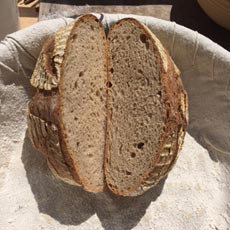 Still, many years passed between those Bridgford rolls and Grampy Pat’s signature sourdoughs–years that Grampy Pat spent, in his wife’s words, as a “serial entrepreneur.” Life moved at a fast pace in the 70s, says Grampy Pat, and after a couple of failed ventures a successful printing business allowed him to “buy the big house on the hill for my wife and 2 kids,” before migrating north to Alaska to use his design minor to create fabulous kitchens for affluent Alaskans. When Grampy Pat had completed a kitchen, he always cooked the first meal in it for his clients. One night a client said “That’s great–you cook dinner and I’ll bake Alaskan sourdough bread to go with it.”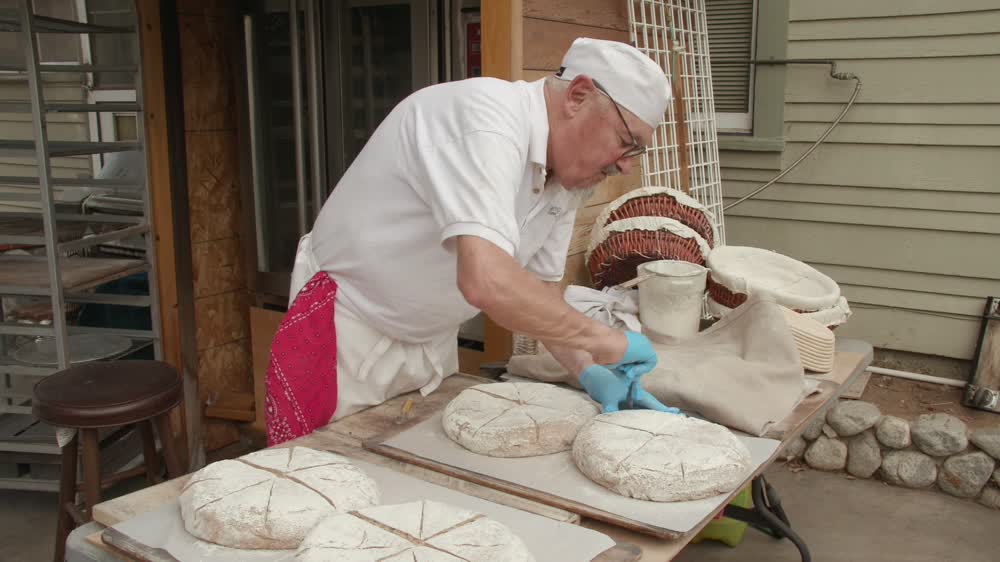
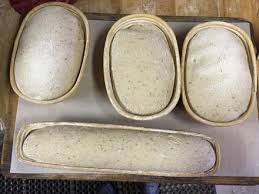
 A few years ago Grampy Pat got the opportunity to bake in a 17th-Century wood-fired oven in Cortona, Italy. It’s a bit of an “Under the Tuscan Sun” memory for Grampy Pat: fresh Italian Asiago cheese, an aged Borolo wine opened the day prior, 16 loaves baked in the village oven, his wife, and friends, in a villa near an olive grove. “It was incredible!” says Grampy Pat, (only he added an expletive before “incredible” for emphasis). “Stupefacente!” the Italians might say. “Amazing!” Read more
  For
For 
 Missy is such an advocate of Bluebird’s grains that she says “We wouldn’t even do a whole grain bread if we didn’t have Bluebird flours.” She continues, “You can taste the difference. It’s very obvious. You use a whole grain flour from somewhere else and it just tastes dead; Bluebird’s flours are fresh and lively. You can’t compare anything else to Bluebird.” Missy notes that the Mazama Store sells a lot of whole grain bread, all of which is made using Bluebird flour. “People really look forward to it and reserve it ahead of time,” she says. “We truly feel that using Bluebird products makes a difference to our customers.”
 Missy continues, “I want my employees to have the best pay they can get. We want to keep them; they’re part of our family.” But she acknowledges, “It’s still so hard to make a small business pencil out. We are constantly working to keep the business profitable while paying our employees a living wage.” This concern feeds into what Missy refers to as “the 3 prongs of sustainability”: longevity of the employees, longevity of the business, and longevity of the planet. To address planetary issues, the Mazama Store has taken a close look at the waste it generates. “We look at how things come to us and we try to minimize packaging,” says Missy. “When you own a store you really see how things arrive. We make many ordering decisions based on not just the quality of the product, but also the amount of packaging involved.”
 Where the store has really been able to make a difference is its approach to food waste. First of all, employees strive to minimize, if not eliminate, true food waste. “We are very creative,” says Missy. “With the bulk items, we don’t like to let them sit in the bins too long before we incorporate them into the kitchen. Same with produce–we only want the freshest things out in the store, then we take the older items back into the kitchen to be made into soups. Fruit is made into pies, or apple butter, pear butter, or pastries.” It’s the reason there is no published menu at the Mazama Store; the kitchen needs to have the creative freedom to look at what needs to be used and design menu items around those ingredients. Food scraps are composted by locals who pick up buckets of food waste; someone else picks up leftover milk from the espresso machine and feeds it to her pigs. “It’s very rare that we throw anything out,” says Missy.
 The Mazama Store gracefully dances the line between folksy and sophisticated, with a carefully curated selection of clothing, mugs, glassware, gifts, and toys augmenting food offerings that would rival those in a chic urban market. Both the store’s shelves and its website promote the work of
  For the LeDucs, the Mazama Store is truly a family business, with Rick, Missy, and their 4 children all working at the store at various points. Although their youngest daughter, Sylvie, is in China, the other 3 LeDuc adult children all work at the store, as well as being involved in the community. Missy manages to find a balance between home life and work life by getting outside whenever possible, and taking little trips out of the valley with Rick here and there. (“Although when we travel I am always looking at other general stores, getting new ideas,” she admits.) But much of Missy’s energy is derived not from being away from the store, but from being right in the thick of it. “I have to put a lot of time into the store,” Missy says. “It’s like an organism that’s changing and growing. I need that, otherwise I wouldn’t enjoy it.”
 Missy says that customers, too, feed her energy. “We have really wonderful customers,” she says. “We have our locals who we know and love, who come in to visit and talk about things weighty and trivial. And then we have our part-time customers. The part-timers work really hard in their other lives to be able to come here, so when they’re in Mazama they’re in a really good mood. They want to say hello at the store, they want to enjoy the outdoors.” She continues, “We don’t seem to be just a convenience store for the part-timers. They know our employees by name. They want to get to know the locals. It’s really special for me to watch.”
 Missy appreciates the Mazama Store’s customers in the bigger picture as well, because they are choosing to support a family-owned independent business. “In this world of WalMart, Amazon, and Costco,” she says, “you need to value your small businesses. If you don’t actually physically go and support them, they will disappear. New laws don’t favor small businesses. You need to go to your local store, get to know the people there, and support them.” This is no selfish request, motivated by personal gain. Missy reminds us that small businesses like the Mazama Store allow employees to earn a living locally. “These small businesses are supporting the people in our community,” she says. “Our employees–this is our community. We’ve seen other places where small businesses close and people have to move out of the community to find work. We see it back east. To me this is a big blinking red light–you need to cruise your towns and support your local stores.”
 The transition from political scientist to executive chef was an evolution–one that confirmed Molitor’s eventual career path. “I learned a lot about myself over those couple of years,” he says. “I realized that my future belonged in restaurants.”
 Molitor says “the v
 and their landscape. We love the work they do- they are preparing the next generation of farmers, environmental stewards, and leaders! Bluebird has been helping CiB by plowing and cover cropping the field where their 2018 garden expansion is planned. Stay tuned for more developments.
 Our annual Granary Open House and Tour is coming up on Saturday December 9th from 10:00 AM- 1:00 PM (tour at 12:00). Come on up and share a hot drink, meet your local farmers, and learn how we store, clean, mill, and package our organic grains. You’ll get to see our unique wooden silos that help naturally condition the grain and our cool old-school grain cleaning machinery. We’ll have Bluebird products and our gift baskets for sale if you need to do some last minute holiday shopping. Call 509-996-3526 for directions and to RSVP.



 On a foggy day last February after skiing the Echo Ridge Loppett, my kids and I stopped at the
  Brooke and Sam Lucy of
  Bluebird is just the tip of Lindsay’s efforts to source local ingredients. Local and regional growers and farmers provide her with seasonal fresh fruit and vegetables. Her own parents’ home garden in Chelan sends fresh herbs, kale, cherry tomatoes, zucchini, raspberries, and other produce straight into the bakery. Blueberries for pies and pastries come from
 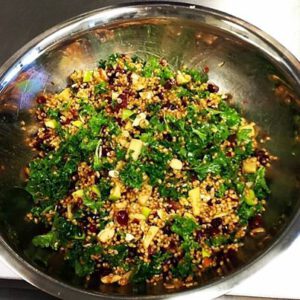 at the bakery are things that feature fresh, locally-grown, in-season fruit,” Lindsay says. “This includes our fruit Danish [nectarines, peaches, or raspberries], fruit pies [cherry and strawberry-rhubarb are particular favorites], and our cherry almond tart.”
 The bakery is also a place where Lindsay’s love of baking is evident in every product in the cases. Lindsay says, “I’ve always loved to bake for my family and baking for my community members is an extension of that. I get satisfaction knowing that my treats are part of an enjoyable experience for locals and visitors alike.”
 For more information about Lake Chelan Artisan Bakery,
  awesome organization to help grow our local Northwest food economy.